Get Full Government Meeting Transcripts, Videos, & Alerts Forever!
Get email alerts on the Food Insecurity topic
No spam. Unsubscribe anytime.
Danvers student-run drive and volunteer pantry report rising need as SNAP cuts bite
Summary
Danvers High freshman Grace Burnett reported collecting 6,156 items this year for her 'Grace Gives Back' drive; Paul Brown and the Danvers People to People Food Pantry described 600 registered families, roughly 1,400 individuals served, and more than 15,000 pounds of food distributed monthly, and urged donations and volunteer help.
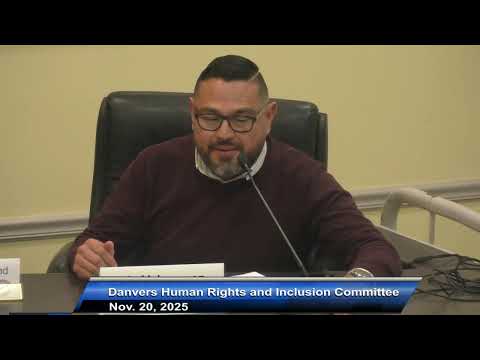
At the Nov. 20 Human Rights and Inclusion Committee meeting, Danvers High freshman Grace Burnett described 'Grace Gives Back,' her annual food drive she says has run for a decade and has collected more than 20,000 items over the years. "We were able to collect 6,156 items to donate this year, surpassing my goal of 4,000," Grace told the committee, and she asked residents to use her Facebook page and Amazon wish list to donate directly.
Paul Brown, speaking for the Danvers People to People Food Pantry, provided details of the pantry’s operations and partners. He said the pantry began more than 30 years ago; it relies on more than 35 volunteers (many long‑time volunteers), serves more than 600 registered families—about 1,400 people, including over 300 seniors and nearly 400 children—and provides "over 15,000 pounds of food" each month. Brown said about 50% of the pantry’s food comes from the Greater Boston Food Bank and that local partners, including Stop & Shop and area car dealers, help with donations and logistics. He described deliveries from the food bank (4,000–4,500 pounds on the first Monday of each month and about 3,000 pounds delivered to Salem on the third Thursday) and estimated annual savings through the food bank exceed $100,000.
Committee members asked how SNAP changes have affected demand. Brown said SNAP cuts led some residents to return to the pantry and that the pantry tries to supply items SNAP may not cover such as diapers, toiletries and infant formula when available. Alphonse Wright (a Salem resident) described the Healthy Incentives Program for SNAP users, which can reimburse $40–$60 monthly for fresh produce purchases, and suggested tactics for maximizing the benefit.
Both the student organizer and pantry leaders encouraged financial and in‑kind donations; Brown said cash donations are helpful because the pantry can purchase three dollars of food for each dollar donated through the Greater Boston Food Bank. Committee members thanked Grace and Brown and highlighted volunteer and donation options, including a local Post Office Box for monetary gifts.