Get Full Government Meeting Transcripts, Videos, & Alerts Forever!
Get email alerts on the Workplace Accountability topic
No spam. Unsubscribe anytime.
Former HRIC vice chair urges town to act after workplace investigation found 'systemic issues' but no harassment finding
Summary
Shilpa Jacobi, a former co‑vice chair of the Town of Danvers Human Rights and Inclusion Committee, told the committee she filed a harassment report this year and that a subsequent investigator’s report found systemic issues but did not classify coworkers’ conduct as legal harassment; she said recommended cultural‑competence training has not occurred and urged accountability.
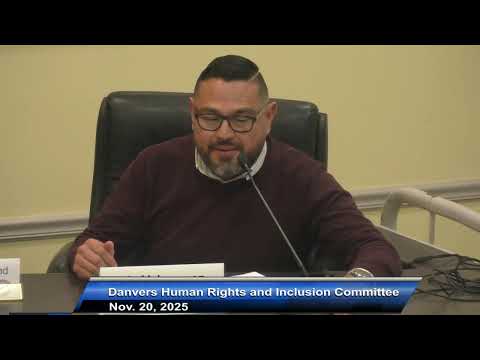
Shilpa Jacobi, a former co‑vice chair of the Town of Danvers Human Rights and Inclusion Committee, told members on Nov. 20 that she filed a harassment report in March about repeated put‑downs and actions she said made daily work life harmful.
Jacobi described an investigative process that began in May and produced a completed report in July. Quoting excerpts she said were from the investigator’s findings, Jacobi read: “Although calling a colleague truculent or pugnacious is certainly impolite, there is no evidence that these terms implicated your membership in a protected category, and therefore they do not constitute harassment.” She also said the investigator told her they “found systemic issues that needed to be addressed and that she was going to let the assistant town manager know that there needed to be some intense training on cultural competence.”
Jacobi told the committee she has not received follow‑up: “My report was filed in March. The investigation began in May and the completed investigative report was received in July. It is now November. And again, there isn't even a whisper of any kind of training, nor has the administration at my institution made check ins with me.” She said the unresolved pattern has continued to cause daily harm to her work life and urged the committee to press for concrete remedial steps.
Committee members responded with empathy and several pledged to ask follow‑up questions of town management. At least one member said the committee should review whether the remedial instruments used by the town are addressing the concerns Jacobi raised and, if not, consider other interventions to reach the “bottom of the concern.” Chair Johan Hunter thanked Jacobi for speaking openly and said the committee would take her remarks seriously.
Several speakers at the meeting framed Jacobi’s account as part of a broader pattern. One attendee who identified herself later as Henice described repeated incidents affecting her child and urged the town to provide mentors and concrete actions beyond suspension. Committee members repeatedly emphasized the need to document incidents and to be prepared to act.
The committee did not vote on any formal measure in response to Jacobi’s remarks during the meeting. Members said they would follow up with town officials and explore next steps, including whether recommended training and check‑ins had been scheduled and whether additional interventions were necessary.