
Needham working group recommends small attic exemption in FAR, debates caps and stairs
Get AI-powered insights, summaries, and transcripts
Subscribe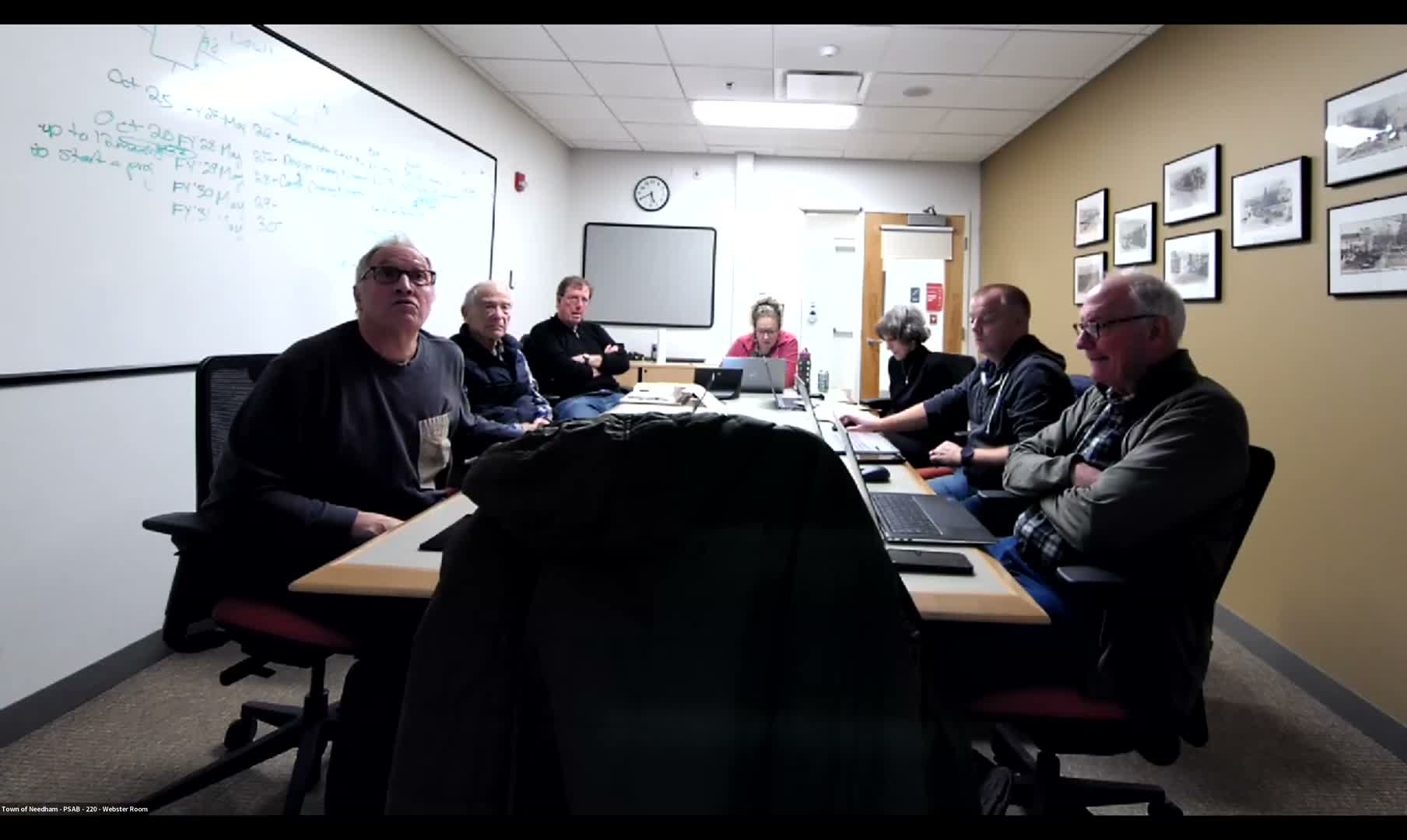
Summary
After lengthly debate, the Needham zoning working group recommended drafting an exception to count a modest amount of attic space (about 200 sq ft) outside FAR while otherwise counting habitable attic area; members also discussed capping attic at a percent of second‑floor area and using objective tests (stair type, dimensions) to prevent loopholes.
A Needham zoning working group spent the second half of its Dec. 20 meeting debating whether attic or half‑story area should be counted in the town's floor‑area ratio calculation and how to prevent builders from exploiting ambiguous definitions to create de facto third floors.
Speaker 1 opened the exchange by asking, 'How about the attic?' and the group examined multiple models used by nearby towns. Participants noted variations in other codes: Lexington uses a fixed‑stair and headroom standard, Newton applies a 50% threshold, and Wellesley counts some attics fully. Several members warned that complex exemptions create 'games' where designers exploit dormers and gables to produce large usable third‑floor areas without counting them against FAR.
To balance design flexibility for traditional pitched roofs and the need to control bulk, the committee coalesced around drafting language to exclude a modest amount of attic space from FAR. Speaker 1 proposed text stating that 'up to 200 square feet of attic space located in the primary structure shall be excluded from the FAR calculation.' The group discussed alternatives (250–500 sq ft) and complementary limits such as capping habitable attic area at a percentage of the second floor (50% was suggested) or requiring that truly habitable third‑floor spaces have a fixed stair and be counted in full.
Members instructed staff to prepare diagrams and example plans showing how a 200‑sq‑ft exclusion (and the other options) would affect typical houses so the Planning Board and public can see tradeoffs. The working group intends to present the proposed clause and illustrative examples as part of the packet for the Planning Board; no final bylaw language or vote was adopted at the working meeting.