Ossining board details new curriculum-review cycle to guide data-driven changes
December 17, 2025 | OSSINING UNION FREE SCHOOL DISTRICT, School Districts, New York
This article was created by AI summarizing key points discussed. AI makes mistakes, so for full details and context, please refer to the video of the full meeting. Please report any errors so we can fix them. Report an error »
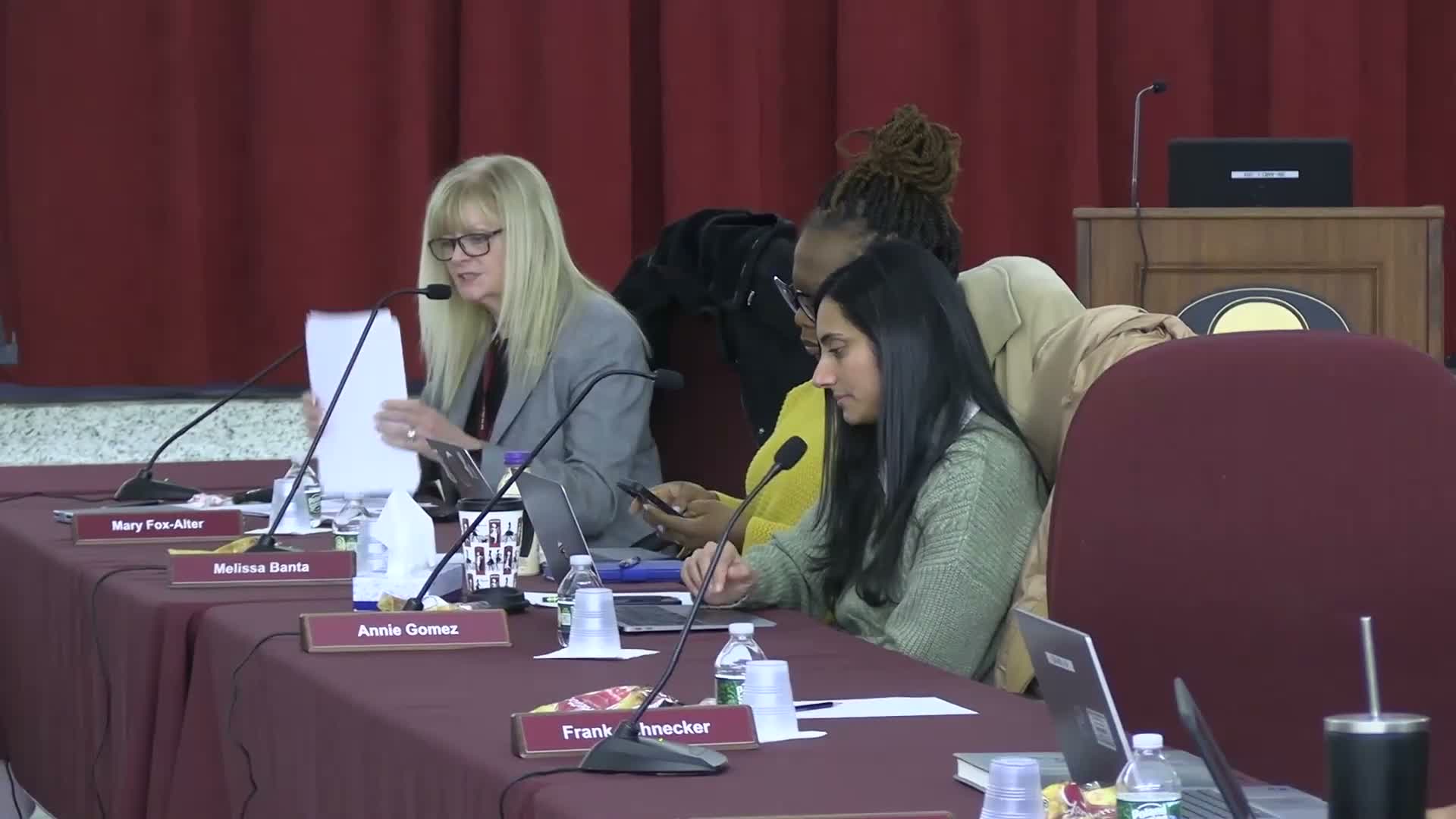
"We're implementing a curriculum review cycle, and it's a structured and cyclical approach towards looking at all areas of curricular or instructional programs," Mary Fox Alter said during the superintendent's update, explaining the policy's purpose and membership.
The committee will include three board members, central-office administrators and leadership from the Ossining Teachers Association, as well as building principals spread across elementary and secondary levels. The model calls for subcommittees and community feedback rounds; it is designed to run on a two-year cycle for an initial program review and to produce an annual report for the board.
The policy distinguishes "curricular areas" named in NYSED Part 100 (math, science, English language arts, world languages, art and music) from specific instructional programs or purchases such as ARC (American Reading Company) and Math in Focus. "ARC stands for the American Reading Company. It's not a curricular area. It's actually a tool or purchase program to teach English language arts and reading," Fox Alter said, signaling the committee will treat commonly used programs as inputs to be evaluated within the larger curriculum review.
Board and committee members described the process as data informed and research based: phases include an internal program self-study, selection of a consultant for external review, site visits and community-led focus groups, followed by a consultant report and an implementation plan that would consider budget impacts and possible pilot projects.
Board members said the policy's goals are to make decisions less anecdotal and more evidence driven. Trustee comments stressed the importance of transparent messaging and broad stakeholder engagement, and the committee will report back with an initial calendar and recommended review priorities for board adoption.
What happens next: The curriculum-review committee will select an initial curricular area to examine, solicit subcommittee members from staff and the community, and develop a timeline for the self-study and external review. Any recommendations that carry budget implications will be returned to the Board of Education for approval.
Don't Miss a Word: See the Full Meeting!
Go beyond summaries. Unlock every video, transcript, and key insight with a Founder Membership.
30-day money-back guarantee
Sponsors
Proudly supported by sponsors who keep New York articles free in 2026

