
Fire prevention staff drop from four to two, officials say inspections and education reduced amid growth
Get AI-powered insights, summaries, and transcripts
Subscribe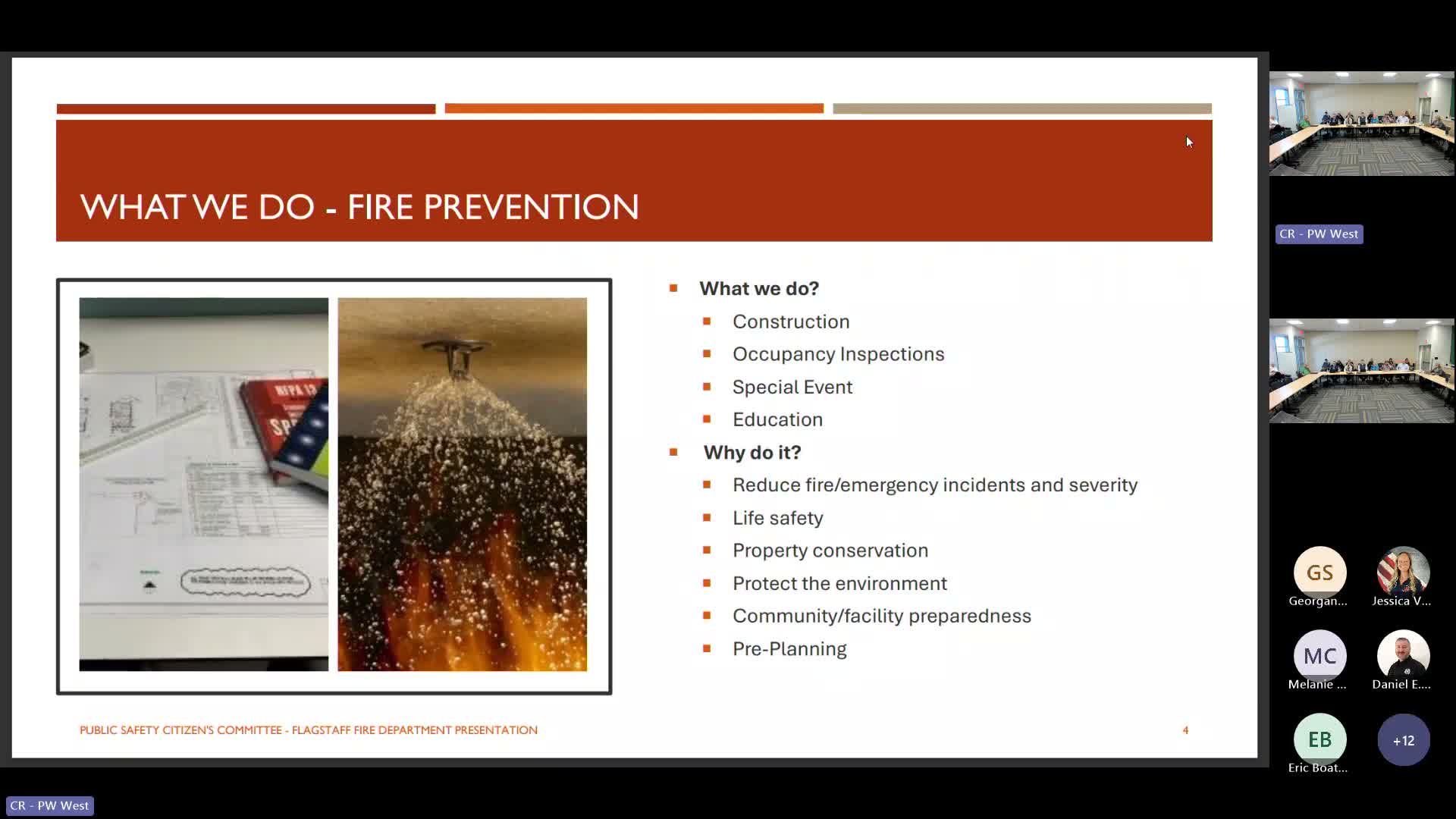
Summary
Fire prevention staff told officials that inspections and public education have fallen as Flagstaff grows: presenters said the city has more than 3,500 businesses, roughly 150 special-event permit inspections this year, and that prevention staffing fell from four pre-recession to two inspectors.
Al Guedem, who led the fire prevention portion of the briefing, said prevention work focuses on plan review, occupancy inspections and public education and highlighted how staffing reductions have reduced proactive activity.
‘‘What Fire Prevention does is they focus a lot on construction, new construction, remodels...we have over 3,500 businesses in town,’’ Al Guedem said, describing risk-tiered inspection cycles (high-risk annual, medium-risk every two years, low-risk every three years) and saying the team handles roughly 150 special-event permits so far this year. He told officials that prevention staff declined from four before the recession to two today, forcing a more reactive posture: "It's more of a reactive than proactive approach right now because they're not always in those businesses."
Guedem said growth, increasing multi-story residential-over-commercial buildings and new suppression technology have increased inspection complexity and time per site, while preventative public education programs have waned (he cited the end of historically wide-reaching school programs and station outreach). He urged the city to consider prevention capacity as part of funding decisions because prevention reduces the number and severity of emergencies and protects property and the environment.
Department leaders said prevention capacity is part of the broader funding and staffing ask; the prevention presentation was followed by technical discussions of standards of cover and operational staffing that shaped the overall funding totals presented later in the briefing.
Officials said follow-up material and slides will provide further details and staff welcomed questions on inspection scheduling and program sequencing.