
County adopts procurement change; commissioners debate adding MWBE solicitation requirements
Get AI-powered insights, summaries, and transcripts
Subscribe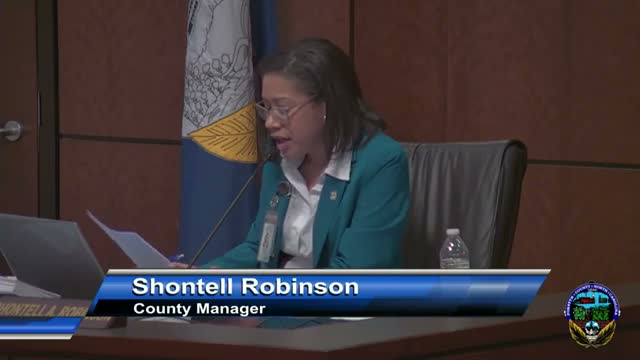
Summary
Forsyth County adopted an updated countywide procurement policy after removing a paragraph on informal solicitation; a substitute motion to require certified HUB/MWBE solicitation for procurements over $10,000 failed and the board asked staff and legal to report back on options and staffing by early March.
Forsyth County commissioners on Dec. 18 approved an update to the countywide procurement policy after a substantive debate over informal bidding language and whether to add explicit solicitation requirements for certified HUB and MWBE firms.
The county manager introduced the staff‑recommended update, and an initial motion was made to strike a short paragraph on page 9 that described allowing departments to send work specifications by email for contracts under $50,000. Several commissioners supported removing that paragraph given current staffing and capacity constraints in the city‑county purchasing office.
Commissioner Woodbury (as the subject of discussion and a proponent of MWBE provisions in the record) proposed adding language in Section 2 to require solicitation of at least two certified HUB or MWBE firms for procurements greater than $10,000 and a discretionary‑spend requirement that at least one of three quotes come from a small MWBE/HUB firm. Purchasing manager Darren Redfield told the board staff already uses vendor lists, the HUB website and B2G Now diversity‑vendor software and that the county could solicit MWBE lists as a work in progress, but doing so consistently would require staff time and potentially additional personnel.
The board debated legal and management considerations, including county attorney input that some MWBE outreach requirements go beyond statutory mandates and that construction‑related MWBE tracking is mandated while other services are not. A substitute motion to add the MWBE solicitation language failed (the board recorded the substitute as failing). The board then approved the original motion to remove the page‑9 paragraph and later approved a separate motion requesting staff and the county attorney to prepare a report on Commissioner Woodbury’s recommendations — including staffing, legal authority and recommended language — with a return by the first March meeting.
Denisha Harris, a caller and president of the North Carolina Coordinators Network, had urged the board earlier in public comment to adopt inclusive procurement practices to expand opportunities for minority‑ and women‑owned firms.
The board’s actions modify the procurement policy’s informal solicitation language but stop short of imposing new countywide MWBE solicitation mandates without further study of legal and staffing implications.