Get Full Government Meeting Transcripts, Videos, & Alerts Forever!
Get email alerts on the Sewer Infrastructure topic
No spam. Unsubscribe anytime.
Forsyth County briefed on Wahlberg Road sewer lift station, $19.7M state grant and bond plans
Summary
County staff and Winston‑Salem Forsyth County Utilities updated commissioners on major water and sewer projects including a Wahlberg Road lift station as part of a Southeast Forsyth County expansion, acceptance of a $19.7M NC DEQ grant, a projected $14M cost for the Wahlberg project, and planned bond issuances to fund water/sewer and solid‑waste capital needs.
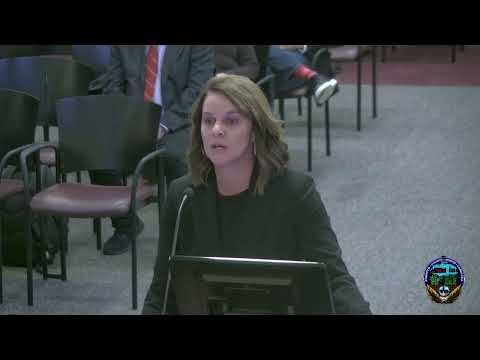
Courtney Driver, speaking for Winston‑Salem Forsyth County Utilities, gave commissioners an overview of utility capital projects and finances at a Nov. 17 briefing ahead of the Nov. 20 board meeting. She said the county and utilities are partnering on projects that include the Tanglewood Business Park sewer extension (estimated $2.9 million total, with the utilities contribution estimated at $250,000) and a completed Highway 65 waterline extension that will allow nearby residents to connect.
Driver spent most of her presentation on the Southeastern Forsyth County sewer expansion, identifying a site off Wahlberg Road for a new sanitary‑sewer lift station. Forsyth County was allocated approximately $20 million in the FY 2024 state budget to expand water and wastewater services in that area; the work will be delivered using a progressive design‑build method. Utilities selected a design‑build team this year, and Driver said a phase‑one preconstruction services package of about $1.1 million was presented to the Utilities Commission. Staff expect to receive a guaranteed maximum price when 75% of the design is complete (projected September 2026) with construction completion estimated in August 2027.
Kirby Robinson, community economic development director, briefed a separate but related agenda item describing a directed projects grant from the North Carolina General Assembly administered by the NC Department of Environmental Quality. The county has been offered $19.7 million in grant funds that staff propose to use to install sewer in southeastern Forsyth County; Robinson described an interlocal agreement by which the Utilities Commission would design, construct, own and maintain the system. The county will draw reimbursement payments from the state as work proceeds. Robinson said the conceptual budget considered a project up to $20 million but that staff currently estimate the Wahlberg project at about $14 million and that any remaining balance would be evaluated later rather than committing unused funds to a specific alternative at this time.
Driver also reviewed compliance work under the updated federal lead and copper rule. The utilities have completed an initial service‑line inventory and report 48 confirmed lead service lines, 642 galvanized service lines requiring replacement work and about 3,000 unknown‑material lines that require exploratory potholing and verification. She said the EPA expects eliminating potential lead sources within a 10‑year window beginning in 2027 and noted the utility has two $2 million principal‑forgiveness loans to fund exploratory work and replacements on private property (which will require homeowner access).
On solid‑waste matters, Driver said Haynes Mill Road landfill tonnage rose to roughly 330,000 tons in 2025 from about 250,000 the prior year, and under current modeling the county projects landfill capacity through about 2042. Staff are considering options for handling construction and demolition waste after Old Salisbury Road/Haines closes in 2029.
Driver reviewed unaudited FY25 operating results: revenues from solid waste were higher than budgeted because of increased tonnage while water and wastewater results were generally in line with budget. She said the utility expects two bond issuances to close in December — a $70 million revenue bond for water and sewer capital projects secured by water/sewer revenues, and a $26.5 million limited‑obligation bond for solid‑waste capital projects that will be secured by city facilities.
Commissioners asked about schedule and scope, whether remaining state grant funds could be reallocated to other projects if Wahlberg costs come in below estimates, and how the progressive design‑build approvals will be staged through the Utilities Commission. Staff said the county followed the state’s recommendation to request the full grant award to demonstrate progress and protect the award while clarifying that the county has not committed to spending above the Wahlberg project at this time.
Next steps described by staff include completing 75% design to obtain a GMP, coordinating a work group across planning, utilities and economic development to determine follow‑up projects, and proceeding with the state’s reimbursement milestones.