Get Full Government Meeting Transcripts, Videos, & Alerts Forever!
Get email alerts on the Community Service Officer Program topic
No spam. Unsubscribe anytime.
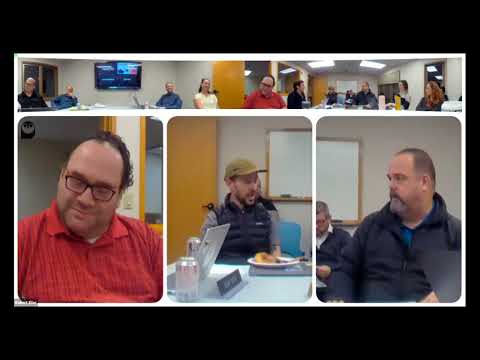
Eugene Police outline Community Service Officer duties, staffing and equipment to oversight board
Summary
Eugene Police Department staff briefed the Citizens Review Board on the Community Service Officer program: program origins in 1970–71, about 15 authorized FTEs (roughly 10 filled), responsibilities for non‑suspect calls and evidence custody, and equipment including Guardian trailers and meridian barriers purchased with grant funds.
City police staff told the Citizens Review Board about the department’s Community Service Officer (CSO) program, describing CSO duties, staffing, and equipment and answering board members’ questions about authority limits and career progression.
Paul Bishop, who identified himself as the community service officer supervisor, said the CSO role began in 1970–71 and that the unit currently has about 15 authorized FTE positions with roughly 10 staff and four supervisors. He described CSOs as "unarmed, non sworn, uniformed professionally trained officers" who handle non‑suspect calls, online reporting (30–50 reports daily, roughly 15,000 a year), traffic direction at events and the custody of SANE (sexual assault evidence) kits in the chain of custody.
Equipment and deployment: Bishop listed programs CSOs oversee — Guardian trailers (camera‑equipped units deployed at private commercial sites), radar trailers, a command bus used for large events, and meridian barriers (mobile metal devices used to block streets for events). He said the department had one trailer carrying eight barriers and had received grant funding to acquire additional trailers and a total of 28 barriers once procurement is complete.
Board questions and workforce pipeline: Members asked about CSO uniforms and visibility in the community, dispatch triage, use of pepper spray for animal welfare calls, and whether CSO experience serves as a pathway to sworn patrol. Bishop said CSOs receive focused forensic training and that the position has served both as a career option for lateral officers and as a stepping stone to patrol.
Next steps: The presentation ended with appreciation from board members. The CSO briefing preceded the board’s case review and the board encouraged continued collaboration with department training and recruitment.