
Residents press board to preserve historic Flint Central; trustees debate reconsideration after prior vote
Get AI-powered insights, summaries, and transcripts
Subscribe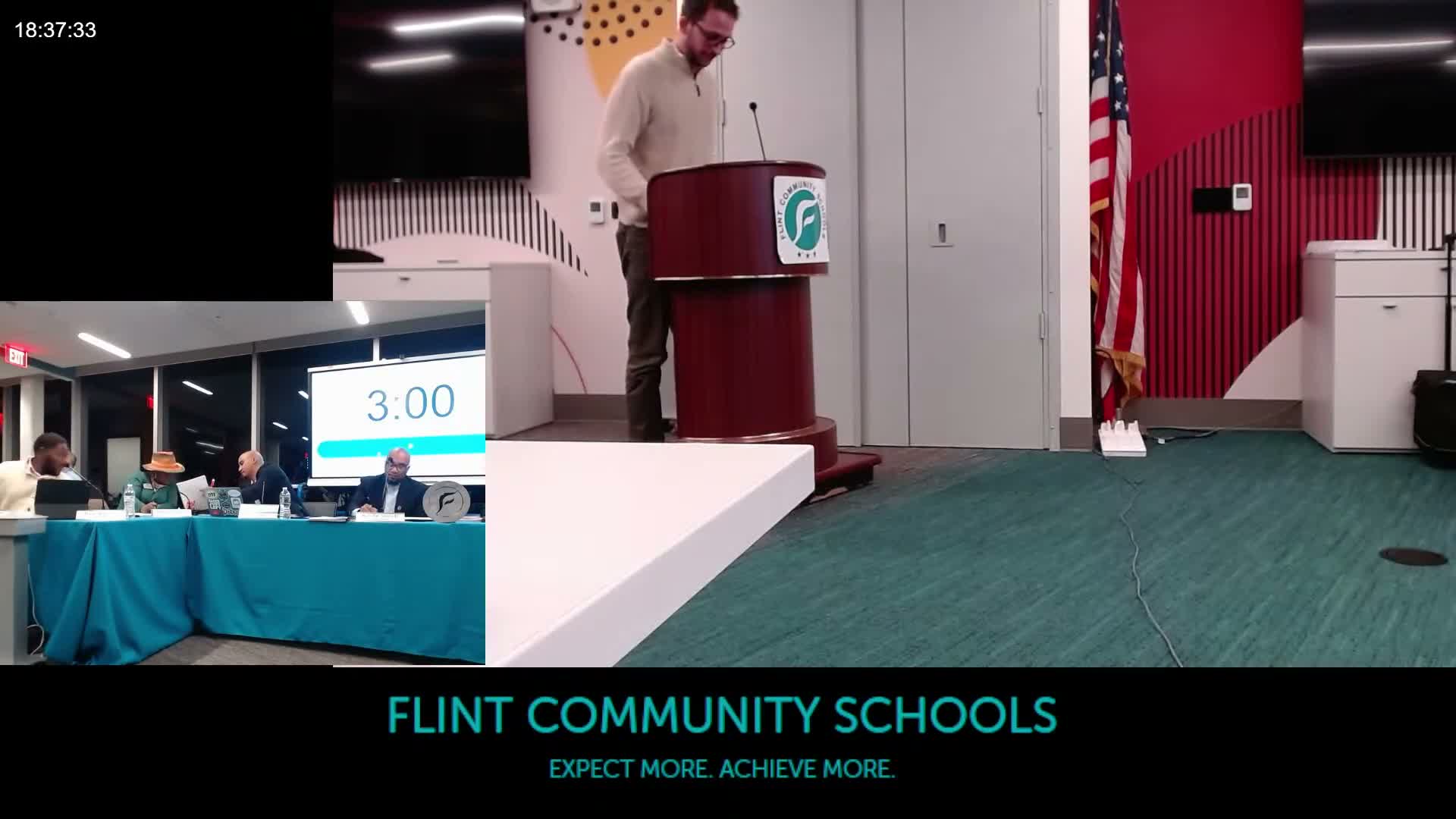
Summary
Dozens of residents, alumni and neighborhood leaders urged the Flint Board of Education to choose a preservation‑focused design for the new Flint Central High School. Trustees debated and a late motion to revisit the board's prior selection of Scenario 2 was raised but ultimately withdrawn after procedural objections.
Community members packed the public comment period to urge the board to preserve more of Flint Central's historic fabric as the district advances a plan for a new high school.
Speakers including alumni, neighborhood association presidents and local architects praised the district's broader renovation work but said the chosen schematic (Scenario 2) did not reflect the preference shown by many residents for "Scenario 1," which preserves more of the historic building. Joel Arnold and several other commenters said Scenario 1 (as previously presented) could be cost‑competitive, particularly if a proposed addition known as the "cube" were removed from that option; public commenters described the campus's proximity to the Flint Cultural Center and argued preservation would sustain property values and community identity.
Trustees and district staff described the selection and procurement process: a selection committee and interviews produced a recommended scheme and the board approved a design decision in a prior special board meeting. Several trustees said community engagement had been extensive, while others and multiple commenters said follow‑up with neighborhood groups was promised and did not occur as expected. One neighborhood leader said she left meetings believing a revised design would be presented to residents, then learned a decision had been made.
Late in the meeting a trustee made a motion to "consider Option 1" (the preservation‑heavier scenario). Other trustees objected, citing procedural concerns: they noted the board had previously voted in a special meeting (recorded as 7–0) to advance Scenario 2; they said that the earlier vote occurred in a different location and with less public visibility and that reconsideration without prior notice could create legal and governance risks under open‑meetings rules. After extended debate the mover withdrew the motion without objection; trustees agreed that further public meetings or a scheduled special session could be used to review community questions should the board choose to reopen the matter.
Board leadership said safety and schedule pressures (the district is targeting an opening date for the new building) and budget constraints informed prior choices; several trustees flagged the need to balance preservation goals with permitting, asbestos remediation, accessibility, construction sequencing and costs. Speakers urged the board to pursue a capital campaign and private philanthropy to close modest gaps if preservation choices added incremental cost.
The record closed for the night without a formal change to the earlier schematic decision.