
Superior council approves Oracle NetSuite and UKG contracts and waives bidding to hire BerryDunn for implementation oversight
Get AI-powered insights, summaries, and transcripts
Subscribe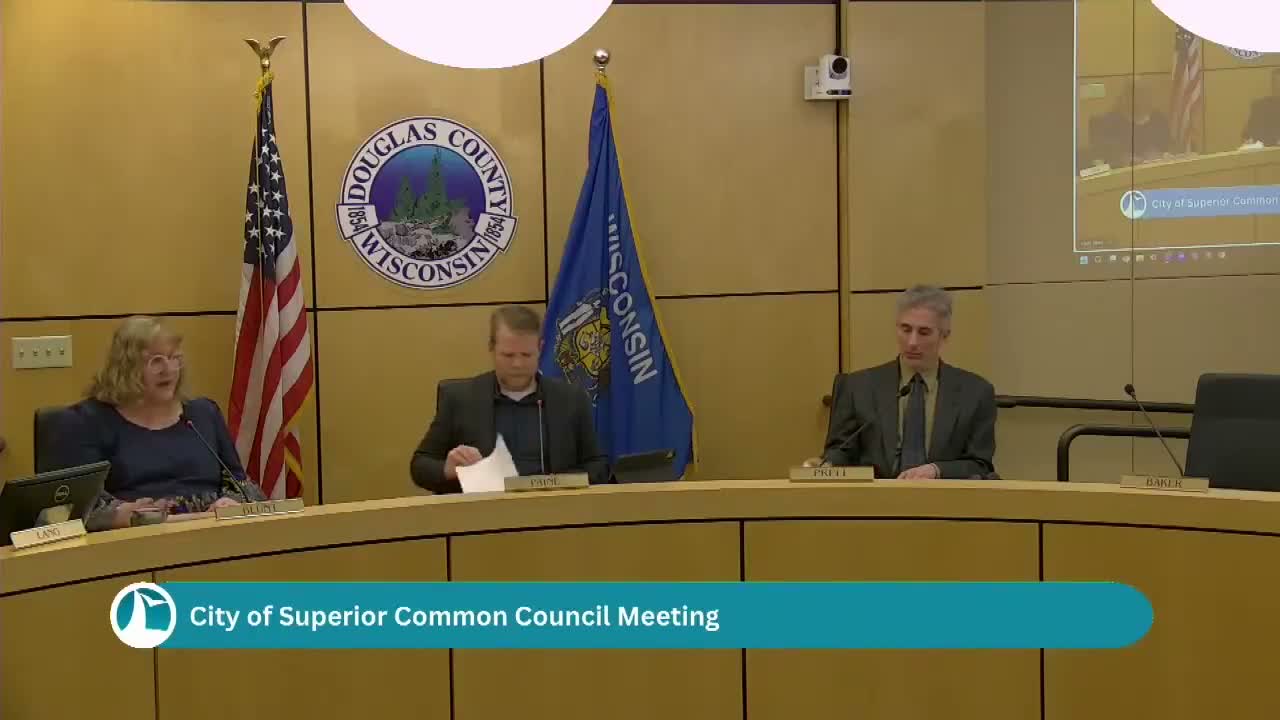
Summary
After extended questioning, the Superior Common Council on Dec. 16 approved ERP (Oracle NetSuite) and HRIS (UKG) vendor contracts and separately approved a time-and-materials implementation oversight contract with BerryDunn; councilors debated costs, data migration scope and the decision to waive formal bidding for the implementation consultant.
The Superior Common Council approved vendor contracts for new enterprise resource planning (ERP) and human-resources information (HRIS) systems and separately approved a time-and-materials implementation oversight contract with BerryDunn after extended debate about procurement and cost.
Director Reinhardt told the council the city began exploring new ERP systems in 2023, received about 10 proposals, conducted multi-day vendor demonstrations and used a multidisciplinary review team to shortlist vendors. He summarized the approach as splitting the financial ERP and HRIS rather than selecting a single bundled system and said the recommended vendors are configured to meet the city’s needs. "ERP — Enterprise resource planning — basically a fancy, fancy word for accounting software," Reinhardt said during his briefing.
Councilors pressed staff on price and scope. Councilor Fennessy cited two headline figures from the proposals: roughly $590,000 in software costs between the two systems and about $462,000 for implementation consulting; Reinhardt confirmed those figures were discussed and said the $462,000 figure already reflected a roughly 25% discount offered by the consultant. Reinhardt also said estimated annual hosting/service fees for the combined systems would total about $158,000 in early years.
Councilors asked about risks: data migration, retention and recovery, training adequacy, and how the city would avoid paying for unplanned additional work. Reinhardt said the city retained bond counsel (Stafford Rosenbaum) to review contracts and negotiated protections such as retaining a percentage of payment until project completion. He explained that data migration is expensive and that the project team proposed moving about five years of accounting history as a practical compromise, while exploring warehousing or pivot-table strategies for older records.
BarryDunn (presented in transcript as Berry Dunn/Barry Dunn) principal Ryan Doyle joined by Teams and described his firm’s role: acting as an extension of the city team during implementation, providing a project manager (estimated 30–40 hours/week) and a pool of consultants for specialized needs. Doyle said the firm proposed time-and-materials billing and had experience keeping projects on schedule and producing contingency plans when client or vendor staff were unavailable. "My firm is an independent and objective consulting services firm," Doyle said, and he emphasized that BerryDunn does not have vendor affiliations.
Some councilors questioned waiving formal bidding for the consultant contract because BerryDunn had previously supported the vendor selection process; others said the institutional knowledge BerryDunn gained during selection justified a sole-source award to avoid delay and preserve continuity. After a privileged motion to divide the package, councilors first approved the ERP and HRIS vendor contracts (voice vote) and then separately voted to waive bidding requirements and approve the BerryDunn implementation oversight contract. The motion to approve BerryDunn’s contract carried by voice vote with one recorded "No." Council direction included monitoring contract deliverables, protecting data retention and negotiating rollback and audit-trail protections.
Next steps: staff will begin implementation tasks per the project plan, with the HRIS side targeted for a 2026 go-live (Oct. 1) and the accounting/ERP go-live planned for Jan. 1, 2027, subject to the scheduling impacts the council discussed.
Costs and contract notes recorded in the meeting: software implementation fees in the proposals were discussed in the ranges cited above; the BerryDunn engagement was presented as a one-time implementation contract on a time-and-materials basis with a reduced hourly rate proposed for this project, and city staff said they would monitor hours against the project budget.