
Long Beach approves automated speed-enforcement pilot, citing traffic-safety goals and privacy safeguards
Get AI-powered insights, summaries, and transcripts
Subscribe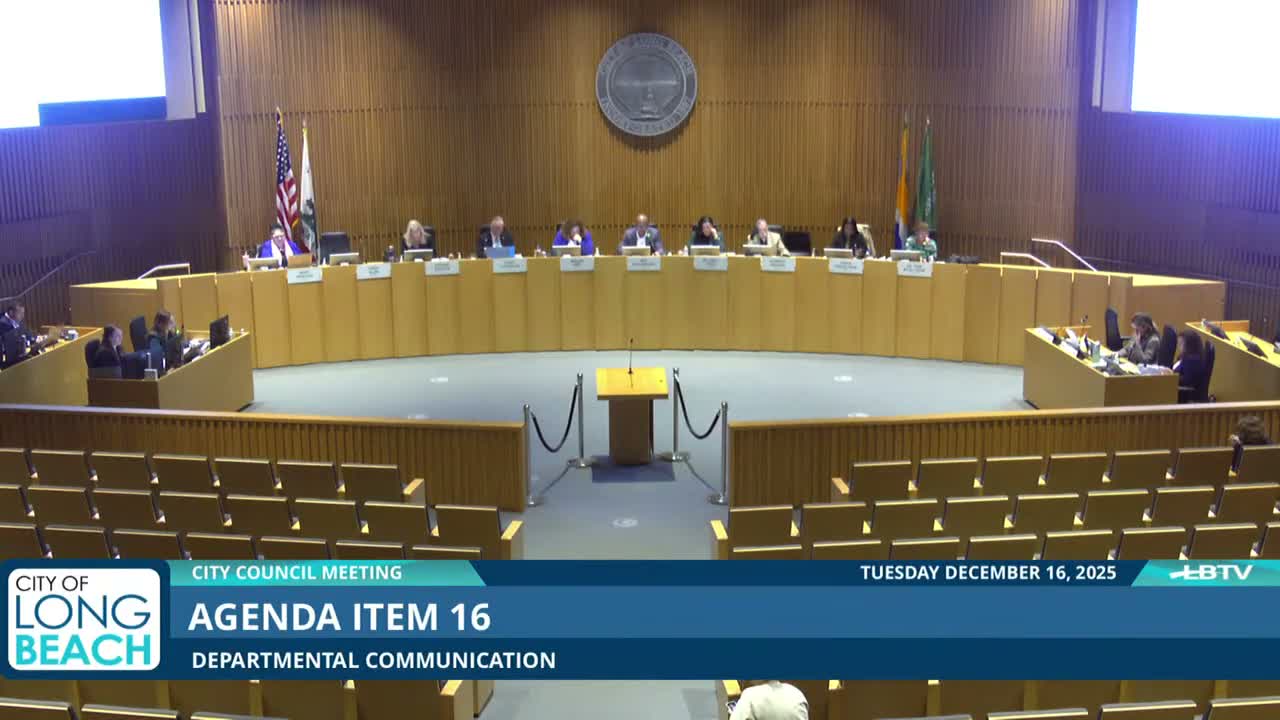
Summary
Council adopted a five-year automated speed-enforcement pilot under AB 645, approving a systems-use policy and contract; staff outlined 18 pilot locations, estimated five-year costs near $8.97 million, privacy/firewall protections, and a community-warning period before citations begin.
After an extended staff presentation, public comment and council questions on Dec. 16, the Long Beach City Council approved a pilot automated speed-enforcement program under state law (AB 645). The council authorized a systems-use policy, an impact report and a contract to install and maintain devices that will operate at 18 locations citywide in two groups of nine.
Public Works staff explained the program follows California Vehicle Code requirements, includes a warning period and limits retained data to rear-license-plate images necessary to process citations. Director Hickman said the first-year budget (materials and labor) is approximately $835,000 with annual operating costs around $1.6 million; staff estimated total program costs over five years would be roughly $8,974,000. The city plans to use citation revenue to pay down program costs and allocate excess revenue to citywide traffic-calming measures.
Council discussion focused on site selection, enforcement equity and coordination with schools and the Long Beach Unified School District. Councilmembers sought assurances about data privacy and diversion alternatives; staff said nonviolation images are deleted within five business days and that Public Works would manage the program with firewalls restricting law-enforcement access. The program includes a 10-mile-per-hour buffer above posted limits before a citation is issued and provides alternatives to payment, including community-service diversion options.
Public commenters included traffic-safety advocates and neighborhood residents. Erin Hoops of CarLite Long Beach urged a yes vote, citing the city’s high traffic-fatality year and noting San Francisco’s earlier pilot saw a 72% reduction in speeding in its most dangerous corridors. Residents near Pacific Avenue and Seventh Street urged attention to highway on-ramps and calls for adding older-adult housing and school zones to the study.
The council approved the program and contract authorization; staff plan phased installation in spring, a warning period the following summer and full enforcement rollout the next fall, with data- and outcome-based reviews at predetermined intervals.