
Board considers lowering graduation-credit floor to 23, adding 0.5-credit financial literacy requirement
Get AI-powered insights, summaries, and transcripts
Subscribe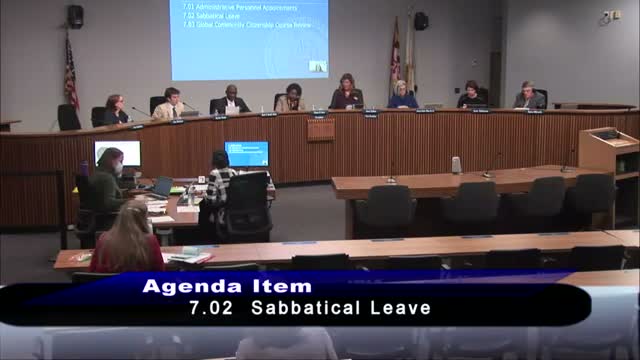
Summary
The superintendent proposed reducing the district graduation-credit floor from 26 to 23 and making a 0.5-credit financial-literacy course required for incoming ninth graders, while retaining a strengthened Global Community Citizenship requirement; the board opened an additional public-comment period before a January final vote.
The Anne Arundel County Board of Education debated proposed changes to graduation requirements on Dec. 17 that would reduce the district's required-credit floor and add financial literacy as a required half-credit.
Superintendent Dr. Bedell said the district will change administrative regulations to lower the overall number of required credits from 26 to 23 (a "floor") and add a required 0.5-credit financial-literacy course beginning with next year's ninth graders. He said the Global Community Citizenship (GCC) course would remain a required 0.5-credit offering, but staff will revise GCC curriculum and provide professional development to restore its intended 2019 design and elevate financial-literacy instruction.
Grace Wilson, the district's director of legislation and policy, said the policy is on second reading and that because the regulation will undergo substantive change, the board will post it for additional public comment through the Jan. 14 meeting and bring it back on third reading then. Christina Catalano, chief academic officer, said multiple pathways will be identified to satisfy the 0.5 financial-literacy requirement, including courses already aligned to Maryland State Department of Education financial-literacy standards such as algebraic applications/daily living and other courses pending standards review.
Board members expressed mixed views. Some, like Mr. Silkworth, warned that reducing required credits risks eroding elective access that supports exploration and creativity. Others, like Dr. Tobin, argued that a lower-credit floor can give students flexibility to pursue internships, apprenticeships and career-technical pathways and reduce the difficulties students face making up credits after setbacks.
Catalano described proposed financial-literacy content as basic personal-finance competencies: budgeting, checking and savings accounts, credit and credit cards, types of loans (including student loans), interest and how it accrues, and strategies for maintaining credit.
Next steps: The board authorized an additional public-comment period and will return the policy for third reading at its Jan. 14 meeting; staff will post regulatory language and program pathways for community review.