Get Full Government Meeting Transcripts, Videos, & Alerts Forever!
Get email alerts on the Childcare Access And Funding topic
No spam. Unsubscribe anytime.
Local childcare providers, parents and advocates urge Kalamazoo County to invest in vouchers, wage supports and TriShare expansion
Summary
Multiple public commenters — including YWCA Kalamazoo, Michigan Transformation Collective and local child‑care centers — told commissioners the county’s child‑care system is broken, cited low staff wages and subsidy barriers, and asked the board to consider vouchers, employer tri‑share support and county investments to stabilize providers.
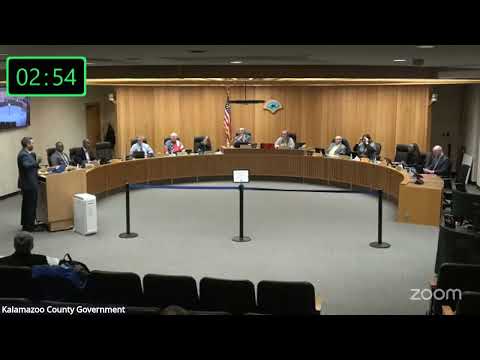
A series of public commenters at the Dec. 2 Kalamazoo County meeting told commissioners the local child‑care system is failing families and providers and urged county investment to improve access and worker pay.
Emily Britton, public policy manager at YWCA Kalamazoo, described the YWCA as one of the county’s largest site‑based child‑care providers and said in 2024 it served about "140 families and over a 180 children" in downtown and Edison neighborhood facilities. She warned that declining government funding and low pay are pushing providers to the breaking point and forcing parents to reduce work hours or exit the workforce.
Jake Yan, director of community engagement at the Michigan Transformation Collective, summarized listening sessions representing 72 community voices and said parents frequently cannot find infant care, providers sometimes decline to accept subsidy payments, and staff wages reported ranged from about $10 to $21 an hour. He said parents and providers asked for county‑level childcare vouchers, expanded TriShare employer participation and predictable subsidy reimbursement.
Jermaine Robinson, executive director of Pre K International Child Care Center on the East Side, told the board his high‑quality center nevertheless faces barriers to major early‑childhood funding streams and urged creation of an early‑childhood voucher program to provide equitable support for infants and toddlers, reduce turnover and help families keep children in trusted centers.
Beth Berglund of the Michigan Transformation Collective cited state and national research on childcare’s economic impacts, stressed that TriShare alone is not accessible to many small employers, and proposed county programs to reimburse small businesses’ TriShare contributions along with a sliding‑scale county voucher redeemable at any licensed provider in Kalamazoo County.
Several speakers tied childcare shortages to broader economic harms, including loss of work hours, reduced family income and reduced tax revenues. Commissioners thanked speakers and noted the comments will inform future budget and policy discussions.
Next steps: commenters asked the county to explore local vouchers and employer partnership models; commissioners did not take immediate action at the meeting but acknowledged childcare as an ongoing policy priority.