Get AI Briefings, Transcripts & Alerts on Local & National Government Meetings — Forever.
Lawmakers probe port fee hikes and market concentration after private sector testimony
Loading...
Summary
At a Dec. 10 House hearing, private-sector witnesses told the Commission on Federal and Veterans Affairs that the San Juan port market is highly concentrated and opaque, and that recent terminal fee increases (about $60 per container, $10 per vehicle) risk raising costs for consumers; the commission requested related documents and pledged further oversight.
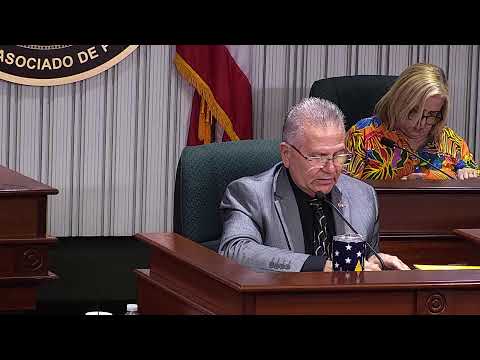
The House Commission on Federal and Veterans Affairs opened an inquiry Dec. 10 into operations and tariffs at the Port of San Juan after private-sector testimony that described an oligopolistic domestic shipping market and a lack of public cost data.
Licenciado Manuel Reyes Alfonso, vice president ejecutivo of MIDA, told the panel that the island’s maritime transport sector is “highly concentrated” and lacks the transparency needed to judge whether recent rate increases are reasonable. “Hay muy poca competencia, hay muy poca supervisión gubernamental, y pues la consecuencia es una falta de transparencia en términos de sus costos y servicios,” Reyes said during his opening remarks.
Reyes and other business representatives said two major carriers and a small number of terminal operators control most container traffic, amplifying the impact of any unilateral price moves. He cited the 2019 collaborative agreement that he and others warned would consolidate capacity; he said those warnings have proved prescient. Reyes described private contracts as largely confidential, which prevents importers from benchmarking prices and impedes public analysis of cumulative cost shifts.
The witness outlined specific recent increases announced by a terminal operator: about $60 per container, $10 for vehicles and roughly $13 per 2,000 pounds of loose cargo. Reyes offered an estimate—based on MIDA’s modeling—that those increases translate into roughly $45–$50 per family per year in added grocery costs, while stressing the figure is an approximation because comprehensive market data are unavailable.
Reyes urged the committee to push for independent, recurring statistics and a permanent office or mandate within existing agencies to collect port metrics. He recommended closer coordination with federal regulators (the Federal Maritime Commission and the U.S. Department of Justice) and legislative steps to give the Puerto Rico Ports Authority clearer tools to prevent monopolistic outcomes in terminal leases and operations.
Representative Ramón Torres Cruz pressed Reyes on the use of international price indices such as the Shanghai Container Freight Index as a benchmark and asked MIDA to provide the documents it filed opposing the 2019 agreement. The commission accepted a motion to request those materials and related submissions, asking Reyes to deliver them to the committee within five days for the record.
Why it matters: Puerto Rico imports an outsized share of food and basic goods. If terminal and port services are concentrated and opaque, businesses and consumers can face higher prices and limited alternatives. The witnesses framed the inquiry as an attempt to restore visibility into contracting and tariff-setting so regulators and lawmakers can judge whether intervention or stronger oversight is needed.
Next steps: The commission asked MIDA to deliver its filings and supporting documents to the committee within five days and signaled it will summon the Ports Authority and the local Department of Justice for follow-up testimony. The Ports Authority was scheduled to present in the afternoon session.