
Prosecutor pitches pre‑filing diversion pilot funded by mental‑health sales tax to reduce recidivism
Get AI-powered insights, summaries, and transcripts
Subscribe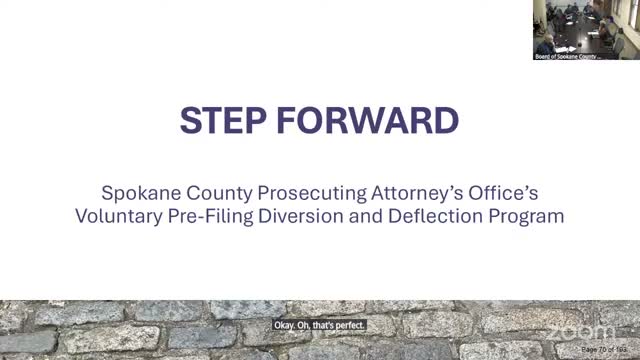
Summary
The county prosecutor proposed a voluntary pre‑filing diversion pilot for nonviolent defendants with mental‑health or substance‑use disorders, asking commissioners to approve up to $200,000 from the mental‑health sales tax for a prosecutor screening position and support staff; presenters said the model aims to reduce recidivism and free capacity to prosecute more serious crimes.
The county prosecutor presented a voluntary pre‑filing diversion pilot aimed at adults arrested for nonviolent offenses who have mental‑health or co‑occurring substance‑use disorders. The prosecutor said an experienced senior attorney is screening first‑appearance cases to identify candidates and that the model offers immediate, person‑to‑person linkage to community services within 12–24 hours of arrest.
Under the plan, eligible participants would enter a six‑month engagement that includes a treatment plan, no‑use requirements and case‑management contacts; failure to engage would return the case to the normal prosecution track. Staff said the model explicitly excludes violent offenders and relies on coordination with jail, pretrial services and community providers.
Presenters said the model builds on existing diversion work and tracking systems (referring to a comparable program with reported reductions in recidivism) and emphasized measuring success by reduced recidivism and lower county costs over time. To enable screening and coordination, the prosecutor requested funding from the mental‑health sales tax to support an Attorney 3 position and related administrative support; staff estimated the request at about $200,000 and said the use is an approved allowable purpose under the mental‑health sales tax.
Commissioners probed eligibility criteria, capacity of community partners, employer pathways for program graduates and whether other sentencing alternatives would remain available post‑program. Staff and commissioners expressed support for a pilot and directed staff to refine performance measures, implementation timelines and provider capacity before formal appropriation.