
Spokane County adopts broad nuisance‑code rewrite, adds civil infractions and code‑enforcement officer role
Get AI-powered insights, summaries, and transcripts
Subscribe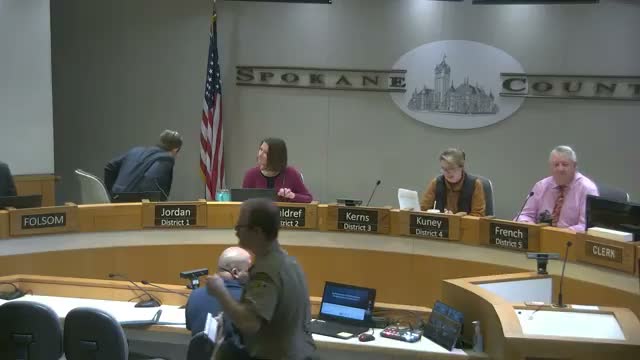
Summary
The county repealed and replaced Spokane County Code chapter 6.13 to broaden nuisance definitions, add a code‑enforcement officer, introduce civil infractions (up to $250 per day per violation), and enable county abatement and lien authority; the changes passed unanimously after residents described decades‑long neighborhood problems.
Spokane County commissioners voted unanimously Dec. 16 to repeal and replace County Code chapter 6.13 (Nuisances), introducing a civil enforcement framework, a new county code‑enforcement officer role and clearer abatement remedies.
Deputy prosecuting attorney Jamieson Dumou told the board the current code funneled nuisance enforcement through building and planning departments and the prosecuting attorney’s office but lacked a functional civil‑penalty process. The new code broadens nuisance definitions, allows a code‑enforcement officer to investigate and issue notices of violation, creates civil infractions (a proposed fine of $250 per day per violation as a compliance nudge) and preserves the county’s ability to pursue abatement and assess cleanup costs as a special‑assessment lien.
Dumou said the civil‑infraction process is provided for by RCW 7.8 and is intended to decriminalize nuisance enforcement and shorten case resolution times. He also said the prosecuting attorney would have authority to initiate abatement lawsuits without returning to the commission in every case and that the county would provide assistance to persons unable to comply because of physical or mental disability.
Several residents testified in support, describing long‑running problems from junkyards and commercial activity in low‑density neighborhoods and expressing skepticism that prior complaints produced relief. Witnesses urged the board to adopt stronger, faster remedies; several described multi‑decade struggles to get compliance. Commissioners said the changes give the county new tools to pursue compliance and protect neighborhoods, and they approved the revisions unanimously.
Why it matters: The rewrite changes the county’s enforcement posture on property conditions and enables a civil (rather than primarily criminal) path to compel compliance, including potential county clean‑up and liening when property owners do not act.