Get Full Government Meeting Transcripts, Videos, & Alerts Forever!
Get email alerts on the Municipal Finance topic
No spam. Unsubscribe anytime.
Public commenter urges Jamestown to avoid using reserves to cover 2026 shortfall, suggests user fees and contract review
Summary
An unidentified Jamestown resident warned that using $3.34 million in unassigned fund balance to cover the proposed 2026 budget would be temporary and recommended shifting certain services to user fees and re-examining $6.6 million in contracts to limit property tax increases.
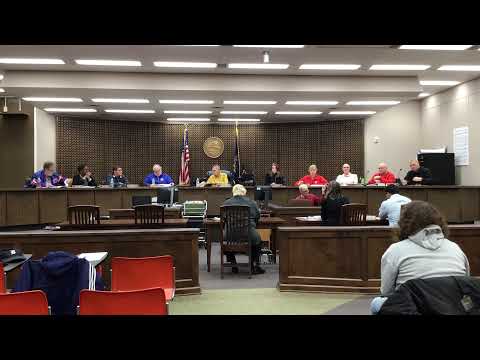
An unidentified Jamestown resident addressed city officials during a budget meeting on Feb. 26, saying the proposed 2026 tax rate of $26.24—"a 7.5% increase over 2025"—and an associated $1,253,447 increase in the tax levy would leave the city relying on limited reserves.
"Projected use of the unassigned fund balance of $3,340,000 ... provides only a limited and temporary financial cushion," the commenter said, adding that "relying on this limited resource to cover rising cost and operating needs is far far from ideal and cannot substantially substitute for long term revenue growth." The transcript also includes an unclear numeric token following the $3.34 million figure that was not specified.
The commenter listed permitted uses for an undesignated fund balance—cash flow, operating expenses, unexpected costs, fund-balance policy and investments—and said Jamestown lacks a formal fund-balance policy establishing an appropriate reserve level. The speaker referenced state guidance recommending two to three months of regular general-fund operating revenues or expenses be held in unrestricted reserves (transcribed as "The New York state government governance financial officer associate, Stan").
To reduce pressure on property taxes, the commenter recommended re-examining roughly $6,600,000 in contractual expenses and said some services now paid for through property taxes (street lighting, leaf removal and storm drainage) could be shifted to user charges or a utility model administered by the BPU or similar entity. "If you were to remove those items and put them as a layer add on revenue cost to utility bill, you would actually ... be able to subtract from your existing budget right now $1,300,000," the commenter said. The $1.3 million figure was presented as an estimate by the commenter.
Using a $70,000 home as an example, the speaker said the change in assessed values and rates resulted in a substantial percentage increase in what that property would pay—described in the transcript as a "128% increase" in the specific calculation the commenter cited; the transcript does not show the full arithmetic behind that figure.
The speaker urged the incoming city council to engage fully with the budget, asked that any use of the unassigned fund balance be accompanied by a replenishment plan, and warned that depleting reserves could increase future costs. The transcript does not record any formal motions, votes or official responses to the recommendations during the comment period.
Next steps were not specified in the transcript; no vote or formal action on the budget or the commenter’s recommendations is recorded there.