
Fairfield officials start rapid‑response outreach after Anheuser‑Busch plant closure announcement
Get AI-powered insights, summaries, and transcripts
Subscribe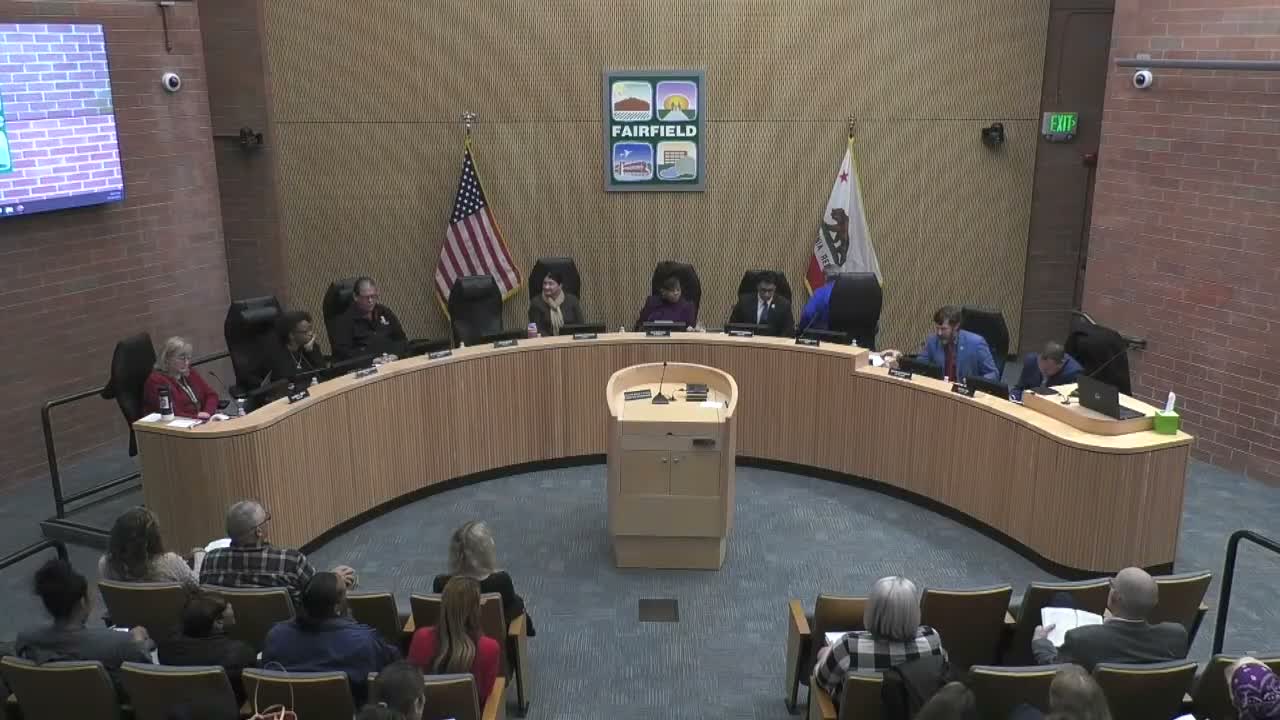
Summary
City staff, the workforce board and partner agencies described immediate steps to assist employees after AB InBev announced the Fairfield plant will close; planned actions include on‑site outreach in January, an on‑site reverse career fair Jan. 29 and requests for state assistance.
City staff and workforce partners said they began immediate outreach after learning Anheuser‑Busch (AB InBev) planned to close its Fairfield facility, a longtime local employer, and outlined a series of short‑term supports for affected workers.
City Manager Seaman told the council the city’s economic development, public works and water‑utility teams began contacting infrastructure partners — including PG&E, Union Pacific and local sewer authorities — to document the site’s assets and capacities and to assess reuse potential. “We’ve started doing some outreach, trying to understand all of the infrastructure capabilities that are on that site,” he said.
David Hubbell, president and executive director of the workforce development board, and a county workforce representative described a rapid‑response plan. They said the company had identified about 238 employees in the Budweiser facility and that the ripple effect could affect roughly 544 workers tied to vendors and related operations; combined county impacts from multiple expected layoffs could reach “upwards of 3,000 dislocated workers” this spring. Workforce staff said they had requested state assistance grants and expect “hundreds of thousands of dollars” in supportive services and training tied to rapid‑response operations.
Planned next steps include on‑site outreach in early January with EDD/unemployment partners to explain unemployment timing and benefits, a Jan. 8–9 rapid‑response visit schedule, and a Jan. 29 reverse career fair at the plant to connect affected employees with prospective employers. Staff also said they will be on site to meet employees and provide information about services, including retraining and job search, and emphasized efforts to keep displaced workers local.
City and county officials said they are also meeting with AB InBev’s real‑estate team to learn about marketing plans for the site and to understand what assets — such as an anaerobic digester and wind turbines cited by staff — might be available to a future operator. Staff emphasized reuse objectives that could favor advanced manufacturing or food and beverage firms that require substantial water/wastewater and rail infrastructure.
What happens next: City staff said they will continue to coordinate with GoBiz, the Solano Economic Development Corporation and workforce partners, host on‑site assistance in January, and report back to the council as plans develop.