
Residents and vendors press Fairfield council over downtown theater contract, allege licensing and process failures
Get AI-powered insights, summaries, and transcripts
Subscribe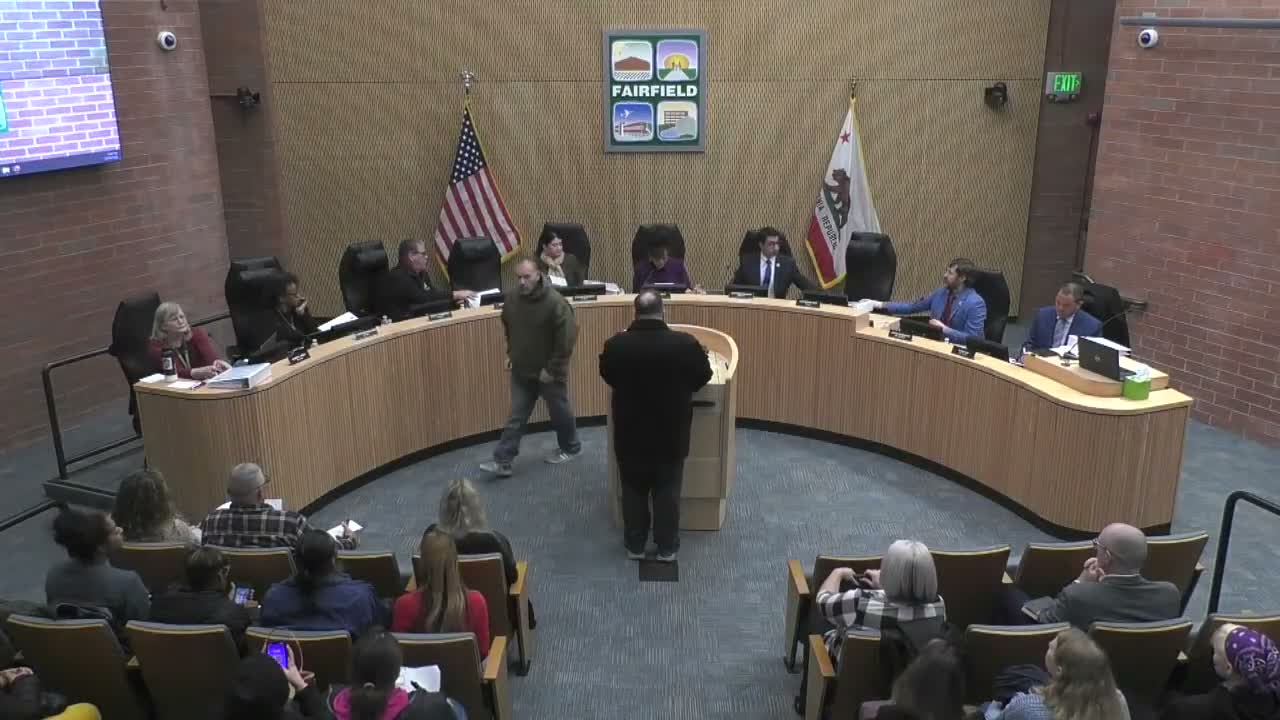
Summary
Dozens of residents and arts‑sector speakers urged the council to re‑examine its recent action on the Downtown Theater contract, alleging missing business and liquor licenses, deferred maintenance, and potential procedural violations in the RFQ process. Council asked staff to investigate comments made during public comment.
Dozens of residents, arts operators and business owners used the Fairfield City Council’s Dec. 16 public‑comment period to press elected officials for more information about the downtown theater’s management and the council’s recent contract direction.
Speakers representing different sides of the downtown theater debate asked the council to explain apparent gaps in oversight and to consider rescinding or re‑advertising the contract. David Rogers, whose Rogers Creative Enterprises (RCE) was the subject of criticism at a prior meeting, told the council he had been “character assassinated” and requested a new, fair RFQ process or that the original staff‑led procedure be honored. “When misinformation is allowed to drive public decisions, it sets dangerous precedent and erodes the integrity of this body,” he said.
Other speakers provided documentary claims and figures. Veronica M. told the council that materials in the meeting binder showed the Downtown Theater Foundation for the Arts had received more than $1,000,000 in public support while reporting roughly $78,340 in rental revenue across nine years, asking plainly, “Where did the money go?” Vanessa L. and others produced documents they said show the venue had no liquor license issued in the state ABC system and no visible city business license for years; they asked council to review tabs of evidence before approving or extending any contract with the incumbent manager.
Supporters of RCE pushed back in turn. Benjamin Est and Juliana Upson defended RCE’s business structure and operational qualifications, saying incorporation and S‑corp status were standard and that RCE had brought an experienced operations team and a 10‑page business plan to the RFQ. Multiple speakers described outreach from regional touring companies and community groups who said they were eager to program with an operator who could modernize the venue.
Technical and safety concerns also surfaced. Theater maintenance and technical staff and contractors described deferred maintenance, missing documentation, outdated lighting and accessibility shortfalls; a maintenance mechanic said the city‑owned facility had “not been maintained to the standard taxpayers deserve.” One speaker also raised AB 5 labor‑law issues and argued that performers and technicians paid by stipends rather than wages may have been misclassified.
Several commenters alleged procedural problems at a Dec. 2 meeting where the council discussed theater management: Melissa S. asserted the agenda described only authorization to negotiate yet the council effectively extended the incumbent’s contract without notice and claimed a Brown Act violation; she requested the Dec. 2 action be rescinded and the item properly re‑noticed. other speakers raised concerns about perceived conflicts of interest when council members had shared personal histories during an active procurement.
Council members did not render a legal finding during the public‑comment period. City Attorney comments during the meeting clarified that public‑comment complaints can be referred to staff for investigation and that enforcement of licensing and code compliance is carried out by staff and relevant enforcement agencies, not by the council acting directly. Following public comment, Councilmember Williams asked staff to investigate the liquor‑ and business‑license claims; City Attorney and City Manager staff confirmed that staff will follow up and check enforcement paths.
What happens next: Council did not adopt a new procurement outcome during the Dec. 16 meeting; several speakers asked the council to rescind or re‑notice the Dec. 2 action. City staff said they will examine the documentary claims raised during public comment and return findings or recommended next steps. The council’s earlier Dec. 2 direction to staff to negotiate with the Downtown Theater Foundation remains part of the record pending any formal rescission or additional council action.