
Kyrene outlines rolling middle‑school stops, opt‑in rides and 14‑passenger vans to ease driver shortage
Get AI-powered insights, summaries, and transcripts
Subscribe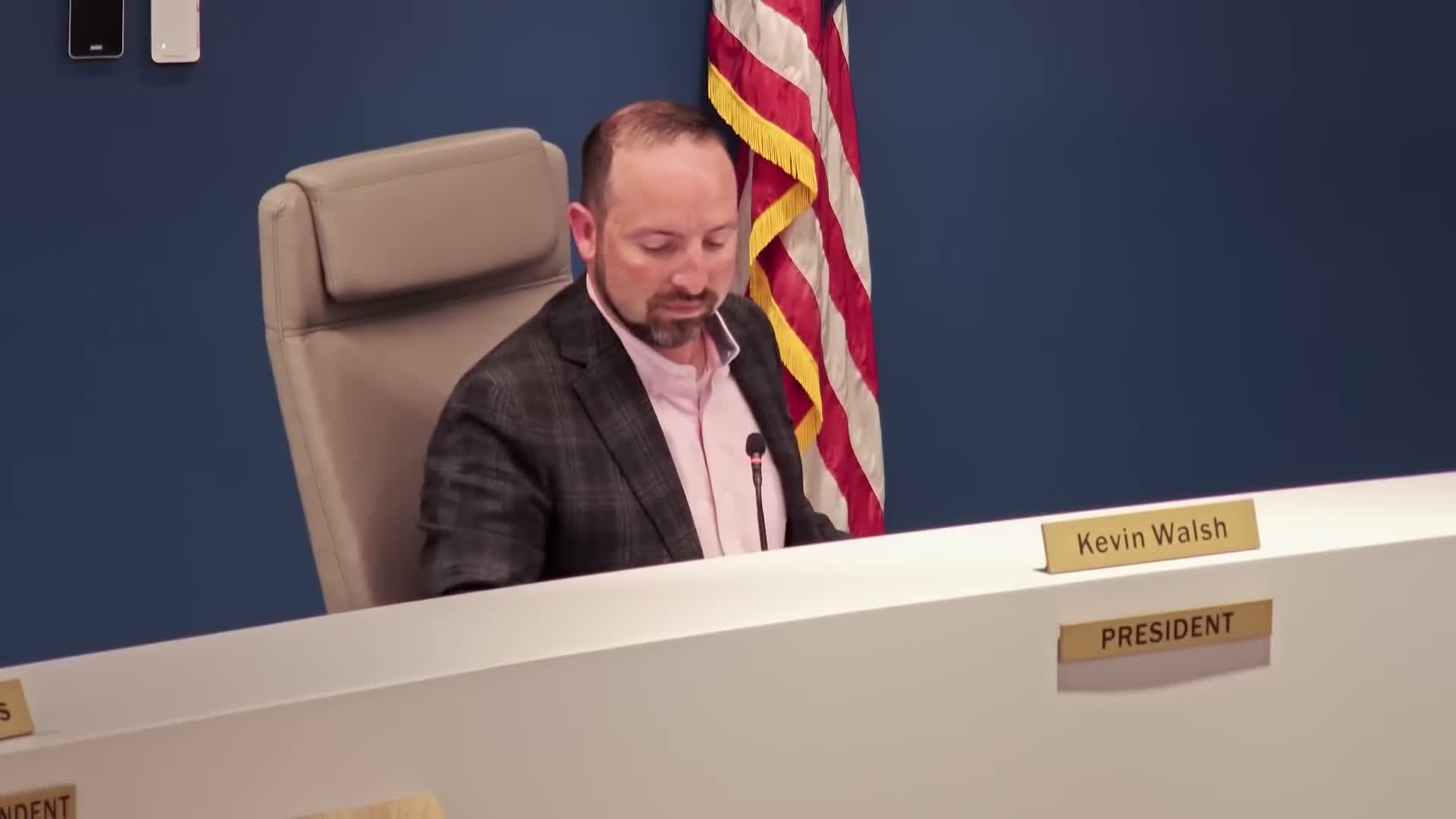
Summary
The Kyrene Elementary District presented transportation changes Dec. 9 including a pilot of rolling middle‑school stops, an opt‑in system for bus riders and purchase of non‑CDL 14‑passenger vans; staff said these changes should reduce the district’s driver need next year from 57 to roughly 45–55 depending on the model chosen.
Michelle Parmley, the district’s director of transportation, told the Kyrene Elementary District Governing Board at a Dec. 9 study session that the district is trying to address a bus driver shortage and reduce costs by changing how routes and stops are organized. Parmley said the district is piloting “rolling middle‑school stops,” consolidating routes, introducing an opt‑in ridership feature and buying 14‑passenger non‑CDL minibuses to be deployed in spring.
Parmley said the rolling stop pilot allows one driver to run two middle‑school routes by picking up a group of students about 30 minutes earlier, dropping them at school and then returning for a second run. “So what a rolling middle school stop is is a driver that will pick up a group of kids 30 minutes prior to the original pickup time. They will drop those students at school, and then they will go back and do a second route,” Parmley said, adding that students’ arrival and departure times would be staggered by about 30 minutes and Community Ed will provide supervision for the earlier arrivals and later departures at no additional district cost.
Parmley told the board the district is also pursuing bell‑time adjustments (a 10‑minute shift on tiers 1 and 3), centralized out‑of‑district pickup hubs around the Baseline and Maricopa corridors (areas near 48th Street) and continued route consolidation. Those changes are intended to reduce the total number of drivers the district needs. Parmley presented driver headcount estimates: the district needs 57 drivers this year; next year she anticipates 52–55 drivers. Under various school‑configuration models presented elsewhere in the meeting the district’s projected need ranges from about 45 to 50 drivers.
Chris Herman, the district chief financial officer and assistant superintendent, framed the transportation changes as part of a broader effort to manage operational costs and accommodate possible boundary or school‑closure decisions. Board members asked whether the rolling‑stop pilot had produced negative feedback. Parmley said schools had reported challenges finding staff to supervise early arrivals, so the district will use Community Ed staff for supervision starting in January. Board members thanked staff for the work and confirmed rolling stops would apply to both arrival and departure times.
The changes Parmley described are intended to be operational in 2026–27 regardless of which closure/boundary model the board ultimately adopts. The board did not vote on transportation policy at the Dec. 9 study session.
The district made presentation slides and additional utilization data available to board members; staff offered to provide further detail for the Dec. 16 meeting when closures and boundary maps may be formally moved and voted on.