
Board declines to accept OE‑12 monitoring report after extensive debate over grading, homework and student recovery policies
Get AI-powered insights, summaries, and transcripts
Subscribe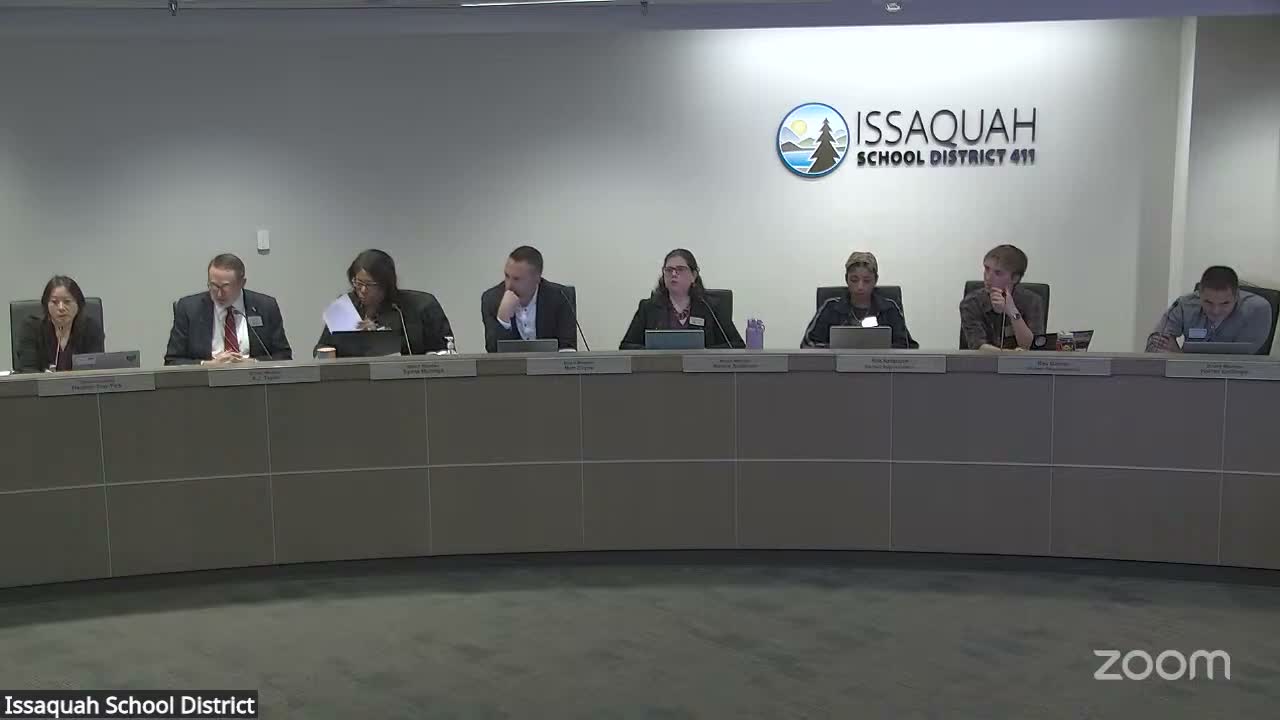
Summary
After extended discussion of grading recovery thresholds, homework purposes and equity concerns, the Issaquah board voted not to accept the monitoring report for Operational Expectation 12 (learning environment). Directors called for more frequent follow‑up and work‑study conversations.
The Issaquah School District board on Dec. 8 voted not to accept the monitoring report for Operational Expectation 12, which covers the district’s learning environment, after several hours of discussion that centered on grading consistency, homework purpose, and how the district supports recovery for students.
Executive Director Rich Melish and Executive Director Sherry Cox presented OE‑12, highlighting strengths such as expanded CTE offerings, an incoming online high school in 2026, and improved access to counseling. They also flagged two exceptions: inconsistent grading/homework practices and the need for stronger SEL integration at the secondary level.
Board members pressed staff about one specific operational detail: the collective bargaining agreement language that sets a recovery threshold (a C+ or similar) and how that interacts with the board’s stated aim of giving students multiple opportunities to demonstrate learning. Director Gallagher asked how the district reconciles a recovery ceiling with the expectation that students should have multiple pathways to demonstrate proficiency; Melish said the threshold is part of the negotiated recovery process and that the district is working to expand proactive opportunities so few students rely on recovery alone.
Multiple directors and student representatives raised survey findings that most students report using homework to finish classwork rather than to "prepare for new learning," and many described an experience of inconsistent grading between teachers and schools that affects student stress and equity. One board member said a student in their family left the comprehensive high school and enrolled fully online because the student lacked a viable in‑district recovery path.
After discussion, a motion to accept the OE‑12 monitoring report was moved and seconded. The board then voted and the motion failed; the report was not accepted. Several directors called for a spring work‑study and more frequent in‑year monitoring on the specific exceptions cited (grading consistency, homework guidelines, recovery practices) rather than waiting a full year between reports.
Quotes from the meeting illustrate the tenor of the debate: "If the average SAT is already high, why would teachers obsess about grade inflation when students are outscoring the country?" one director said, and a student representative described inconsistent advisor interpretations of competency at Gibson Neck as a source of stress for students.
Next steps: board members requested a work‑study session and more frequent progress updates on OE‑12 exceptions (some suggested six‑month checkpoints) and asked staff to prepare clearer homework guidance, monitoring protocols, and equity‑focused grading practices for follow‑up.