
Planning commission recommends denial of Woolen Mills floodplain fill permit amid habitat, archaeology and enforcement concerns
Get AI-powered insights, summaries, and transcripts
Subscribe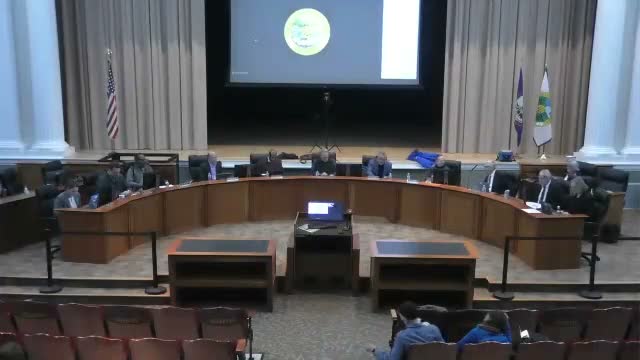
Summary
The commission recommended denial (6–2) of a special‑use permit (SP2025‑6) that would place 1.346 acres of fill in the floodplain adjoining Moores Creek. Staff and applicant said FEMA and county engineering found no increase in base flood elevation; DEQ and residents cited regulatory harm, cumulative impacts and possible archaeological sensitivity.
The Albemarle County Planning Commission on Dec. 16 recommended denial of SP2025‑6, a request to place approximately 1.346 acres of fill within the Flood Hazard Overlay District on a 7‑acre parcel associated with the Woolen Mills Industrial subdivision.
Rebecca Ragsdale, planning manager, opened the staff presentation by describing the request as "a special use permit that is specific to the Flood Hazard Overlay District." She said the property is zoned light industrial and that staff’s technical review — including county engineering and FEMA modeling — found the proposed fill would occur outside the regulatory floodway and could be permitted with specific mitigation and conditions.
Deputy county engineer Tony Edwards and consultant Brian Sahaky (Timmons Group) explained that the parcel sits in a backwater/fringe area where the Rivanna River’s restriction can cause higher water surface elevations; the applicants submitted a hydraulic model and a no‑rise certification. "There is no rise for the placement of this fill by multiple technical subject matter experts," Sahaky said, describing the county and FEMA review process.
Public commenters and technical witnesses urged caution. Eli Connell, a physical scientist from the Virginia Department of Environmental Quality (speaking in his individual capacity), argued the existing fill was placed before formal approval and described that as regulatory harm: "Filling in this flood plain occurred prior to coming for the board for approval... That, in my view, constitutes regulatory harm," Connell said. Neighbors and local archaeologists testified about potential archaeological significance on the parcel, with Jenny Mikulski summarizing prior records and reporting that museum and university archaeologists had identified pre‑contact artifacts at the site and said the area "could possibly contain human burials." Several residents also raised public‑safety, stormwater and long‑term cumulative concerns.
Applicant representatives said the existing stockpile came from onsite stormwater construction and concrete basin demolition; counsel said the owner had a miscommunication with an inspector and had been working to come into compliance. The applicant emphasized that a sizable portion of the site would remain as forest/open‑space easement or stormwater treatment area and that moving the dirt to the identified nearby parcel reduces truck miles compared with hauling material farther away.
Commissioners weighed technical findings against ecological, archaeological and procedural concerns. Several commissioners cautioned that even if a single technical study shows no rise in base flood elevation at this location, filling floodplain fringe areas can produce cumulative harms across the watershed. Staff told commissioners it had proposed conditions intended to avoid detriment, including on‑site enhanced stormwater treatment (to meet phosphorus reduction requirements on‑site), a timeline for completion and a Phase I archaeological survey before final VSMP (Virginia Stormwater Management Program) approval.
After deliberation the commission voted in favor of recommending denial of SP2025‑6 by roll call (recorded 6–2). Commissioners who voted to recommend denial cited the combination of pre‑existing unpermitted stockpile activity, archaeological sensitivity raised by DHR‑related records, neighbor concerns and uncertainty about cumulative floodplain impacts.
The recommendation now goes to the Albemarle County Board of Supervisors for final action. If the supervisors or applicant pursue a different path, staff indicated required next steps would include completion of the Phase I archaeological survey, a detailed floodplain/floodway no‑rise certification accepted by FEMA, a letter‑of‑map revision process if needed, and on‑site stormwater measures and planting plans to meet mitigation conditions.