AI-driven system flags hidden tire damage during roadside inspection
Summary
Presenters demonstrated a tire-anomaly detection system that uses artificial intelligence to compare tires, flag anomalies such as low pressure or internal separation, and direct agents to inspect specific tires before vehicles reach highway speeds.
Speaker 1 said, "The dangers of tire failures can be anything from a minor inconvenience to something that can be deadly." In a short demonstration, Speaker 2 said, "We're just stopping you to check a tire really quick," after the system flagged a possible low tire.
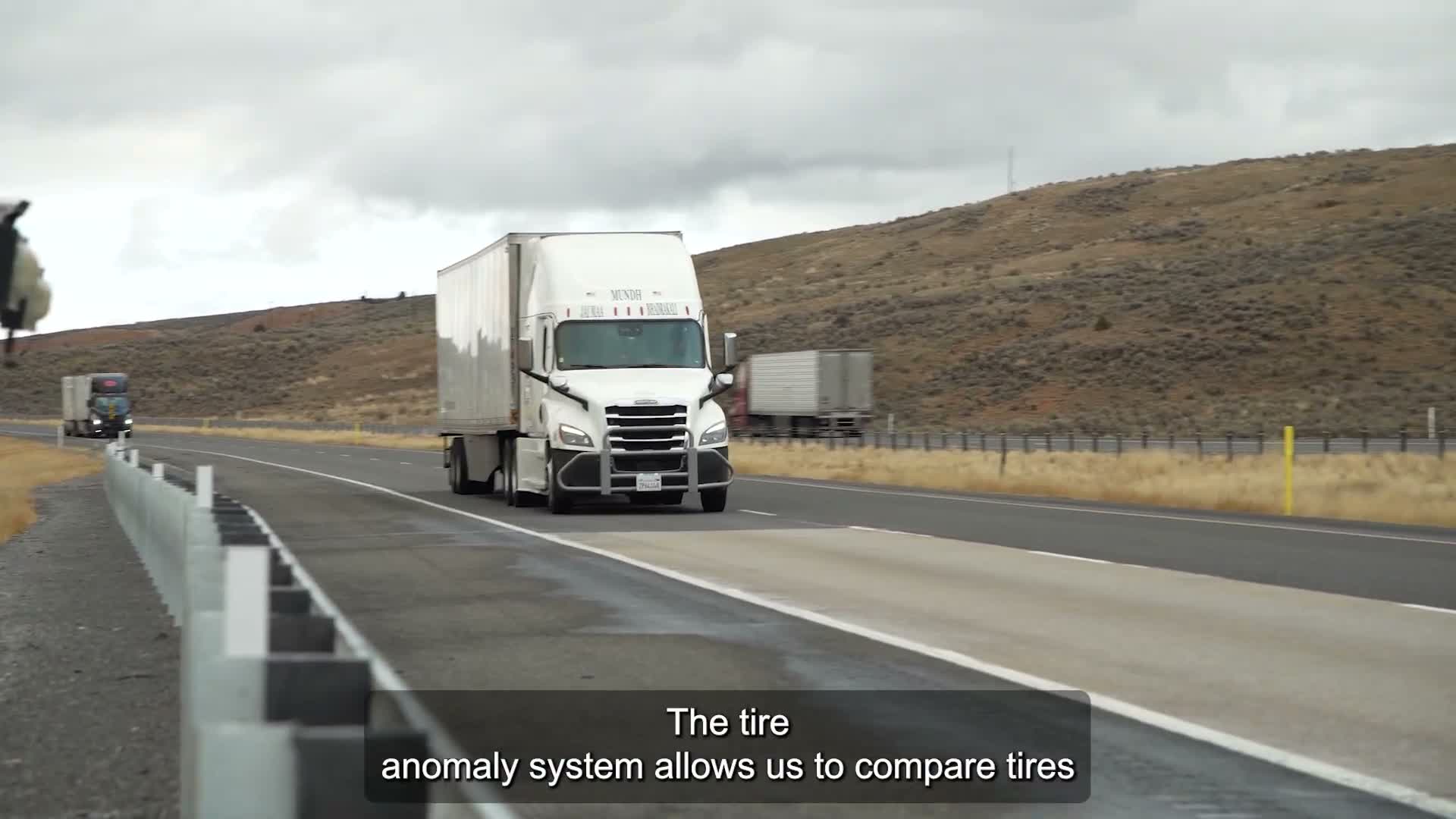
The presenters described how the tire-anomaly system compares a vehicle's tires using artificial intelligence and flags any tire that looks different from the others. "The tire anomaly system allows us to compare tires using an artificial intelligence," Speaker 1 said. The flag tells an agent which tire to check so staff can walk out and perform a physical inspection at the port of entry.
The speakers gave concrete examples of issues the system has identified. Speaker 2 said a tire that "looks totally fine" on approach was found to have a nail when pressed or struck: "There's a nail right there." The presenters said such embedded road debris can escape casual visual checks and later cause a dangerous failure on the highway.
The demonstration also covered internal tire problems. Speaker 1 explained that the system can detect early-stage tire separation beneath the tread that is "not visible or noticeable to the driver," allowing technicians to catch the problem while the vehicle is moving slowly.
On technical thresholds, Speaker 2 stated a tire "needs to be at least 55 PSI in that tire," giving a concrete pressure benchmark for inspections. The presenters characterized the detection tool as an additional safety measure: Speaker 2 said, "Really, the tire anomaly system has just become another tool" aimed at protecting commuting and commercial traffic.
No formal policy actions, regulatory citations, or agency names were specified in the transcript. The demonstration focused on the device's operational role in prompting on-the-spot inspections and preventing tire-related incidents.