Get Full Government Meeting Transcripts, Videos, & Alerts Forever!
Get email alerts on the Victim Services topic
No spam. Unsubscribe anytime.
Safer Path presents SART biennial report; commissioners acknowledge rising local exam access and service need
Summary
Safer Path executive director Rhonda Williamson told the Atascosa County Commissioners Court that the county’s Sexual Assault Response Team (SART) has increased adult survivors served from 20 in 2022 to 68 in 2025, linked in part to local forensic exam access; commissioners formally acknowledged the biennial report and were asked to continue support amid a recent $300,000 funding cut to assault services.
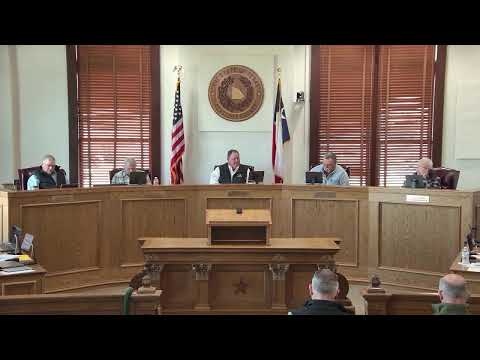
Rhonda Williamson, executive director of Safer Path, presented the Atascosa County Sexual Assault Response Team’s 2025 biennial report to the county commissioners court on Dec. 8 and asked the court to officially acknowledge the document and continue supporting the SART partnership.
Williamson said the SART was formed in December 2021 after state law required coordinated local response. She told the court that local access to Sexual Assault Nurse Examiner (SANE) services — available at Methodist Hospital Atascosa since November 2024 through the Texas Forensic Nurse Examiner Center for Nursing Excellence — has been a turning point. "In 2022 we served 20 adult sexual assault survivors at Safer Path... in 2025, we've served 68 adult survivors," Williamson said, describing the change as roughly a 300% increase over a four‑year period and attributing much of the rise to survivors having local exam access and clearer interagency response.
Williamson summarized case-tracking trends from county law enforcement: repeated instances of cases mislabeled as child cases, several unfounded determinations, instances of uncooperative victims, and a small number of cases progressing to prosecution or grand-jury review. She also said Safer Path experienced a funding cut in October 2025 of about $300,000 that she said targeted sexual‑assault services and reduced advocacy capacity by roughly 20 percent.
The presentation described steps the SART will take over the next two years: expand protocols to include the county attorney’s office, formalize procedures to call advocates first in adult sexual‑assault cases, conduct regular case briefs, create a survivor advisory council, and provide trauma‑informed interviewing training to partner agencies to reduce victim blaming.
Commissioner Gillespie moved to acknowledge and approve the report; Commissioner Cohen seconded, and the court voted to carry the motion. Several commissioners thanked Williamson and the SART partners in the audience. Williamson asked that the court file the documented report as required by state law and continue supporting the collaborative work.
The report and the SART protocol were provided to the court packet; Williamson invited commissioners to ask partner representatives in attendance for jurisdictional detail on any specific numbers.