Get Full Government Meeting Transcripts, Videos, & Alerts Forever!
Study: Carp removal helps vegetation and food web but not lakewide water quality
Summary
A Utah State University fish biologist presented monitoring (2009–2024) showing reduced carp biomass coincided with more shoreline plant species and stronger zooplankton and fish condition, but overall nutrient concentrations and submerged-vegetation densities have not declined.
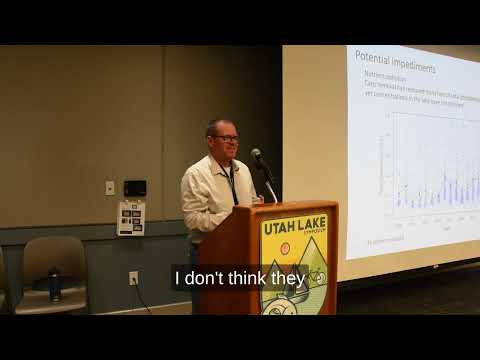
A Utah State University fish biologist presented long-term monitoring results showing that the program to remove common carp from Utah Lake has produced measurable ecological benefits — notably more shoreline vegetation species, greater zooplankton and insect prey, and improved body condition in June sucker and sport fish — but has not yet produced measurable improvements in lakewide water quality.
"We've also seen a positive response in the food web," the presenter said, reporting increases in preferred prey (zooplankton and aquatic insects) and fatter fish following reductions in carp biomass. The monitoring covers the period 2009 through 2024 and, according to the presenter, recorded the lowest carp biomass around 2017–2019 before a modest uptick in recent years.
The findings come from standardized shoreline and ecosystem sampling…
Already have an account? Log in
Subscribe to keep reading
Unlock the rest of this article — and every article on Citizen Portal.
- Unlimited articles
- AI-powered breakdowns of topics, speakers, decisions, and budgets
- Instant alerts when your location has a new meeting
- Follow topics and more locations
- 1,000 AI Insights / month, plus AI Chat