
McHenry County Board upholds denials of several solar project petitions after residents raise groundwater and health concerns
Get AI-powered insights, summaries, and transcripts
Subscribe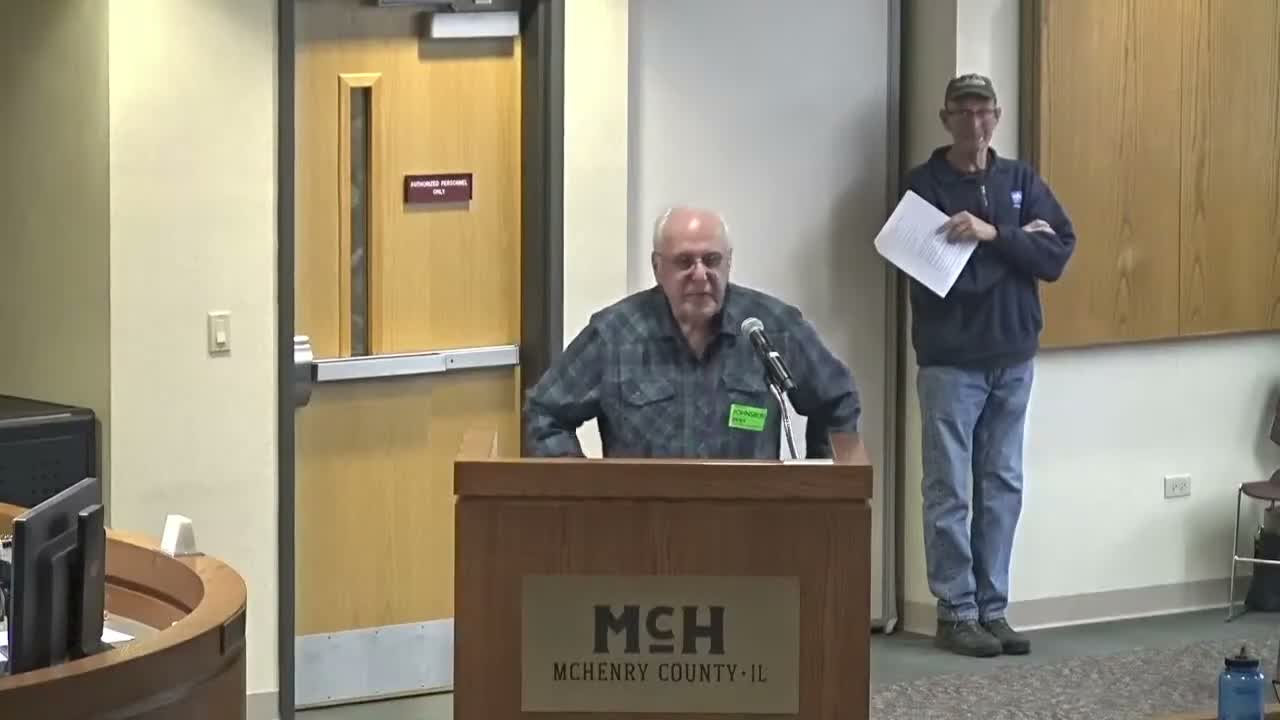
Summary
The McHenry County Board declined multiple proposed solar installations on Dec. 16 after hearing residents and experts raise concerns about groundwater, potential future battery storage and long‑term public‑health risks; developers said they will continue community outreach.
The McHenry County Board on Dec. 16 declined multiple petitions for commercial solar developments after extended public comment and discussion about groundwater protections and long‑term safety.
Board members debated whether certain petitions required a three‑quarter majority if a township formally objected, but staff said no formal township objection was on file for the contested item, so the board proceeded under a simple‑majority rule. At least one zoning petition recommended for denial by the Zoning Board of Appeals (ZBA) was ultimately denied by the board.
Why it matters: Residents said the stakes included drinking water and farmland protection. During public comment, Johnsburg residents and a former county water resources manager said the village’s groundwater is the sole source of water for their community and urged the board to prioritize public health. “You voted no to stand united with farmers, families, children, seniors, neighbors, and every person who depends on clean water, fertile farmland, and a healthy future,” resident Renee Weigert said, thanking the board for what she called a courageous choice.
Developers responded: Dylan Haber, identified as the lead developer for the Pebble and Water Locust projects, said the outcome was not what his company wanted but added, “Cultivate Power is very much committed to continuing to work within the community, with the local interest groups, and within the county government.”
Board and staff context: Members noted a scrivener’s error in the ordinance language on one variance (grindings versus asphalt surfacing) that changed how votes would be interpreted; staff advised on the correct voting semantics. Board members also discussed whether a township’s planning commission and comprehensive plan could trigger a higher voting threshold; staff said no formal objection was filed with the clerk that would trigger the three‑quarter threshold.
Public reaction and record: Speakers credited the board’s decision to listen to hundreds of public comments from a small village community and to weigh potential environmental and health risks above developer plans. The ZBA’s recommendation in at least one case was a negative recommendation to deny (7–0 as stated on the record). One member of the public quoted a tally he had recorded—13 against, 4 in favor—but staff and the clerk provided that the petition in question did not pass; the official rollcall tally for that specific item was not stated verbatim in the transcript.
What’s next: Developers said they will continue outreach; the board will proceed with related zoning and ordinance items separately and address conditions when motions and ordinance language are corrected.
(Reporting note: The transcript used the names 'Water Locust' and a separate reference to 'Lotus' by a commenter; the record indicates these refer to the contested commercial solar petitions heard this evening.)