
Council approves 2026 schedule, advances dozens of rezonings; mobile-home displacement and Mallard Creek projects draw sharp debate
Get AI-powered insights, summaries, and transcripts
Subscribe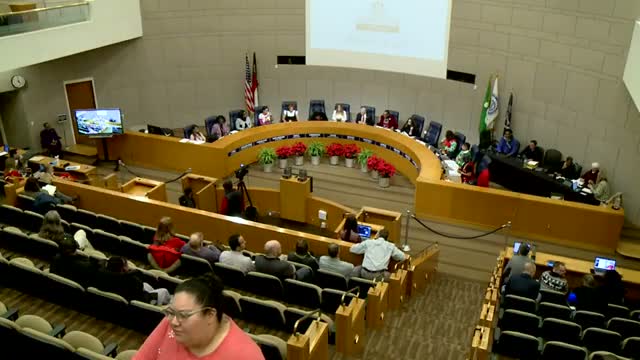
Summary
At its Dec. 15 zoning meeting, Charlotte City Council approved the 2026 meeting schedule, deferred multiple petitions to Jan. 20, approved numerous rezoning items on the consent agenda and separately, and voted on several contentious rezonings including approvals that include mitigation offers for displaced mobile-home residents and a council motion opposing a large Mallard Creek proposal.
CHARLOTTE — The Charlotte City Council’s zoning committee wrapped its last meeting of the year on Dec. 15 with a mix of routine business and heated land-use debates. The council approved a modified 2026 meeting schedule, deferred multiple petitions to Jan. 20 and acted on dozens of rezoning requests that will change how parts of the city develop.
The meeting opened with Chair Ed Driggs laying out hearing rules and the council approving the calendar on a unanimous voice vote. Clerk Kramer then read a long list of petitions that petitioners asked to defer; council voted to push those items to Jan. 20.
A block of rezoning petitions that met staff and zoning committee criteria moved on the consent agenda. Several items pulled for discussion were handled separately. Councilmember La Juana Mayfield asked staff to report back on whether previously approved rezonings were being built out; staff said an updated rezoning-history map and staff analysis will provide those project-tracking details in the new year.
On several contested items, council discussed mitigation and infrastructure. Councilwoman Renee Johnson, the District 4 representative, described a rezoning that will displace mobile-home residents and said the city has limited authority: “Mobile homes are treated as personal property and the underlying landowner has the legal right to sell this property,” she said, adding that her focus is on mitigation and advocacy for affected families. Staff and the developer told council the developer has offered financial assistance, rent relief and an extended move-out timeline; the petition was approved with the council adopting the zoning committee’s consistency statement.
Brookhill Investments’ large overlay petition prompted lengthy debate about timing and infrastructure. Staff said the project would require clarifying when sidewalks, street trees and other improvements are triggered through land-development permitting. The petitioner and staff agreed to language clarifying the timing of infrastructure improvements, and council approved the petition with that condition.
Traffic, schools and cumulative impacts dominated conversation about rezonings in the Mallard Creek corridor. Councilmember Renee Johnson said the corridor is approaching capacity, and she and other members asked staff for a cumulative-impact map showing pending and approved development and its transportation and school impacts. That Mallard Creek petition by Charter Properties (a large, multi-parcel request with up to hundreds of units and dozens of conditions) prompted a formal motion by Councilmember Johnson to oppose the petition; the motion was seconded and recorded as carried in the hearing.
Among other highlights: - Multiple consent items (rezoning petitions 4, 6, 9, 11 and 12) were approved together after council confirmed staff and zoning committee recommendations. - Item 8, a petition adding roughly 113 multifamily units, was approved with the council adopting the zoning committee’s consistency statement; the recorded vote included two opposed votes. - A high-turnout hearing for petition 2025030 (Triand Advisors, item 29) produced some of the most sustained public opposition on the night, focusing on traffic and whether the Outer West area plan should be finalized before a large rezoning there is approved. Neighbors argued approving the petition now would “predetermine the future” of the area; petitioners said they had reduced trip generation by removing a daycare from the plan and offered traffic mitigation steps.
Council adjourned after a brief, festive photo and seasonal remarks. Staff and council members said the many outstanding technical and infrastructure issues will carry into January, as several petitions require follow-up conditions or clearer language before final adoption.