
Central Falls council to send charter amendments — debate centers on bundled ballot language and term limits
Get AI-powered insights, summaries, and transcripts
Subscribe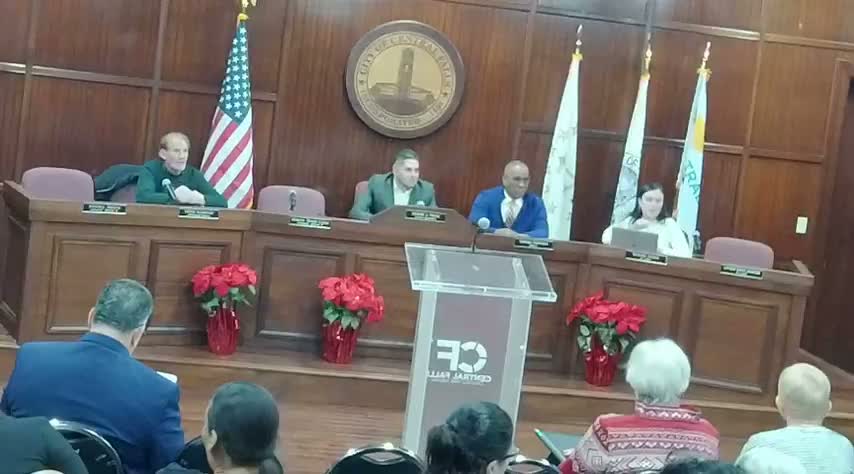
Summary
After hours of public comment and a Charter Review Commission briefing, the City Council approved a procedural amendment to split bundled charter questions that would close a term-limit loophole and set a 12-year lifetime limit; supporters said voters should decide, opponents called the wording log-rolling.
Dozens of residents and local organizations urged the Central Falls City Council on Dec. 1 to place a set of charter amendments on the November 2026 ballot, with public testimony sharply divided over whether the proposed language properly separates a reform to close a loophole from what critics call an extension of term limits.
"The residents of Central Falls deserve the opportunity to decide whether Mayor Rivera should continue her service beyond the second term," said Sergeant Nicholas DeCar, speaking for the Central Falls Police Union, which urged the council to allow voters to weigh in. "Leaders with her vision, integrity, and results are rare."
Barbara Silvis, presenting on behalf of the Charter Review Commission, described a months-long, page-by-page review and said the commission advanced four questions with strong majority support and substantial public input. "This is a process with multiple steps…ultimately, if approved, the voters will have the final word," Silvis said.
Council discussion focused on the first two proposed questions. One would remove a loophole in current language that allows officials to serve eight years, sit out a term, and serve another eight years; the other would set a 12-year lifetime limit. A member of the public told council the two items are distinct and that packaging them together amounts to log-rolling that "creates the illusion of a reform while concealing an entirely different result."
City Solicitor Jose explained that the commission's drafting treats term limits as a combined definition of number of years and whether service is consecutive. "The change that would go to the voters would say, instead of 8 break 8 break, total of 12 period full stop," Jose said, describing the intent to make the limit clear and transparent to voters.
At the council dais, a councilor moved to amend the resolution by splitting the bundled questions so voters would see separate items; a second was recorded. The motion passed on a roll-call vote, 5–1. Council President Bynum later cautioned that procedural constraints limit how the council may vote on individual questions but the motion to split the ballot language advanced procedural clarity for the public debate.
The council packet includes proposed amendments to specific charter sections (section 3-400, section 2-100, section 8-103, and section 4-700) that, if approved by voters, would change how term limits and appointments are worded and would expand the charter's ethics language to align with city and state standards.
Supporters framed the change as giving voters the power to choose continuity in leadership to complete long-term projects, while opponents cautioned that any change to term limits must be transparent and weighed against the risks of concentrated authority in a city with a history of bankruptcy and past corruption.
The Charter Review Commission recommended the four questions move forward to the ballot if approved by the council. The council's procedural vote to split the two contested questions was the most significant action the body took on the set of charter items during the meeting; the council did not adopt final ballot language at that same moment. The questions will return to the public record for further deliberation before appearing on the November 2026 ballot.