
MCPS strategic planning committee presses for realistic math targets, expands interventions
Get AI-powered insights, summaries, and transcripts
Subscribe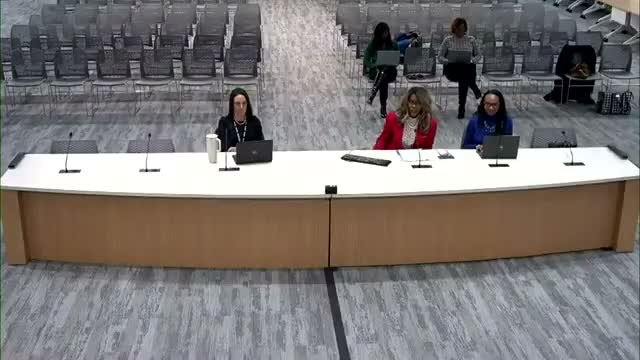
Summary
Montgomery County Public Schools staff outlined baseline math proficiency and quarter 1 trends and proposed phased, equity-centered target setting. Board members pressed for evidence, student counts, an intervention RFP, and broader family supports including IXL; no vote was taken.
Montgomery County Public Schools staff on Dec. 18 briefed the Strategic Planning Committee on baseline mathematics results and options for setting multi-year proficiency and growth targets, emphasizing equity and alignment with Maryland State Department of Education expectations.
Keisha Addison, director of shared accountability, told the committee the district must "set targets that are ambitious, attainable, and aligned to state expectations" and use baseline data to inform a phased approach toward the superintendent—s 2030 goal that all schools be four-star or higher. She said district scorecards show MCAP (Maryland Comprehensive Assessment Program) proficiency rates, MAP and required district-assessment results and that some middle-school grades remain areas of concern.
The presentation flagged uneven implementation of mathematics instruction in quarter 1 and recommended targeted, classroom-level supports. Dr. Stephanie Brandt (secondary mathematics strategies) described a continuous-improvement cycle tying classroom observations and district assessments to cross-functional teams (CFTs) that model instruction, provide coaching and guide professional learning. "These actions are designed to support teachers in strengthening lesson design, pacing, and the use of instructional materials aligned to grade-level standards," Brandt said.
Members pressed staff for concrete evidence and for numbers. "Is this baseline data even going to be useful or is it just something for the year and then next year we have to start over?" asked Brenda Wolf (District 5), noting state-standard changes. Board members asked staff to update slides to include how many students actually took each assessment so the community can interpret percentages.
Staff described targeted interventions and next steps: a planned pre-K–12 math intervention RFP modeled on a recent literacy procurement, increased use of small-group (tier 2) reteaching, an illustrative math curriculum observation tool, and deeper coaching tied to observation evidence. On family engagement, staff pointed to IXL use as a supplemental practice tool and offered to provide cost estimates and elementary-level access details.
Board members also questioned the cross-functional team model—s ability to scale and its evaluation. Staff said CFTs are in their first year, meet regularly to calibrate, and are being monitored with observation evidence and the district—s "kick up" monitoring tool; a formal ROI and impact analysis is expected at year—s end. "We're not yet at a place to say kind of what are those intentional things," Addison said, adding early promise but a need for ongoing evaluation.
The meeting closed with no formal actions. Staff agreed to return with follow-up materials including counts of students tested by assessment and grade, IXL cost/coverage at the elementary level, RFP timing and evaluation plans for CFTs.