
Johnson County commissioners unanimously approve two brief executive sessions to consult counsel on AG opinion
Get AI-powered insights, summaries, and transcripts
Subscribe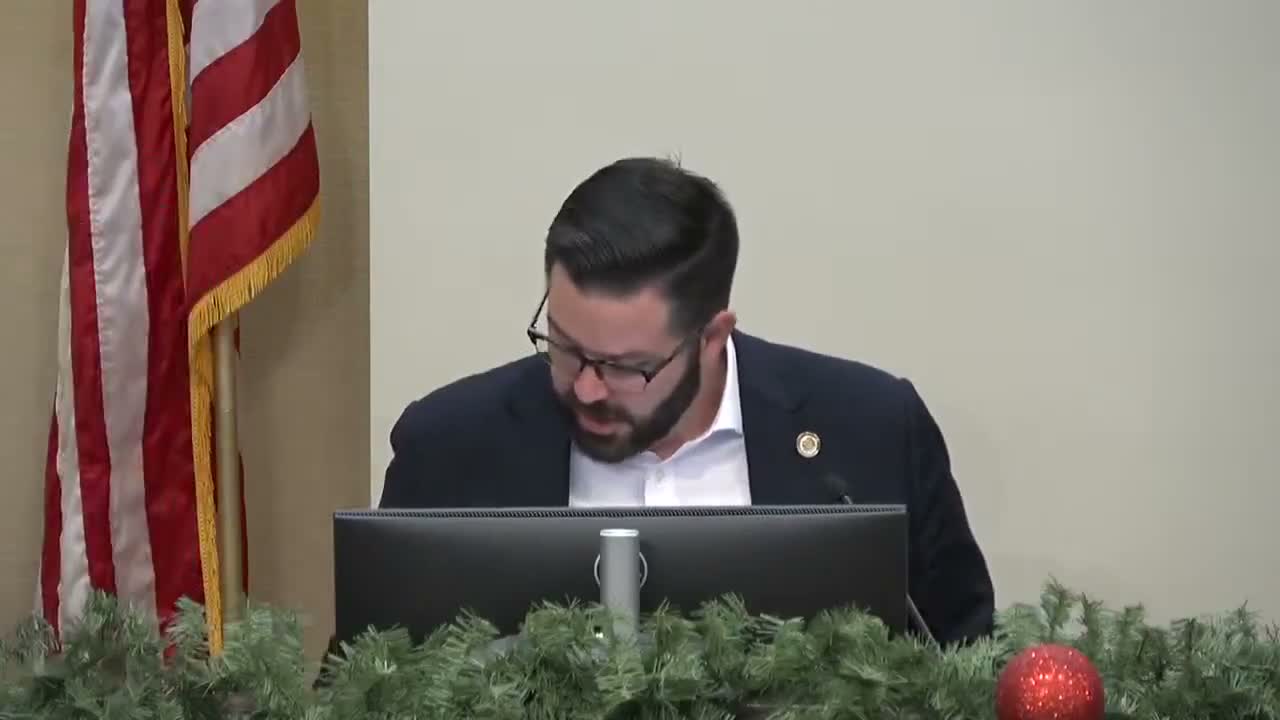
Summary
At a Dec. 17 special meeting, the Johnson County Board of County Commissioners voted unanimously to enter two executive sessions under KSA 75-4319(b)(2) to consult legal counsel regarding Attorney General Opinion No. 2025-013; no public action was taken and the meeting adjourned the same morning.
Chair Mike Kelly called a special meeting of the Johnson County Board of County Commissioners on Dec. 17, 2025, and the board immediately moved into executive session to consult legal counsel about a pending matter tied to Attorney General Opinion No. 2025-013.
“My name is Mike Kelly, the chair of the board of County commissioners for Johnson County, Kansas,” Kelly said at the start of the meeting. Commissioners recorded their presence and the chair confirmed a quorum.
Commissioner Hanslick moved that the board “recess its open meeting and convene an executive session at 8:08 a.m. for a total period of 30 minutes for the purpose under KSA 75-4319(b)(2) of consultation with legal counsel, which would be privileged in the attorney-client relationship to discuss pending litigation relating to Attorney General Opinion No. 2025-013,” and Commissioner Allen Brand seconded. The clerk called the roll; every commissioner voted in the affirmative and the chair announced, “That’s 7 in favor, none against.” The board recessed into executive session at the times specified in the motion.
The board returned to open session and Chair Kelly said, “No action’s being taken at this time.” Shortly thereafter, Commissioner Hanslick moved for an additional, short executive session—described in the meeting as an “additional 10 minutes” under the same statutory authority—naming the county manager, deputy county manager and the county’s chief legal counsel as attendees for the discussion; Allen Brand seconded. The motion again passed unanimously on a roll-call vote.
Following the second executive session the board reconvened, took no public action, and the chair adjourned the special meeting. Kelly closed by offering seasonal greetings: “Merry Christmas. Happy Hanukkah and Happy New Year.”
Why it matters: Kansas law permits local governments to hold closed sessions for attorney–client consultation in certain circumstances; the board cited KSA 75-4319(b)(2) and an Attorney General opinion number (2025-013) as the reason for the closed discussions. The transcript indicates the discussions were framed as consultation with counsel about pending litigation; the board did not announce any motions, decisions or changes to policy as a result of the executive sessions.
What the record shows: two formal motions to recess for executive sessions (first for 30 minutes beginning at 8:08 a.m.; then an additional 10 minutes to reconvene at about 8:49 a.m.), each moved by Commissioner Hanslick and seconded by Commissioner Allen Brand, and each approved on unanimous roll-call votes. The motions named the county manager, deputy county manager and chief legal counsel as participants in the private consultations. The clerk’s roll calls recorded all seven commissioners voting in favor both times.