Get Full Government Meeting Transcripts, Videos, & Alerts Forever!
Get email alerts on the Property Tax topic
No spam. Unsubscribe anytime.
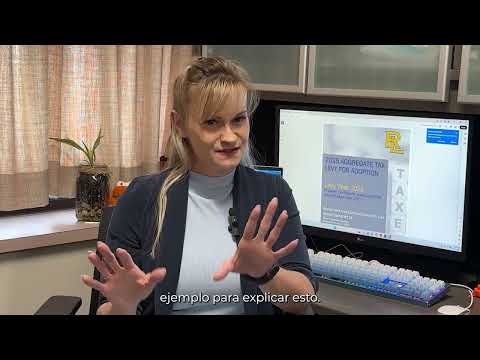
Round Lake CUSD 116 CFO explains how levy requests affect individual tax bills
Summary
T. A. M. Soule, chief financial officer for Round Lake CUSD 116, explains that whether a homeowner's taxes rise depends largely on how their property value changes relative to other district properties, not only on the district's levy request; Soule uses a two-property example and cites a Lake County 12.4% value estimate.
T. A. M. Soule, chief financial officer for Round Lake CUSD 116 (Round Lake Area Schools), said the key factor determining how a levy request shows up on a homeowner's bill is how that home's value changed compared with other homes in the district. "How does this translate to your tax bill?" Soule asked in the district's third Tax Levy explainer video.
Soule told viewers there are four main influences on what a homeowner pays: changes in a home's value relative to other properties in the district; appeals or reassessments that shift the tax burden; requests from other taxing bodies (village, fire department, library and similar jurisdictions); and a statutory cap he referred to in the video as the "P Veil law," which he said limits what the district can actually receive.
To illustrate, Soule used a simplified two-property example. If the district requests $10,000 from all properties and the tax base comprises a $100,000 property (Property A) and a $200,000 property (Property B), Property A represents 33% of the tax base and would pay $3,300 of the levy while Property B would pay $6,700. Soule described the distribution this way: "Think of all the properties in the district as one giant pie and your home's value is your slice of that pie."
He then walked through a hypothetical 2.9% levy increase, which would raise the district's total from $10,000 to $10,290. If Property A's market value doubled to $200,000 while Property B's value stayed the same, the two properties would split that $10,290 total 50/50 and Property A's tax payment would rise to $5,145 while Property B's payment would fall—showing that individual taxpayers can see differing effects even when the district's total levy is held within its permitted cap.
Soule cited a Lake County estimate that average home values in the district could increase about 12.4% this year and directed homeowners to check the Lake County "blue card" for their specific assessed value. He closed by pointing viewers to the district website for additional examples and explanation.
The video is instructional rather than a policy action: it does not change the levy request itself but explains how levy totals are allocated among taxpayers and how reassessments and other taxing bodies affect individual bills. Soule did not provide an official statutory citation for the cap he referenced, calling it the "P Veil law" in the video; the speaker did not specify an official statute name or citation.
Homeowners seeking further detail can review their Lake County blue card or consult the district website for the explainer and example worksheets.