
Columbia council approves first reading of CPWS rate action tied to proposed downstream intake after heated public hearing
Get AI-powered insights, summaries, and transcripts
Subscribe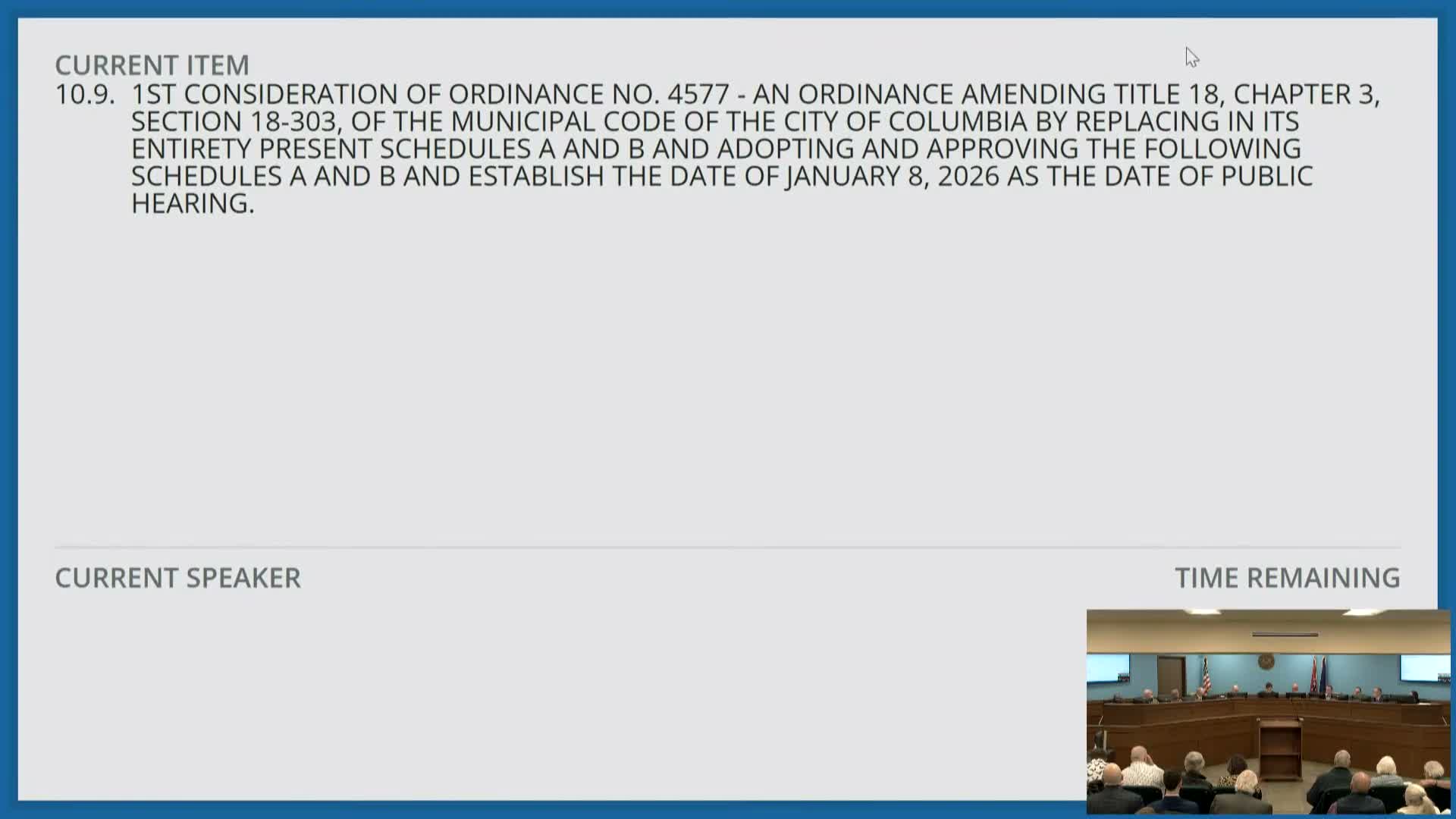
Summary
After hours of public testimony from residents, county officials and conservation groups urging delay or regionalization, the City of Columbia council approved on first consideration a rate/financing action tied to a proposed downstream intake and treatment project; the vote was divided 4–3 (three No votes recorded).
Columbia City Council voted on first consideration to approve a Columbia Power & Water System (CPWS) rate and financing action connected to a proposed downstream intake and treatment project estimated in planning materials at roughly $505 million–$520 million, after more than an hour of public comment and debate.
The council’s vote to approve the motion came after repeated calls from residents, municipal leaders and advocates to pause the proposal and pursue regional alternatives. Representative Scott Cipicchi urged the council to ‘‘pause and give us time to work at the state level’’ and questioned whether the plan was ‘‘the best use for half $1,000,000,000.’’ Resident Gabe Howard warned the proposal would shift costs onto long-time ratepayers and described the immediate rate impact as a ‘‘150% rate increase’’ referenced in public testimony.
Why it matters: CPWS officials and their partners told the council they need additional permitted capacity to meet long-term demand. CPWS representatives said the proposed intake and treatment project would add roughly 12 million gallons of capacity; the utility’s rate model and low-interest lending assumptions underlie the proposed ceiling rates presented to the council. Opponents argued the project’s scale, cost and the proposed pace risk affordability for fixed-income households and farmers, and said regional approaches (countywide water authority, pipelines from other sources) should be exhausted first.
What happened in the meeting: Dozens of residents and elected county officials spoke in opposition during the public comment period. Opponents’ central points included affordability (seniors and fixed‑income households), alternative supply options (HB&TS/Cumberland pipeline, regionalization), and environmental or legal concerns about a large intake on the Duck River. Supporters — including representatives from Spring Hill and some wholesale partners — said they have worked on long-term supply planning with CPWS and would continue to partner on solutions.
Council discussion centered on competing priorities: securing a long-term water supply versus the short-term affordability burden on current customers. The mayor and several council members noted the project has undergone state and federal permitting steps; others emphasized the need to consider the Duck River Water Planning Partnership’s regional study. The council ultimately approved the motion on first consideration with roll-call recorded as: McCullen — No; Huffman — No; Seacrest — Yes; Marshall — Yes; McKelvey — Yes; Vice Mayor McBroom — Yes; Mayor Mulder — No. The motion therefore passed.
Details and next steps: The action approved is a first‑reading / ceiling-rate authorization linked to a financing plan using low‑interest lending programs; final rates and financing details will return to council for further readings and implementation steps. Several speakers and elected county officials asked the council to defer consideration until the state-supported Duck River Water Planning Partnership completes a regional study expected in approximately nine months. CPWS staff said federal and state low-interest lending programs were being pursued and that modeled rate outcomes were provided in a CPWS FAQ and fact sheet for customers.
Quote selection: "Tonight, we're here because that warning was not heeded, and now the solution being placed before the people is a 150% rate increase on current rate payers," said Gabe Howard during public comments. "Is this the best use for half $1,000,000,000, especially of state and federal money that you're borrowing?" asked Representative Scott Cipicchi.
What to watch: The item passed on first consideration; further council readings, final rate calculations, and any formal financing commitments will be required before customer bills change. The Duck River Water Planning Partnership’s regional study and any alternative proposals remain the principal near‑term developments that could change the project’s scope or the council’s next vote.