Get Full Government Meeting Transcripts, Videos, & Alerts Forever!
Get email alerts on the Land Use Development topic
No spam. Unsubscribe anytime.
Elgin commission deadlocks on proposed 86,000‑sq‑ft temple and 33 townhomes at 890 Galt Blvd.; matter moves to City Council
Summary
On Dec. 8 the Elgin Planning & Zoning Commission split 3–3 on petitions 42‑25 and 43‑25 for an 86,000 sq ft temple, 536 parking spaces and 33 townhomes at 890 Galt Blvd. Staff recommended approval with conditions; neighbors raised traffic, safety and legal concerns tied to a 1967 consent decree; the tie means the project advances to City Council without a commission recommendation.
The Elgin Planning & Zoning Commission deadlocked on Dec. 8 over a revised plan for a Hindu temple and associated housing at 890 Galt Boulevard, sending the matter to the City Council without recommendation after a 3–3 vote.
City planning staff described the proposal as a planned development on a roughly 34‑acre parcel currently zoned general industrial with a community facility band to the north. The applicant, identified in the record as an Illinois nonprofit, seeks approval to construct an approximately 86,000‑square‑foot temple (peak height ~90 feet plus a 5‑foot flagpole), 536 parking spaces and 33 townhomes. Staff told commissioners the project was substantially reduced from an earlier 2024 proposal and that staff’s analysis concludes the submittal meets applicable standards for map amendments and planned developments; staff recommended approval subject to conditions in the packet.
Key facts presented at the hearing: staff said typical weekday services would draw 15–30 people, a typical Sunday evening service about 400 people, special Sunday services about 800, and the Hindu New Year event could have a total daily attendance up to about 2,900 with a single‑time peak of approximately 965. The building‑code maximum occupancy cited was 2,025. Staff’s parking analysis concluded the temple requires 518 spaces by ordinance and the project proposes 536, which satisfies the code requirement. The project includes a roughly 8‑acre private recreation/open space area and 33 townhomes, each modeled at about 2,165 square feet per unit.
Staff and the applicant emphasized changes since the prior 2024 petition: attorney Peter Bezos said the applicant voluntarily reduced the project’s footprint and consulted adjacent neighborhoods, and planner Chuck Hanlon described an increase in on‑site green/open space (from about 7 acres previously to about 21 acres under the revised plan) and a roughly 63 percent reduction in temple square footage compared with the earlier submittal.
Traffic engineering consultant Lynn Means told the commission the traffic and parking study used observed data from three comparable local temples, forecasted to a 2027 opening year and a 2032 five‑year horizon, and found typical weekday and Sunday operations would add about 1–4 percent of traffic at the US‑20/Lambert intersection — a change the consultant said is within ordinary day‑to‑day fluctuation — while recommending intersection improvements (restriping, turn‑lane adjustments and signal timing) and an event traffic/parking management plan for peak days that could include trained staff, volunteers and police detail.
Opposition from dozens of nearby homeowners dominated the public‑comment period. Speakers — including neighborhood association counsel Paul Ochmanek and multiple Oak Ridge, Sherwood Oaks and Castle Creek residents — objected on traffic, safety, emergency access, stormwater/snow removal and legal grounds. Several residents cited a 1967 Cook County Circuit Court consent decree that staff said currently prohibits residential uses on that parcel; staff noted the applicant would have to petition the court to amend or vacate the consent decree to implement residential components if the city approved the land‑use changes. Neighbors and attorneys pressed the commission to apply LaSalle factors (Illinois caselaw standards for rezoning) and raised doubts about traffic counts (some conducted in 2022) and holiday attendance assumptions.
Supporters and faith‑community representatives who spoke urged approval and defended religious‑institution siting in residential contexts. Attorney Jeremy Carlson and others questioned the comparators used in the traffic work (for example, BAPS in Bartlett), arguing gross interior square footage can mislead site‑intensity comparisons and that the applicant’s event‑management commitments are not enforceable zoning conditions.
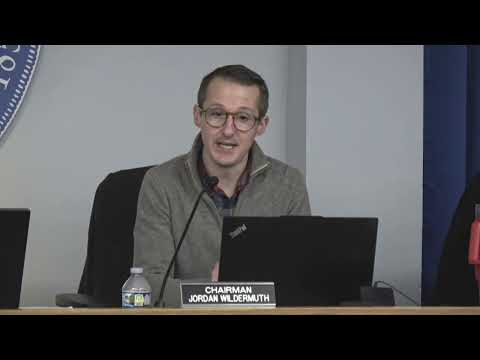
After extended deliberation Commissioner Jones moved to approve petitions 42‑25 and 43‑25 subject to the packet’s conditions; Commissioner Gasca seconded. Roll‑call votes were recorded as Jones (yes), Gasca (yes), Chair Wildermoen (yes), Commissioners Abueli (no), Olsen (no) and Ruble (no). The 3–3 tie failed for lack of a majority; staff stated the application will move to City Council without a recommendation from the Planning & Zoning Commission.
Key next steps identified at the hearing: if the City Council approves any zoning or map amendments, the applicant would still need to petition the Cook County court to amend or vacate the 1967 consent decree to allow residential uses; additionally, final engineering, landscaping, and detailed traffic/parking‑management plans would be reviewed at the final plat and building permit stages.