U.S. outlines phased Gaza plan: border security, Palestinian technocratic body and stabilization force
Summary
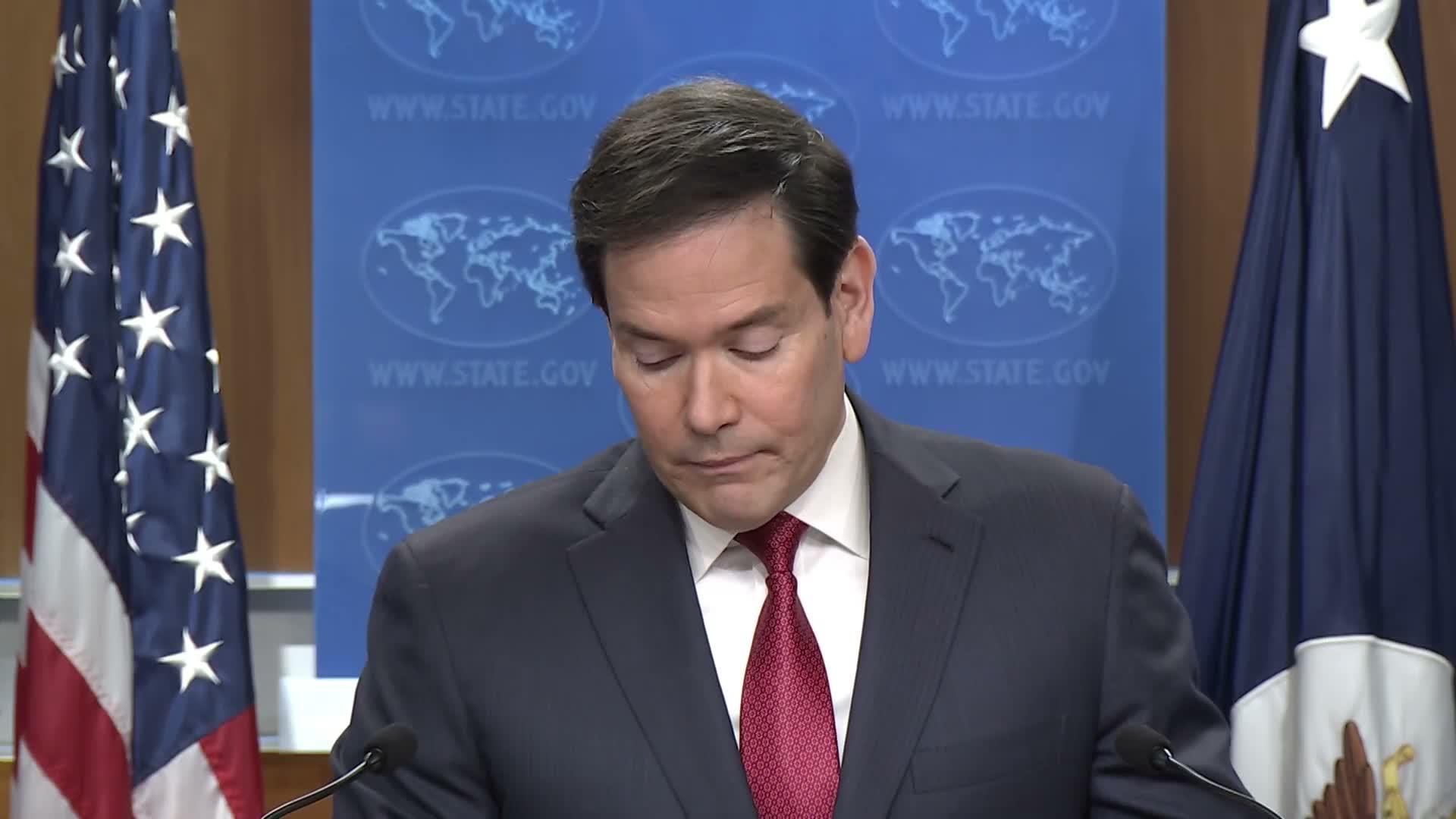
At a State Department press event, the secretary said the Gaza ceasefire’s next step is completing "phase 1"—establishing a border security component and a Palestinian technocratic body—before an international stabilization force and reconstruction can proceed.
The Secretary of State said the most urgent priority for Gaza is completing phase 1 of the ceasefire agreement, which he described as installation of a border-security mechanism and the establishment of a Palestinian technocratic body to provide daily governance.
He said those two steps are prerequisites for a stabilization force that could secure humanitarian corridors and allow large-scale reconstruction. "We want the board of peace in place and announced. Let's get the technocratic Palestinian group in place, and then let's get this stabilization force in place," he said.
The secretary warned that disarmament is a technical issue that requires agreement by both Israeli and Palestinian partners and must be worked out by technical teams, not at the podium. He urged donors to withhold major reconstruction pledges until security and governance arrangements are in place: "Who's going to invest in a peace if they believe another war is going to happen in two, three years?" he said.
He acknowledged the process will require sustained, day-to-day diplomatic and operational follow-up by U.S. intelligence, diplomatic and defense elements and by international partners, and that implementation timelines extend beyond any single administration. For now, he said the U.S. is focused on getting phase 1 completed quickly to enable the stabilization force and subsequent donor support.
The secretary declined to provide operational details about the stabilization force or to specify which countries will contribute troops, saying offers (for example from Pakistan) require clarified mandates, funding arrangements and rules of engagement before commitments are requested. He described the work as "peacemaking" that includes both political and technical steps and said the U.S. role is to convene and help countries identify the conditions necessary for a durable settlement.
Next procedural step: the secretary said State Department teams and international partners are working to finalize names for the Palestinian technocratic group and to announce the board of peace, after which details of the stabilization force and donor coordination will be firmed up.