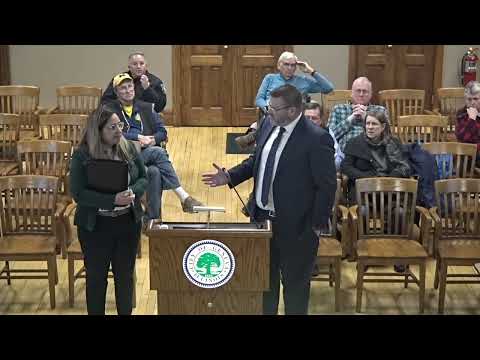
Geneva council approves sending about $58 million public-safety bond referendum to March ballot
Loading...
Summary
The Geneva City Council voted 11–0 to place Ordinance 2025‑31 on the March 2026 primary ballot, asking voters to approve general-obligation bonds to fund public‑safety facility improvements outlined in the Facilities Master Plan. Staff demonstrated an online tax‑impact calculator and bond counsel described issuance timing and debt limits.
The Geneva City Council voted unanimously to approve Ordinance 2025‑31, sending a general‑obligation bond question to the March 2026 primary ballot that would fund public‑safety facility improvements laid out in the city’s Facilities Master Plan.
City Administrator Alex Voigt and Director Milewski told the council the ballot question would permit the city to issue roughly $58 million in bonds for public‑safety projects, with the police facility identified as the single largest project in the plan. Alderperson Marks moved the measure and Alderperson Casarag seconded; a roll call produced 11 yes votes and no no votes.
The council heard a brief demonstration of a new online tax‑impact calculator that the city posted on its website (geneva.il.us → City Government → Facilities → Community Engagement). Director Milewski walked through inputs and exemptions residents should use, including entering the assessor’s full value (equalized assessed value is one‑third of fair market value). Milewski showed examples, including a $350,000 sample and a $450,000 homestead example with an illustrative annual impact around $431 under staff assumptions.
Bond counsel Kent Flores (Chapman and Cutler) answered questions about debt capacity and timing, saying the city would have a five‑year window after voter approval to issue bonds and that typical payback periods can run up to 20 years. Flores cited a legal debt limit of 8.625% of equalized assessed value (EAV) and explained that many existing city obligations are alternate‑revenue bonds that do not count against that limit; he also described options to issue the program in multiple series to match project scheduling and cash needs.
Council members asked staff to provide broader context on other taxing bodies’ bond retirements so residents can assess net tax‑bill impacts over time. Several members also pressed staff to clarify the breakdown of the bond program between a new police facility and other public‑safety projects.
During public comment, resident Bob Shiffler urged the council to state how much of the bond would be dedicated specifically to a police station, comparing the program’s scale to St. Charles’s $24.6 million police station and asking why the city’s program would be larger. City staff acknowledged the request and said the allocation details will be part of upcoming community engagement materials.
The council and staff said the city will continue to update the website with information about the Facilities Master Plan, the tax‑impact calculator and timeline next steps. If voters approve the referendum in March, the earliest bond issuance would likely occur the following summer depending on cash‑flow and project needs.