
Board member objects to investigatory process; board votes to enter executive session under Ohio law
Get AI-powered insights, summaries, and transcripts
Subscribe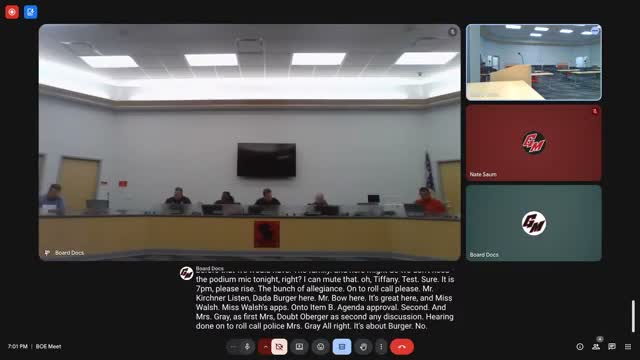
Summary
A Groveport Madison Schools board member publicly objected to investigations and alleged coercion ahead of a vote to enter executive session under Ohio Revised Code §121.22; the motion passed despite the dissent and the board later adjourned.
A board member raised objections and alleged coercion before the Groveport Madison Schools Board of Education voted to enter executive session to consider employment matters under Ohio Revised Code §121.22.
Board member Kirschner told colleagues he objected to initiating or continuing any investigation of a board member or administrator "without explicit board authorization in open session, a defined scope, a written engagement agreement, and properly certified funds," and said standing authorizations were "not sufficient." He also said he had been subjected to "repeated attempts to pressure or coerce me to sign documents, including in connection with executive session," and that he did not consent to such conduct.
The comment came during discussion of a staff recommendation that the board go into executive session to consider the employment of public employees. Staff cited ORC 121.22 as the basis for the proposed closed session. Kirschner warned that executive session use "does not by itself create confidentiality," and that documents discussed in private may remain public records and subject to disclosure.
Kirschner outlined multiple procedural concerns: he objected to reviewing, approving or executing agreements during executive session; he said regular district counsel appeared to have access to investigative materials that were not equally visible to all board members, and he objected to any blanket prohibition preventing board members from asking questions of a complainant. He also invoked board policy (recorded as "CBG" in the record) and said a prior motion to calendar evaluations for October had been voted down, leaving what he described as insufficient notice for a "highly significant" evaluation now proposed.
Other board members responded during the discussion, asking Kirschner for a copy of his statement and defending the board's existing evaluation process as consistent with past practice. One member said the treasurer's evaluation had been conducted in February as an example of prior procedure.
The board took a roll-call vote on the motion to enter executive session. Several members voted Aye and Kirschner voted No; the motion carried. The presiding officer announced the board entered executive session at 7:07 p.m.; the record later notes Kirschner left the meeting at 7:11. The board returned to open session and adjourned at 11:41 p.m.
The meeting record shows the substantive dispute centered on the proper use of executive session, access to investigative materials, and whether the board had followed its own policy and required notice before conducting significant employee evaluations. The board's formal action was limited to voting to enter executive session; no execution of agreements or final employment decisions were recorded in the public minutes provided.