
Chesterfield County planning committee reviews overhaul of subdivision rules, time limits and tax treatment of recorded lots
Get AI-powered insights, summaries, and transcripts
Subscribe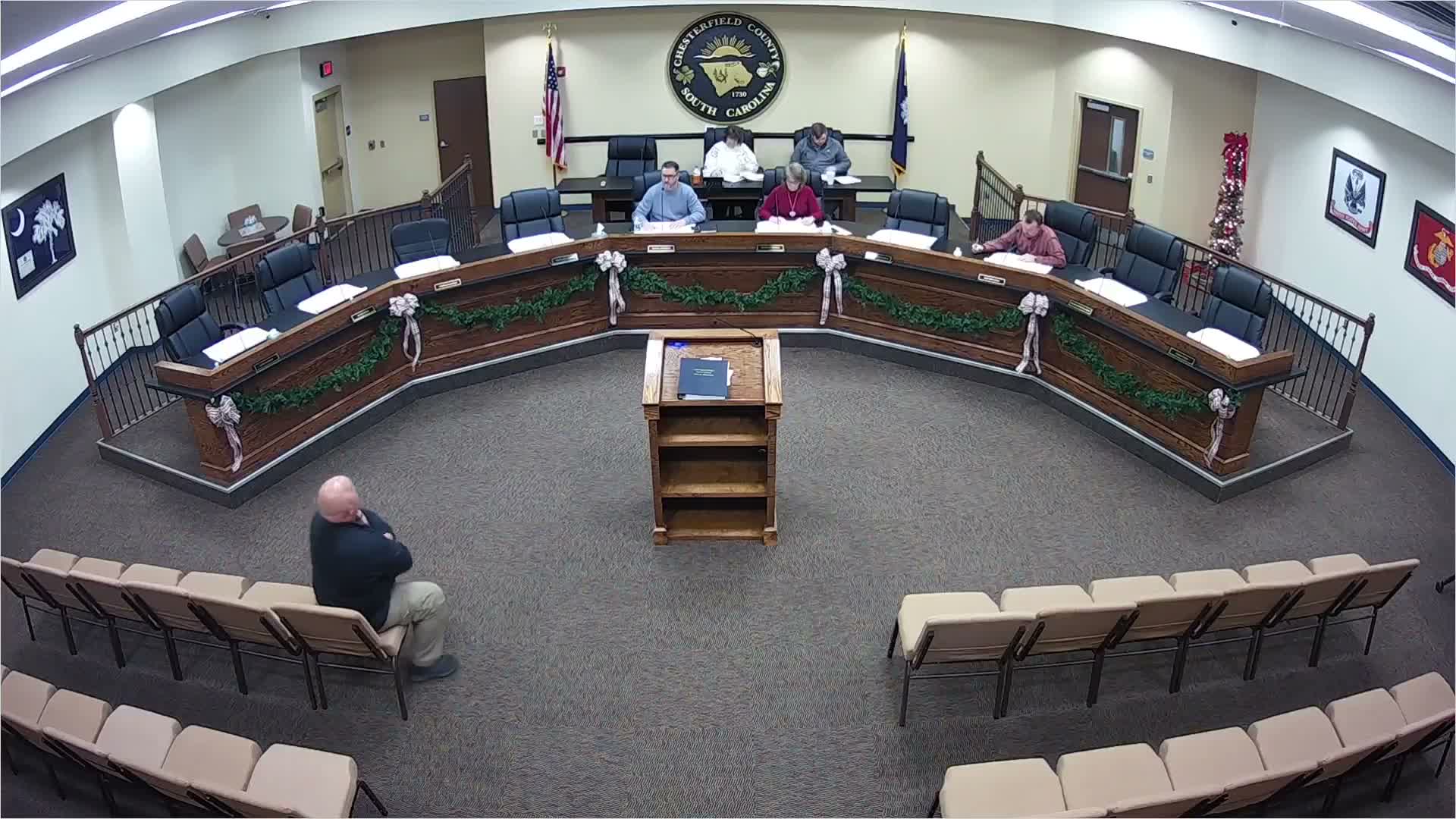
Summary
The committee reviewed proposed subdivision-ordinance revisions covering grandfathering, minor vs. major subdivision thresholds, road and flag-lot specifications, a proposed 2-year completion clock (plus one 12-month extension), and concerns that recorded lots remain taxed at agricultural rates, costing county revenue.
The Chesterfield County Planning and Zoning Committee spent its Dec. 10 meeting reviewing proposed changes to the county’s subdivision ordinance, focusing on grandfathering rules for previously approved parcels, clear thresholds between "minor" and "major" subdivisions, road and flag‑lot standards, time limits for final plats, and tax treatment of recorded lots.
Unidentified Speaker 3, who led the presentation, said heirs should be able to use inherited property without new restrictions but acknowledged that large inherited parcels (for example, those that could host solar farms) must meet the county’s guidelines. "If someone receives a piece of property from a deceased family member, I want them to be able to do with it what they wanna do," Unidentified Speaker 3 said.
On grandfathering, the committee debated whether parcels bought with the intention to subdivide before an ordinance change should be treated differently from parcels already recorded as subdivided. Some members argued that a recorded subdivision — even if undeveloped — should follow the rules in place at the time the plan was recorded; others said that allowing indefinite grandfathering creates revenue and enforcement problems. Unidentified Speaker 1 summarized the tension: if a subdivision plan is recorded but no work begins, should the owner still benefit from the old rules?
Road and access requirements were a central topic. Committee members discussed a two-tiered approach: allowing gravel roads for smaller "minor" subdivisions while holding larger "major" subdivisions to paved-road standards. The group discussed numerical thresholds (examples discussed in the meeting: 10–20 lots for minor; others proposed higher thresholds such as 30–40) and agreed the committee needs clear cutoffs so small local developers are not disadvantaged by requirements aimed at large-scale builders. Committee members also confirmed existing setbacks for houses (10 feet on the sides; 30 feet front, 25 feet rear) and noted fire-safety provisions that require fire‑retardant siding when buildings are very close.
The committee discussed flag-lot controls rather than eliminating them. An example ordinance from another county (cited in the meeting) uses a minimum flagpole width and maximum flagpole length to ensure safe access; Unidentified Speaker 3 said he will add flag-lot language to the draft for committee review.
Staff process and timing were clarified: staff proposed handling routine waivers and single extensions administratively to avoid repeated planning commission meetings for minor procedural matters. Unidentified Speaker 3 proposed a two‑year time limit from final plat approval for developers to complete required work, with a single 12‑month extension allowed (a maximum of three years), after which the developer would need to restart the process.
Taxation and assessor-process issues drew notable attention. Unidentified Speaker 3 and others said the county has recorded lots that are still taxed at agricultural rates, costing the county revenue. "We are losing a lot of revenue today because you've got all these subdivisions cut up that's owned [in GIS] and they're paying ag rates," Unidentified Speaker 3 said. Committee members discussed notifying landowners that recorded subdivided lots will be taxed at residential rates unless the parcel is reverted to a single aggregate parcel.
Mobile home parks and RV parks also featured in the discussion. Members noted current permits may not prevent future subdivision of park lots and raised concerns that many RV residents register vehicles elsewhere, meaning the county receives no property tax revenue on those units. The committee discussed options for capturing revenue through hookups, registration, or permit conditions but did not adopt specific changes.
Next steps: Unidentified Speaker 3 said PD COG (as referenced in the transcript) will produce a draft ordinance in January for committee review; the presenter asked the committee to review the draft in advance of a meeting so discussion time can be reserved for substantive feedback. No ordinance was adopted at the Dec. 10 meeting. The committee approved routine meeting items (agenda and minutes) and adjourned.
The meeting raised several follow-ups for staff: circulate the PD COG draft, draft flag-lot and minor/major definitions, clarify the process with the Register of Deeds and tax assessor’s office to correct improperly taxed recorded lots, and consider administrative rules for waivers and a two-year completion clock for final plats.
The committee adjourned without taking formal action on the ordinance revisions; the staff draft expected in January will be the committee’s next substantive step.