
State Rep. Kirk Hastings previews education priorities including testing, scheduling and teacher pipelines
Get AI-powered insights, summaries, and transcripts
Subscribe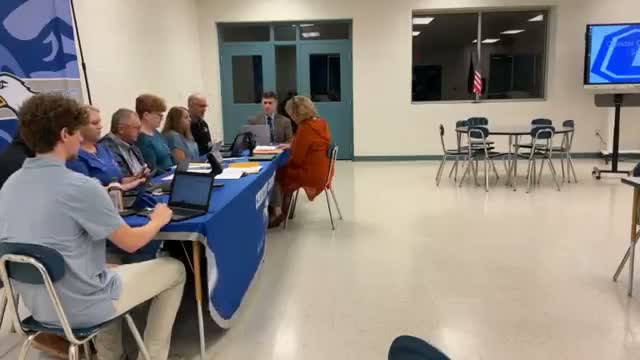
Summary
State Rep. Kirk Hastings visited the Chester County School Board to preview bills for the upcoming general assembly, urging pilots for hour‑based high‑school schedules, faster TCAP score turnaround from vendors and new two‑year pathways into teaching.
State Rep. Kirk Hastings, who represents Chester County and nearby districts, told the Chester County School Board on Nov. 14 that he will pursue a package of education changes in the next legislative session, focusing on testing timelines, schedule flexibility and teacher recruitment.
Hastings said the legislature is pushing to get TCAP scores and sample items to districts more quickly so local educators can act on results. "We're trying to get those scores out, trying to get sample questions out there a lot more often," he said, adding that faster reporting is a "huge priority" for the upcoming session.
Hastings also described a proposal to allow hour‑based calendars at the high‑school level as a pilot rather than an immediate statewide change. He said the idea is to give districts flexibility — including the option of a four‑day schedule or dedicated CTE and dual‑credit days — and to pilot changes at the high‑school level before wider rollout.
On accountability, Hastings urged that ACT scores and career‑readiness measures (including ACT WorkKeys) be allowed to count alongside EOC results in calculating achievement so that CTE success and ACT performance are reflected in public letter grades. "If a student does take the ACT WorkKeys...and it's better than their EOC, then that should be counted," he said.
Hastings also outlined a workforce proposal: create two‑year associate‑degree pathways at community colleges designed specifically to prepare teachers as an additional route into the profession. He said such pathways could broaden recruitment in rural areas.
The representative raised compensation disparities between counties as another recruitment issue. Citing different employer/employee insurance splits in neighboring districts, he said benefits differences can draw teachers away from rural schools.
Hastings closed by inviting constituents to contact his office for help on both education and non‑education matters, saying staff can assist with state department inquiries and voting‑rights concerns.
The board heard Hastings' remarks at the start of its regular meeting and did not take formal action on any of the proposals; Hastings presented them as priorities he intends to pursue at the state level.