
Bangor advisory committee forwards draft for safe outdoor space after unanimous vote
Get AI-powered insights, summaries, and transcripts
Subscribe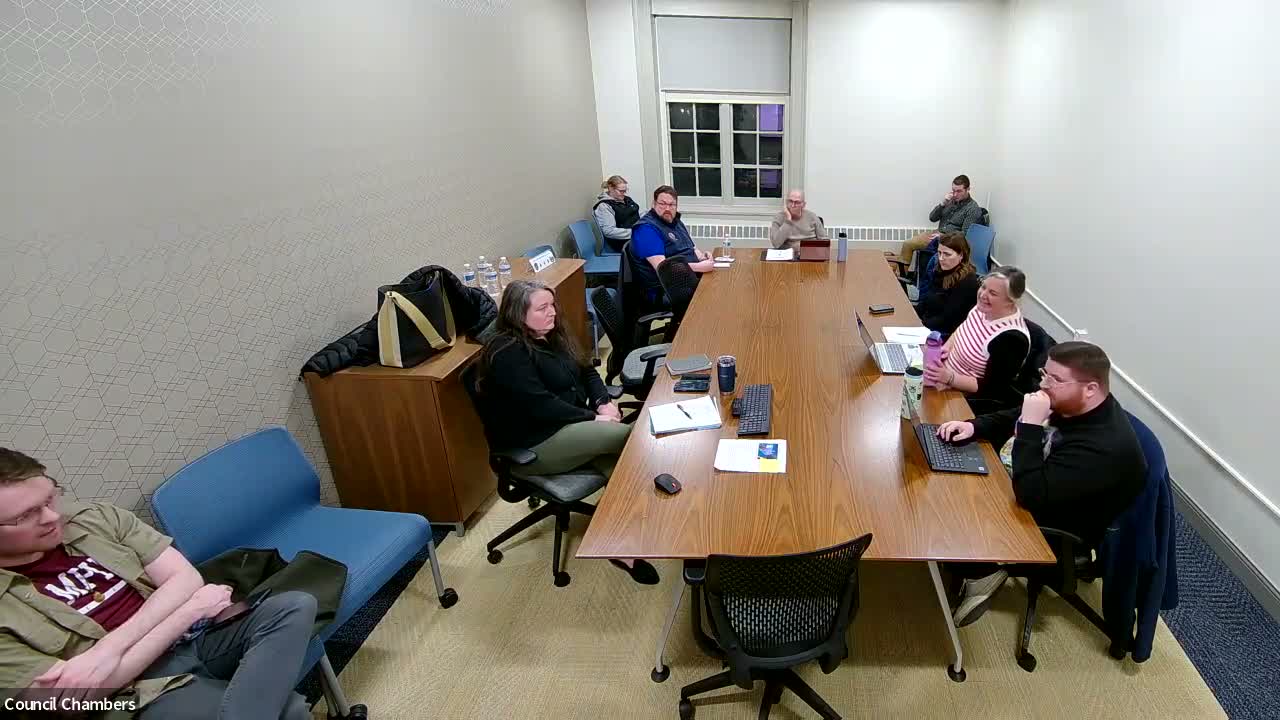
Summary
The committee voted unanimously to send a drafted legislative policy directive to city council urging a temporary safe outdoor space for people living in an encampment near Penobscot Plaza, after hearing updates from the city manager and public comments calling for alternatives to sweeps and shelter-only options.
Bangor’s advisory committee on bridal equity, inclusion, and human rights voted unanimously to forward an amended legislative policy directive to city council asking the city to establish a temporary safe outdoor space and related supports for people living in a railroad encampment near Penobscot Plaza.
The committee’s action on the draft — approved 7–0 after an amendment limiting staffing to "presence as needed" rather than 24/7 — follows public comment and a briefing from City Manager Carolyn Lear about an unfolding situation in which CSX Railroad indicated it no longer wished to permit camping on its property and has suggested it may seek police assistance to remove people.
The vote sends the committee’s advisory directive to the city clerk for placement on the council agenda; the committee does not have authority to enact policy but recommended that council direct staff to identify and resource a temporary site with basic services, allow residents to remain together where feasible, and coordinate nonprofits and service providers to reduce harm.
Lear told the committee that engineering and field checks found two distinct parcels at the site: CSX-owned trackside land and a narrow, city-owned strip near Washington Street. ‘‘When we followed up with the railroad, they were pretty affirmative that they no longer wished to permit individuals to camp on their property,’’ she said, adding that staff planned to be on site to try to avoid a traumatic, forcible removal. Lear said counts vary day to day but staff observed about 12 tents — roughly 12 to 20 people — with approximately six tents on railroad property and six on the city strip.
Public commenters urged urgent action. Brian Ray, who identified himself as a member of the appeals board and a live-feed program worker, told the committee, "I think the most important thing is to do everything in our heart to prevent the...process of getting to that level," urging coordination with county and state actors to avoid displacement to public reserve land. Resident Jay Beck said, "There has to be some sort of movement forward on a safe open space," arguing that warming centers and emergency shelters do not meet the needs of all residents, especially those with pets, couples, or sensory needs.
Committee members and staff discussed practical supports suggested by residents and service providers: temporary replacement tents and storage bins for personal property, phone or case-manager contact support, bus or community-passes, and exploring whether hotel vouchers were feasible; staff said most items appeared low-cost except hotel stays and that community groups might contribute. Lear also said state environmental staff had scheduled an inspection after reports of waste entering the river, a development that increased pressure for cleanup activity.
Members debated whether to send the draft immediately to full council or route it through committee review; some members urged placing the directive on the council agenda right away given a railroad timetable for removal, while others wanted clearer sign-offs from nonprofit partners and operational details. The committee amended the draft to clarify that staffing and support presence at a temporary site would be "available as needed" rather than continuous 24/7 supervision before approving the motion to send the document to council.
The advisory committee’s recommendation asks council to direct city staff to identify suitable temporary sites, ensure potable water and sanitation, coordinate service-provider access, and prioritize residents’ agency and continuity of community connections while units tied to vouchers become available. The committee chair said the amended directive and a list of interested community partners will be submitted electronically to the city clerk for council consideration at its next meeting.
The next procedural step is for council to consider the advisory directive; any operational decisions, funding allocations, or ordinance changes (including questions about the city’s no-camping ordinance) would require council action. The committee closed the meeting by thanking two outgoing members and adjourning.