Caldwell Council Unanimously Adopts Central Urban Renewal Plan to Fund North‑End Safety and Infrastructure
Loading...
Summary
After extensive presentations and public testimony, the City Council voted unanimously to adopt the Caldwell Central Urban Renewal Plan to direct tax‑increment financing toward sidewalks, lighting, park and roadway improvements in the North End and central neighborhoods.
Caldwell — The City Council voted unanimously Dec. 16 to adopt the Caldwell Central Urban Renewal Project Area Plan, a 20‑year proposal to marshal tax‑increment financing for prioritized public infrastructure and safety projects in central and north Caldwell.
The plan, introduced at a public hearing, was presented by Douglas Waterman of the Caldwell Urban Renewal Agency and supported by staff and consultants from ArchNexus and Zions Bank. Economic development director Steve Jenkins reviewed a multi‑year public engagement process and past resolutions identifying the area’s need for intervention. Consultant Michael Keith (Zions) presented financial scenarios that estimated roughly $21 million (3% growth) to $31 million (5% growth) in tax‑increment revenue over the life of the plan, while Rob McDonald (Public Works) provided a prioritized project list with rough cost estimates and phasing guidance.
Why it matters: city and URA leaders said the plan targets basic, visible needs—lighting, sidewalks, curb and gutter, irrigation upgrades and park improvements—aimed at making streets safer for children and reducing long‑standing disinvestment in the North End.
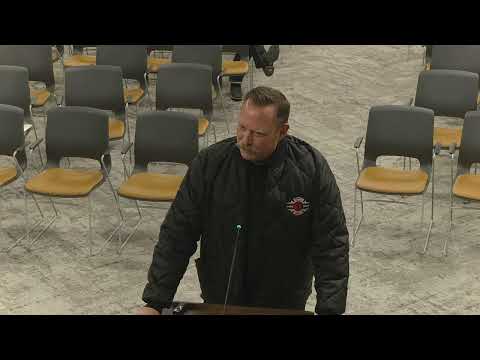
Public testimony was strongly in favor. Jim Porter, chairman of the Urban Renewal Agency, said the plan is modest and focused on safety and dignity: “It’s about transportation and safety … better streets, better lights,” he said. Residents, business owners and community groups emphasized recent pedestrian safety incidents involving students and urged immediate action. Miguel, a neighborhood resident and organizer, told the council: “Let’s do it today. I don’t want to wait another year.”
Concerns raised: several council members and speakers pressed staff and consultants on possible unintended consequences, including rising property values and gentrification, the balance of commercial versus residential development in the district, and how the city might cover any funding shortfalls if tax‑increment revenue does not cover the full project list. Consultants and staff said urban renewal itself does not directly raise tax rates for current property owners; rather, it freezes a base valuation for the district and captures subsequent increment to fund projects. Council members requested staff follow up on available grant funds and the possibility of city matching dollars.
Council action: Councilor Allgood moved to accept and approve the plan (recorded in the meeting packet as bill no. 76, ordinance no. 37‑28). The motion was seconded and the council approved it unanimously.
Next steps: adoption authorizes the URA to proceed with the urban renewal process, including project design and later individual project approvals by the URA and city council as revenues materialize. City staff and URA members said they will return to council with project‑level proposals, funding details and public‑engagement steps as individual projects are ready for design and construction.
Provenance: the plan presentation, public testimony and final motion were all part of the council’s Dec. 16 regular meeting; the hearing portion of the agenda began with the URA presentation and concluded with the council’s vote to adopt the plan.