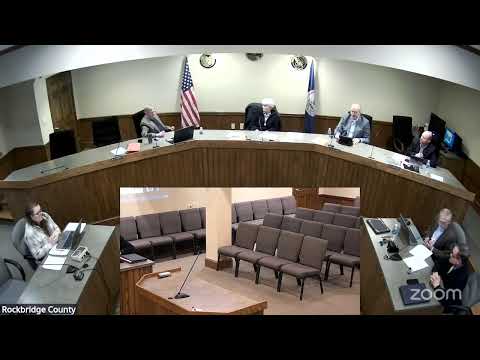
Board approves Bark Electric special-exception amendment after residents urge limits and buffering
Loading...
Summary
The board voted to approve Bark Electric Cooperative's special-exception amendment to add a building and remove the permit's time limit, with conditions on lighting and landscaping; residents and adjacent landowners urged time limits, greater buffers and proffers in case ownership changes.
The Rockbridge County Board of Supervisors approved Dec. 15 a planning-commission-recommended amendment to a special exception for Bark Electric Cooperative's Highland Bell laydown yard to allow construction of a building and to remove the previously stated period of validity, subject to conditions adopted from the planning commission.
Bark representatives said the application responds to prior planning concerns and seeks to move most material and equipment under cover in a warehouse to protect assets from weather. Bark staff said certain large items (poles) would remain outside, and estimated the construction timeline in the permit application at four years, making completion by Dec. 15, 2029, a condition of the permit.
Multiple nearby residents and landowners opposed indefinite time limits and permanent expansion. Steve Hart (Carstree/Cars Creek district) said the county's planning and zoning purposes require clarity on whether this is an appropriate permanent industrial use in agricultural zoning and noted repeated temporary-use extensions. A letter from Buddy Powers (read by Trip Alme) requested strict proffers if approval was granted, including limiting future exterior lighting controls and a proffer that the current plan be the final revision for 25 years. Bill Russell and other residents asked the county to address broader planning and the frequency of special exceptions.
County counsel explained the legal options: special-exception terms generally run with the land and apply to later owners, but the board may set a specific term (for example, 5 or 10 years) if it chooses; applying a time limit to only part of the special exception is not straightforward because the existing special exception covers multiple activities including solar fields and would likely require a single-term approach.
Board members debated whether to attach a multi-decade term; several said imposing a time limit on special exceptions broadly could set a precedent. After discussion and an additional motion, the board approved the amendment as presented with planning-commission conditions. The approval passed on a roll-call vote with the recorded members voting yes.