
Revere teachers’ executive committee withdraws from MCIEA; superintendent warns of lost supports and grant opportunities
Get AI-powered insights, summaries, and transcripts
Subscribe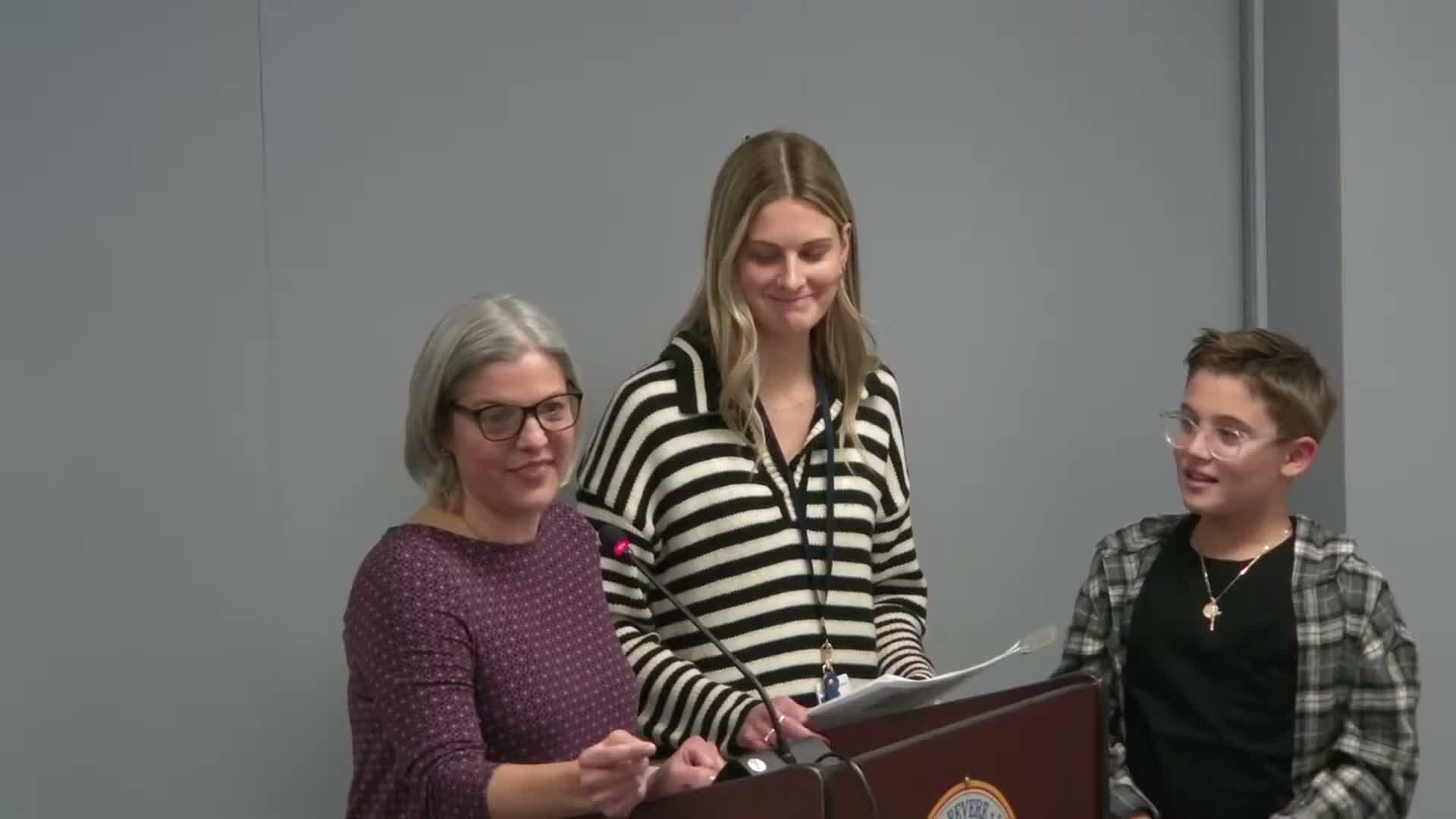
Summary
Superintendent Dr. Kelly said the Revere Teachers Association executive committee voted to withdraw the district from the Massachusetts Consortium for Innovative Educational Assessment (MCIEA/MCIA), a move the district says will end access to coaches, task banks and survey dashboards and could cost the district opportunities including a potential $890,000 multi-year grant application. Wayland School staff and students demonstrated the consortium’s deeper-learning tasks and portfolios earlier in the meeting.
Principal Shanley and Wayland School teachers presented examples of task-based, deeper-learning assessments developed through the Massachusetts Consortium for Innovative Educational Assessment (MCIEA), showing student portfolios and classroom tasks that staff say offer alternatives to traditional pen-and-paper tests.
"MCIA has kind of propelled us forward with deeper learning," Principal Shanley said, describing roughly a decade of district participation in the consortium. Lindsay Conrad, a grade-level teacher, said students find performance tasks "much more engaging" and that projects let diverse learners show mastery in ways conventional tests may not capture. Student Luciano Schille demonstrated a recent fourth-grade task and described why project-based work felt more hands-on.
Later in the superintendent’s report, Dr. Kelly told the committee he had been "very disappointed to hear late last week that our teachers union has elected to stop our work with the MCIEA." He said the decision came from an executive committee vote by the Revere Teachers Association and that the district was not given prior collaborative discussion on the change.
Kelly described immediate consequences: loss of the MCIEA task bank and the consortium’s survey/dashboard data and the coaches who met with Revere staff. He said re-establishing those services without the consortium would likely require contracting external vendors for surveys and data collection — a measure he estimated could cost well into five figures, citing a $50,000 student-survey estimate from a decade earlier and suggesting new services could reach six figures.
The superintendent also described a pending external grant effort: the district’s joint application with MCIEA and UMass Amherst to the Spencer Foundation, which Kelly said had been encouraged to reapply after a near-miss and that a successful application could have brought approximately $890,000 to the Revere Public Schools over five years, including about $120,000 earmarked for teacher stipends to support after-hours and evening engagement.
Kelly emphasized the district will continue to pursue deeper-learning work and portfolios internally, but acknowledged the loss of state-level collaboration, external coaches and some funding resources: "We're still gonna do this work," he said, "we just won't have the funding, the resources, and the partnerships that we've been able to enjoy through MCIA to date." He said MCIEA also provided a shared task bank used by multiple districts to validate and refine performance tasks.
Committee members and administrators pressed for clarity about the teacher association’s process. Kelly said the RTA president, Jane Chapin, communicated the executive committee's vote to the MCIEA executive director and that the local executive committee — not the full membership — made the decision. Members discussed whether the district could negotiate a path back into the consortium if the union leadership was willing to re-engage.
During the Wayland presentation, staff also underscored what would be lost: validated task items, coach support, and longitudinal survey data that principals said had been valuable for school improvement planning. Assistant Superintendent Peter Piazza (speaking as part of the administration) noted the high student and staff survey response rates when MCIEA administered the instruments and said losing that tool would be a setback for gathering reliable climate data.
The committee did not take a vote on the MCIEA partnership during the meeting. Members asked administration to explore whether interim arrangements or agreement changes could restore participation, and discussed next steps — including outreach to union leadership and further conversation with MCIEA leadership about potential middle-ground options.
The Wayland School demonstration and the subsequent discussion highlight both classroom-level enthusiasm for task-based assessment and the institutional impacts when a labor-management joint venture is interrupted.