Get Full Government Meeting Transcripts, Videos, & Alerts Forever!
Get email alerts on the Police Accountability topic
No spam. Unsubscribe anytime.
Carroll County oversight panels cite 'rudeness' as leading cause of complaints; ACC reports 20 cases over three months
Summary
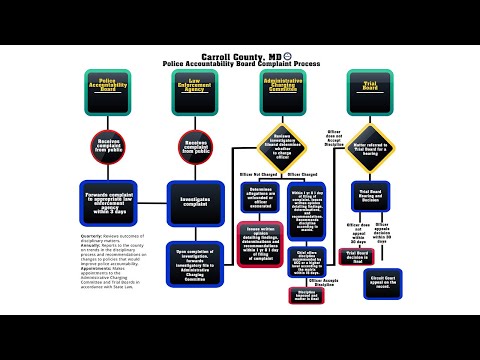
The ACC reported 20 cases from September through November, with two officers formally charged and many complaints dismissed as unfounded or exonerated; PAB members called for more outreach and quarterly data-sharing to reduce workload from non-substantive complaints.
The Carroll County Police Accountability Board (PAB) heard an ACC update that 20 cases were reported between September and November and that two officers were formally charged, one case remains pending, and many other complaints were dismissed as unfounded or exonerated.
Tom, an ACC representative, gave the quarterly highlights, saying: "This is over the last 3 months, September, October, and November. We had a total of 20 cases. And, out of the 20 cases, there were, 2 officers charged. And 1 of those cases is still pending." He limited detail on pending matters in the meeting.
The ACC provided a month-by-month breakdown: September included seven Westminster cases and one Taneytown case; October had seven cases (including four in Carroll County and one in Hampstead); November had five cases (two Carroll County, two Westminster, one Sykesville). The ACC noted one unusual out-of-state complaint that involved an off-duty officer working as a youth baseball coach; investigators concluded the officer acted appropriately in that instance.
Panel members and local police chiefs told the board the dominant trend driving many complaints is how officers come across during encounters, not clear policy violations. "The vast majority of [dismissed] complaints are because the officer was rude," a board member summarized, and Westminster’s chief said the department is identifying officers with repeat contacts and counseling them on communication and tact while noting those officers also have high contact volumes.
The PAB agreed to request statistics from law enforcement agencies (calls for service and traffic stops) to include in the PAB’s end-of-year report, to give context to complaint counts. The board also voted to receive the ACC log quarterly rather than only annually.
Next steps: the PAB will incorporate agency-supplied contact and enforcement data into a shorter annual report, continue outreach to civic groups to educate the public about what constitutes a formal complaint, and monitor the pending trial-board cases mentioned at the meeting. The meeting adjourned after a motion and second; the transcript did not record the names of the mover and seconder.