
Greene County council approves tax abatement for Worthington Solar after extended public hearing
Get AI-powered insights, summaries, and transcripts
Subscribe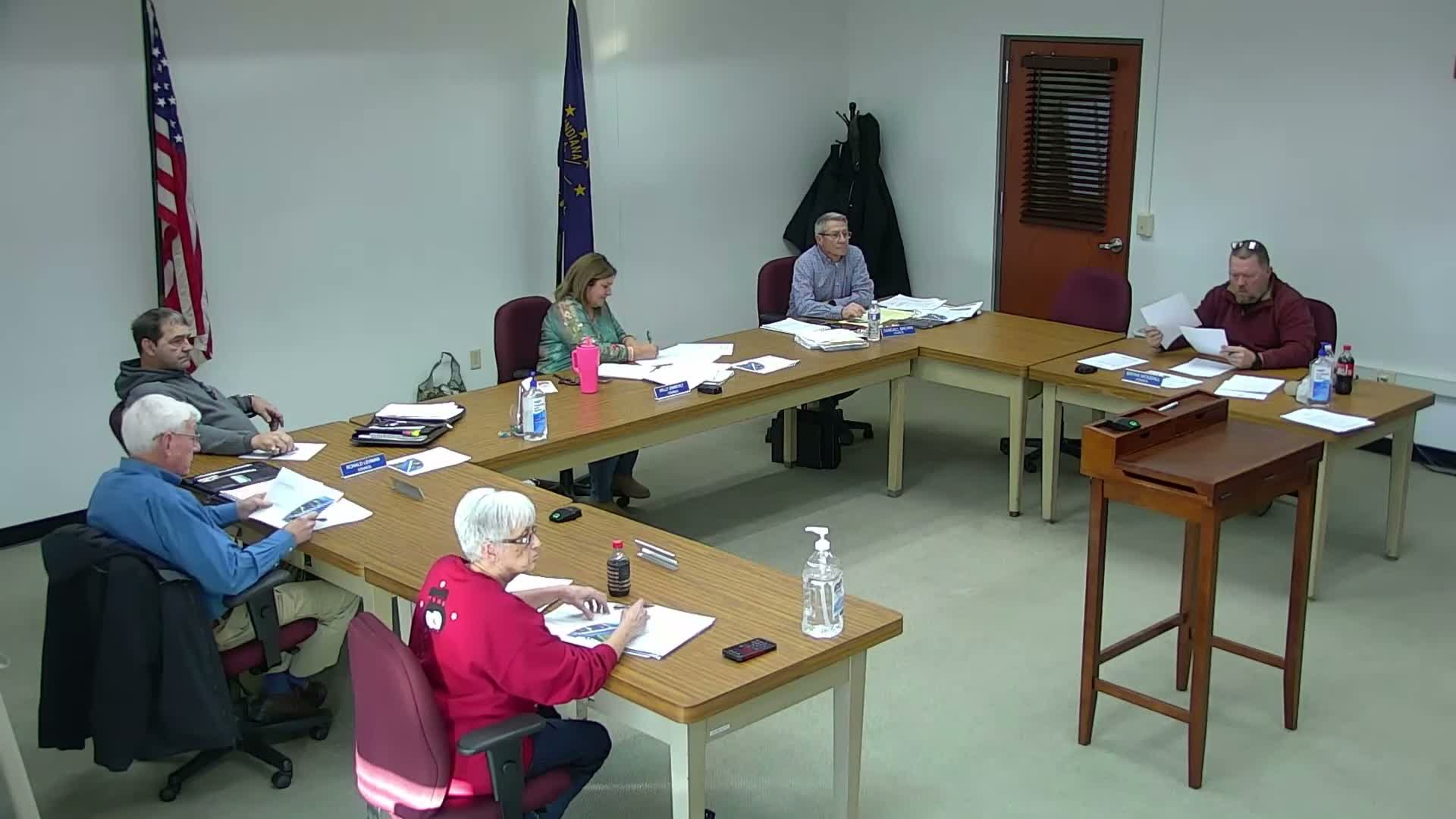
Summary
After a multi-hour public hearing that drew dozens of residents and detailed presentations from Geronimo Power, the Greene County Council voted to adopt a confirmatory resolution designating Worthington Solar as an economic revitalization area and granting a 10-year personal-property tax abatement.
Geronimo Power presented its Worthington Solar project to the Greene County Council and residents on Dec. 21, then secured council approval of a confirmatory resolution that designates the proposed site as an economic revitalization area and grants a 10-year abatement on business personal property. The project footprint was presented as about 1,600 acres with roughly 800 acres proposed for solar panels; company representatives said construction negotiations would continue with a goal of beginning work in 2027 and commercial production in the late 2020s.
The presentation was led by Ben Adamich of Geronimo Power, who identified the company as a long-running U.S. developer recently acquired by Brookfield Asset Management. Adamich told the council the company guarantees a minimum capital investment and described tax and payment terms; he said the county cannot abate state-prescribed real-property solar base rates and that the proposed abatement would apply to business personal property and improvements. Adamich stated a guaranteed minimum capital investment of $142,500,000. The transcript also contains an earlier numerical reference that reads as $102,500,000; Geronimo later described the EDA payment package as $2,500,000 over 10 years and said it offers $250 per megawatt per year in charitable contributions — the record includes those differing figures as presented at the hearing.
Residents voiced a mixture of support and concern during the public comment period. Supporters and participating landowners said the company had negotiated protections in lease contracts, would pay lease revenue to landowners and could provide steady tax revenue and limited local economic benefit. Opponents and other residents raised environmental and health concerns, asking whether panels or panel components could leach heavy metals or PFAS into groundwater, whether proprietary components were made abroad, and who would bear cleanup costs if an operator abandoned the site. Several speakers said they were worried about short-term construction jobs and long-term decommissioning responsibility; one resident urged the council to read Senate Bill 3327 (cited by a member of the public) that addresses farmland protections.
Adamich and developer staff responded in detail: they said they have a supply agreement with First Solar that manufactures panels in Perrysburg, Ohio; their design does not use concrete foundations for modules; they have not observed leaching issues on their other U.S. projects; they plan a road-use agreement, baseline road surveys and repair obligations as part of the economic development agreement; and they carry liability insurance and contract terms with landowners to address decommissioning and site restoration.
Council members debated whether the county should request an increased share of the company's proposed economic development payments for local schools. A motion by Randall to ask Geronimo to increase EDA payments to $300,000 per year for 10 years, with $50,000 annually earmarked for the White River Valley School Corporation, was seconded and put to a roll call. The roll call produced an even split (three yes, three no) and the motion to request the increase failed.
The council then adopted the confirmatory resolution authorizing the designation and abatement. The resolution passage followed a roll-call vote in which multiple members voted in favor and the motion carried. The council chair announced the resolution approved for the county. The confirmed arrangement, as presented to the council, will: (a) leave real property subject to the state solar base rate set by the Department of Local Government Finance, (b) abate business personal property and improvements for the period described in the economic development agreement, and (c) include a road-use exhibit and EDA payments described in the proposed agreement.
Next steps identified at the meeting included finalizing the economic development agreement terms (including any EDA carve-outs for the school district) and executing road-use and lease documents. The council set a special follow-up timeline for resolving outstanding contract details with the developer prior to any construction commitments.
Votes and motions described in this article are recorded in the council transcript and were taken in public session. Where the transcript records differing numeric statements about investment or payment amounts, this article reports each figure as the speaker presented it at the hearing rather than reconciling inconsistencies.
The council recessed briefly after the vote and then continued routine county business later in the meeting.