Get Full Government Meeting Transcripts, Videos, & Alerts Forever!
Get email alerts on the Criminal Justice topic
No spam. Unsubscribe anytime.
Becker County highlights early success of pretrial supervision program and F5 peer‑support partnership
Summary
County officials reported the first year of a pretrial supervision program serving 67 clients and an early partnership with F5 Project peer‑support services that leaders said has quickly connected dozens of people to treatment and kept many out of jail.
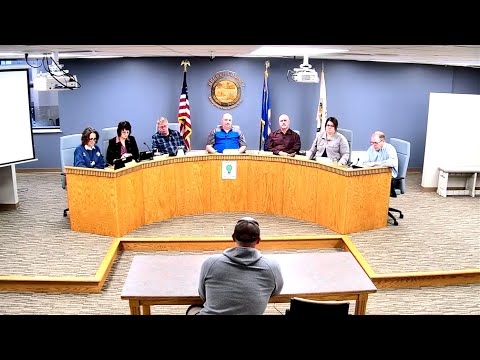
Becker County on Tuesday reviewed the first full year of a newly launched pretrial supervision program and heard testimonials about a related peer‑support partnership with the F5 Project that commissioners said is already showing measurable results.
Brian, who leads the county’s supervision effort, told the board the program, launched last November, has served 67 clients across 81 cases and generated roughly 5,267 days of community supervision. "If every one of those 67 clients were in jail," he said, "the per diem...would equal an unrealized cost savings of about $316,000." He emphasized that the figure is an estimate of avoided jail costs, not new revenue to the county.
The county described outcomes as high: staff reported a 92 percent successful completion rate for people while on pretrial supervision. Commissioners asked for context about prior practice and whether clients would otherwise have been jailed; Brian and staff clarified that the local jurisdiction previously had no formal pretrial supervision program and that some people placed on pretrial would otherwise have faced incarceration.
The board also heard from the F5 Project, a peer‑run recovery and reentry provider operating under an opioid settlement‑funded contract. Adam Martin, co‑founder of F5 Project, described bringing formerly incarcerated people into peer roles and said the organization quickly produced referrals and support services. "I started going to the jails and talking to the guys," Martin said, explaining the program’s origins and its emphasis on lived experience.
Probation officer Joe Peterson gave a concrete example of the program’s effect: he recounted a client who, without the peer intervention, he believed likely would have been returned to custody, but who instead engaged with treatment and is "doing amazingly well right now." Peterson and other probation staff said F5’s peer staff provide time‑intensive, relationship‑building contact — simple acts such as taking a walk with a client — that probation officers lack capacity to deliver.
County leaders credited opioid settlement dollars for accelerating the partnership, and asked staff to continue tracking recidivism and outcomes longitudinally. The board did not take any formal vote related to the program at the meeting; staff said they will return with follow‑up data in a year to present two full years of outcomes.
Next steps: county staff will continue monitoring pretrial metrics, report back to the board at the one‑year follow‑up, and maintain the F5 partnership under the current funding and oversight arrangement.