Get Full Government Meeting Transcripts, Videos, & Alerts Forever!
Get email alerts on the Rezoning topic
No spam. Unsubscribe anytime.
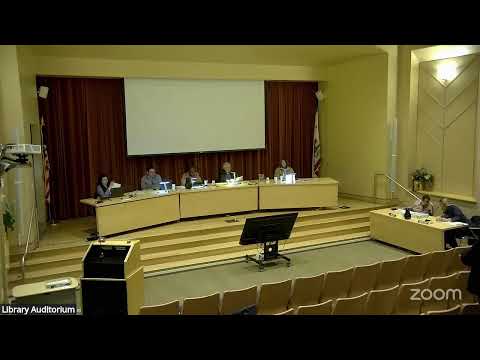
Orinda Planning Commission recommends rezoning of 23 Alta Rinda Road to allow multifamily housing; 3-1 vote
Summary
The Orinda Planning Commission voted 3-1 on Nov. 25, 2025 to recommend the City Council change 23 Alta Rinda Road from office to Downtown General zoning, allowing mixed-use and multifamily development; opponents warned the change could worsen evacuation risk, and the council will consider the recommendation next.
The Orinda Planning Commission voted 3-1 on Nov. 25 to recommend that the City Council re-designate 23 Alta Rinda Road from Business and Professional Office/Downtown Office to Downtown General and rezone the parcel to DG, a change that would allow mixed-use and multifamily residential development.
The recommendation — embodied in Planning Commission Resolution 25-07 — asks the council to find the proposal consistent with the certified Plan Orinda revised final environmental impact report (EIR), adopt CEQA findings and a statement of overriding considerations, and adopt an ordinance changing the zoning map. The commission also agreed to remove a sentence referencing the rescinded Downtown Precise Plan from the findings before forwarding the item to council.
Christine Thompson, principal planner for the City of Orinda, told the commission the 0.6-acre parcel is included in the area studied by the Plan Orinda EIR (certified March 2025) and that the staff consistency analysis concluded no supplemental environmental review was required under CEQA (guidelines section 15168(c)). Thompson said DG zoning would allow a minimum of 20 and a maximum of 25 dwelling units per acre, and that any specific development proposal would later undergo project-level review with more detailed analyses and mitigation.
The applicants, Brian Griggs and Jeff Stone, said they were only seeking rezoning, not approval of a particular project. "We are not here seeking approval of the project. We are here asking for a rezoning of our property," Griggs said, adding that any future project would be subject to design review, traffic study and fire‑district review.
One nearby resident, long-time downtown planning participant Nick Warnoff, urged the commission to reject the recommendation, saying the certified EIR found that adding housing downtown would create "a significant and unavoidable adverse impact on emergency evacuation." "This is literally a life or death issue," Warnoff said, and he argued the parcel was not needed to meet the city's state-mandated housing targets.
Applicant Griggs disputed that the rezoning would worsen evacuation risk, saying the EIR's wildfire and evacuation findings were programmatic for downtown as a whole and that a future project would use evacuation-modeling software and fire-district review to determine site-specific impacts. He also said residential uses can produce fewer peak-hour vehicle trips than some office or medical uses on the parcel.
Commission debate centered on tradeoffs between meeting housing obligations and unresolved wildfire/evacuation concerns. Some commissioners described 23 Alta Rinda as among the more suitable downtown sites because of its access to multiple road directions and proximity to regional transit; others said they would prefer more progress on mitigation measures before adding more downtown housing. Commissioners also noted that objective downtown design standards would apply to any future proposal.
The motion to recommend the General Plan amendment and the zoning change passed on a roll-call vote, 3 to 1. The commission's action is a recommendation to the City Council; the council may adopt, modify, defer or reject the rezoning. An appeal of the commission's decision must be filed in writing with the planning department within 10 calendar days, staff said.
If the council approves the rezoning, the property owner would be eligible to submit a separate development application; that application would be subject to project-level CEQA review, fire-district and traffic studies, public hearings and design review before any construction approvals were granted.