
Developers revise Pabst Farms plan to add owner‑occupied homes; council signals cautious support to proceed
Get AI-powered insights, summaries, and transcripts
Subscribe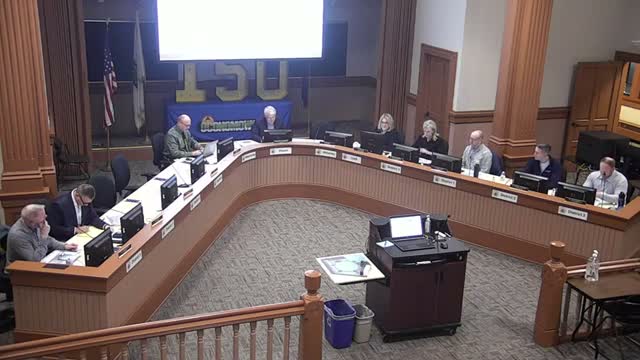
Summary
Developers presented a revised mixed‑life plan for the final Pabst Farms parcels, adding single‑family lots, condos and green space while seeking council direction to proceed; aldermen praised design changes but many expressed concern the project’s rental units could alter the city’s single‑family/multifamily ratio without offsetting single‑family supply.
Developers of the proposed Pabst Farms mixed‑use project returned to the City of Oconomowoc on Dec. 16 with a substantially revised concept that shifts the plan toward more owner‑occupied housing, expanded green space and a retail‑anchored town center.
At a Committee of the Whole presentation, Brian Bell of Pabst Farms Development said the team is “in the middle of this MOU process” and asked council for a directional response on whether to continue to detailed design, rezoning and negotiation of developer agreements. The development team, led by Scott Yauch (Cobalt Partners), said the project would proceed through a PD overlay and developer agreement to limit undesirable uses and protect long‑term value.
Why it matters: City staff estimated the roughly 106‑acre parcel currently yields about $255,102 in annual city property tax revenue (city portion), and aldermen repeatedly framed the choice as one between allowing by‑right industrial/logistics development or enabling a mixed‑life town center that would bring retail, new rooftops and civic space. Retail advisors from Mid America Real Estate argued the commercial square footage proposed is sized to market demand and uses tools such as anchor studies and drive‑time data to identify potential national retailers.
What changed: Designers said much of a previously proposed ‘single‑family attached’ band was replaced by conventional single‑family lots (roughly 30–35 acres) and that the housing portion now spans roughly 72–77 acres of the project. Architect Matt Rink described a central commons and pedestrian networks connecting the Lake Country Trail to storefronts and residences, saying the green spaces “knit together the entire development” and help support both walkability and retail foot traffic.
Housing and phasing: Developers clarified the residential program and phasing multiple times in response to council questions. They described a mix that includes owner‑occupied single‑family lots, about a dozen owner‑occupied condos counted in Oconomowoc, and multifamily rental buildings that would be built by absorption (developers said typical buildings would be in the 120–180 unit range). On unit counts the team cited a total scheme in the high hundreds across both municipality and the adjacent Village of Summit; numbers for the Oconomowoc portion include roughly 42–68 single‑family lots (dependent on lot size) and a small number of condos.
Council reaction and outstanding issues: Several aldermen praised the team for converting large portions of the plan to ownership housing and for adding below‑grade parking and forest trails. Alderman Spiegelberg said the new approach “fulfills a need” for small, affordable single‑family homes while preserving mixed‑use retail. Other council members said the project is a big improvement from the version presented two weeks earlier, which some described as mostly rental and politically untenable.
But a recurring concern was the city’s single‑family versus multifamily ratio. Councilors noted that, because the municipality counts approved multifamily in its ratio calculations as soon as the council approves them, adding several hundred rental units would lower the single‑family share unless the city also approves a large number of single‑family homes elsewhere. Police and fire chiefs said service impacts appear manageable over a 5–7 year buildout with incremental staffing adjustments; Police Chief Bowen cautioned that long‑term impacts depend on building design and safety standards.
Next steps: Developers asked for a signal to continue. The council did not take a formal vote on rezoning or incentives but most members signaled conditional support to advance the proposal to the next phase and to return with updated plans, financial tools (including potential TIF), and community listening sessions; a few members stated they remain opposed or want substantially more owner‑occupied units. The project team said it will return with more detailed architecture, potential TIF analysis and formal rezoning requests if the council wants them to proceed.
The council’s direction was procedural rather than a formal approval; public hearings and subsequent ordinance actions would be required before any zoning change or binding development agreement is adopted.