Get Full Government Meeting Transcripts, Videos, & Alerts Forever!
Get email alerts on the Workplace Training topic
No spam. Unsubscribe anytime.
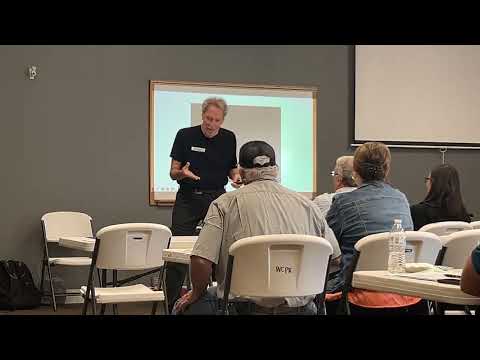
Wasatch County holds employee "Lunch and Learn" on expectations, difficult conversations and delegation
Summary
Wasatch County hosted a staff lunch-and-learn led by presenter Andrew Sanderbeck that focused on clarifying job expectations, conducting performance conversations, creating action plans and delegation strategies to improve workplace accountability and follow-up.
Wasatch County invited employees to a "Lunch and Learn" leadership session led by Andrew Sanderbeck, owner of the People Connect Institute, who focused on concrete tools for supervisors to set clear expectations, document performance conversations and delegate work effectively.
Sanderbeck opened by asking managers to check that job descriptions and expectations are current and understood, recommending a written "what/why" prep form and a follow-up action plan that records tasks, timelines, resources and potential barriers. "If it's important enough, you'll make time," he said, urging leaders to schedule brief regular check-ins rather than avoid difficult conversations.
The session emphasized ownership: Sanderbeck encouraged supervisors to have employees contribute to written plans so they take responsibility for follow-through. He recommended specific documentation practices and said consistent follow-up makes coaching meaningful rather than just talk. "Stop trying. Just do it," he said when urging concrete commitments and measurable steps.
Sanderbeck also discussed diagnosing performance issues: confirm whether an employee understands expectations, has necessary resources, is capable (training vs. management), or simply does not want the work. He advised managers to identify the underlying need behind behavior — "behind every behavior is a need" — and to pursue compassionate but clear conversations when nonwork pressures affect performance.
Delegation was a major topic. Sanderbeck introduced a 10-level delegation framework, from exact directions to full decision authority, and urged managers to view delegation as a long-term investment: initial training time can produce net time savings after several weeks. He said unclear expectations are the leading cause of delegation failure and recommended making results, deadlines and communication responsibilities explicit.
The presentation included research-based coaching concepts (Carol Dweck’s growth mindset) and practical examples from Sanderbeck’s experience with corporate clients. Participants used a "learning and application" worksheet during the session and shared key takeaways, including "more documentation," "more conversations," and stronger delegation structure.
Host remarks included logistical notes (facility use by Parks, a reminder about free family park passes for Wasatch County employees) and an announcement of a follow-up training on supervisory roles. The session was recorded for later reference but staff noted upload issues to the county's connect system.
The session ends with an invitation for attendees to email the presenter for follow-up and a reminder of a related upcoming training on distinguishing supervisor, manager and director responsibilities.