Get Full Government Meeting Transcripts, Videos, & Alerts Forever!
Get email alerts on the Workforce Development topic
No spam. Unsubscribe anytime.
Wasatch County staff attend leadership training on 'soul, heart, mind' framework
Summary
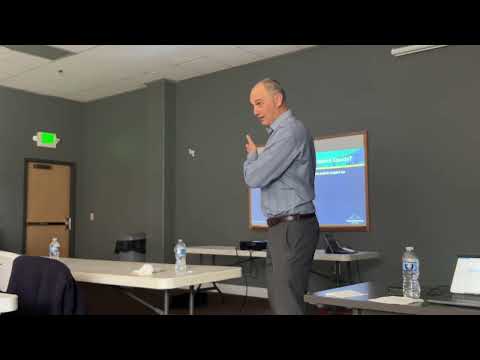
Wasatch County hosted an internal leadership workshop where a presenter outlined a three-part leadership framework — soul (morality), heart (relationships), and mind (operations) — and led staff through case studies on timekeeping, onboarding, and interdepartmental coordination.
A presenter (Speaker 1) led Wasatch County staff through a leadership workshop emphasizing that leadership is "the ability to influence people" and that leadership is a form of work anyone can perform, not just a position. The session focused on three pillars—what the presenter called the soul, heart, and mind of leadership—and included group case studies on workplace conduct, new-employee integration and cross-department coordination.
The presenter opened by asking participants what organizations exist to do and stressed that "organizations should create value" for stakeholders, including citizens and employees. Using a neighborhood storm anecdote, the presenter illustrated small-scale, informal leadership: neighbors self-organized, brought tools and cleared a fallen tree in about 40 minutes, producing tangible value for the homeowner and the neighborhood.
The "soul" section framed leadership as a moral responsibility to "do what's right because it's right even when it's hard," urging leaders to establish concrete values and to enforce them when necessary. The presenter said that when values are only "on the wall" and not practiced, people laugh and organizational culture deteriorates.
On the "heart" of leadership the presenter introduced a "LIVE" framework—Love (attention and acceptance), Inspiration (connection to purpose), Vitality (personal energy and health), and Expression (voice and contribution). Participants said they respected leaders who "get their hands dirty" and emphasized teaching and mentorship as ways to build trust.
The session included three case studies used in small-group exercises. In the first, workers on a maintenance crew reportedly clocked in and then took one to two hours to reach worksites. Group recommendations included clarifying expectations with supervisors, communicating company-wide norms so the expectation isn’t limited to one manager, and addressing root causes such as pay or unclear guidance. The presenter warned that continued inaction can lead to organizational "entropy" and said that time-theft can be perceived as "stealing" or "fraudulent" if not addressed.
The second case involved a newer employee, identified in the exercise as Rachel, who proposed automating routine paperwork. Participants advised managers to solicit Rachel’s perspective, set clear objectives and timelines, explain contextual constraints that led to current processes, and help her build credibility with peers before scaling the change.
On the operational "mind" of leadership, the presenter urged staff to "initiate, mobilize and empower"—identify problems, build vision, form teams and provide resources (noting time and a working computer among key needs). For a scenario in which departments operated in silos, participants recommended cross-functional meetings, shared vision statements and regular collaboration to reduce duplication and provide consistent customer experiences.
In closing, Speaker 6 encouraged staff to review the county’s value statements on County Connect and the presenter offered to share slides with staff. The session ended with practical next steps: managers were advised to clarify expectations, foster relationship-building for new staff, and set regular cross-department communication channels. No formal policy changes, motions or votes were recorded during the session.
What happens next: presenters said they would distribute the slides and encouraged managers to apply the soul/heart/mind framework in unit-level meetings and to prioritize communication and follow-up.