DRMS outlines steps to implement state auditor recommendations for the Mine Subsidence Protection Program
Summary
DRMS reported progress on the state auditor’s recommendations for the Mine Subsidence Protection Program, including a tiered inspection approach to cut contractor costs, planned MOU updates with OSMRE, and evaluation of an actuarial study and non‑engineering contractor options to improve program sustainability.
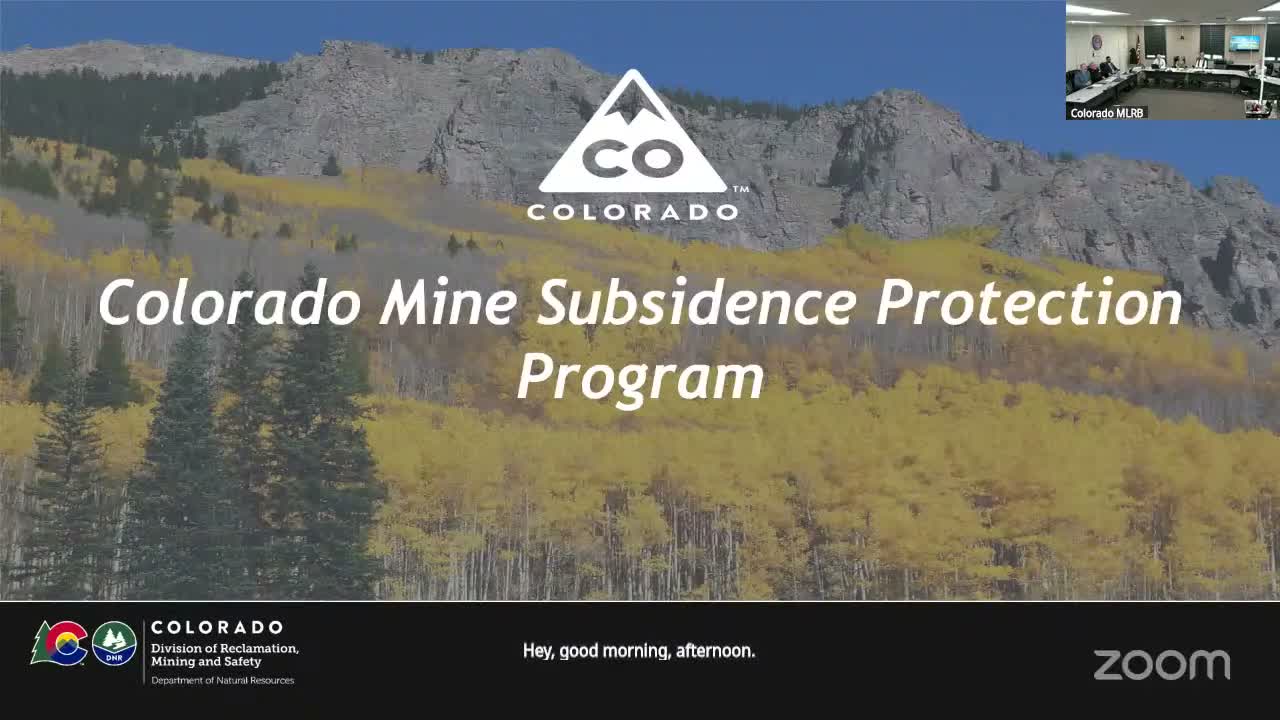
DRMS staff told the Mined Land Reclamation Board Dec. 17 they are implementing recommendations from the state auditor’s review of the Mine Subsidence Protection Program (MSPP) and pursuing cost‑saving measures designed to sustain the Colorado Coal Mine Subsidence Trust Fund.
Deb (MSPP program lead) said staff have engaged with the Office of Surface Mining Reclamation and Enforcement (OSMRE) to update federal grant agreements and the program’s plan of operations, though OSMRE resource constraints make firm timelines uncertain. To reduce contractor costs, DRMS has implemented a tiered inspection approach: high‑detail engineering inspections will be limited to homes in known high and severe subsidence risk areas, and a streamlined enrollment inspection is now used for lower‑risk homes — a change staff estimate has already saved roughly $600 per inspection.
DRMS is soliciting cost estimates from non‑engineering firms to perform initial enrollment inspections under a tightly specified form and guidance the division developed with its engineering contractor (Tetra Tech). Deb said staff plan to keep Tetra Tech for claim investigations and subsurface work while using lower‑cost vendors for routine enrollment documentation. "We've implemented a tiered approach to inspections by completing more highly detailed floor level survey inspections only at homes that lie within the known high and severe subsidence risk areas," the MSPP lead said.
Staff also proposed conducting an actuarial study to model the financial implications of rule changes — for example, removing the 1989 construction cutoff that currently limits enrollment — and to evaluate changes to enrollment fees and annual fee structure to improve trust fund sustainability. Any substantial rule or fee changes would require board approval and likely rulemaking.
Board members discussed realtor disclosure about subsidence risk, qualifications and supervision for non‑engineering inspectors, and how the program defines high‑ and severe‑risk areas (staff cited earlier geotechnical studies and mapping efforts). DRMS said it will bring further details and cost estimates to the board in follow‑up briefings (planned for June and the program’s annual report), and will consider a redacted sample inspection report for board review to demonstrate the proposed streamlined enrollment format and quality controls.
DRMS emphasized that any substantive changes that widen program eligibility or adjust fees will be presented to the board with supporting data, and that the actuarial work is intended to provide that data to inform rulemaking and trustee decisions.